WCG Repair and Refurbishment Learnership 2026 Opens for Youth Interested in Electronics
Young people aged 18 to 35 who enjoy fixing things can access three months of free appliance-repair training followed by a nine-month paid learnership.

WCG Repair and Refurbishment Learnership 2026 Opens for Youth Interested in Electronics is a learnership offered by WCG Repair And Refurbishment (open nationally). Applications close on 25 Sept 2026.
Who can apply
- Applicants need to meet several important requirements.
- Be between 18 and 35 years old
- Live within the Cape Metro
- Have studied Pure Mathematics, Mathematical Literacy or Technical Mathematics
- Have an interest in electronics
- Be able to travel to the training venue
- Be willing to commit to the full 12-month programme
- Matric is preferred, rather than presented as an absolute requirement.
- This distinction matters.
- Applicants should provide their education information accurately and allow the programme selection process to determine whether they meet the full criteria.
How to apply
Applications are submitted directly to WCG Repair And Refurbishment - we do not collect applications. Read the eligibility criteria, prepare your supporting documents, then complete your application on the official page.
Go to the application pageFull details
Young people aged 18 to 35 who enjoy fixing things can access three months of free appliance-repair training followed by a nine-month paid learnership. The WCG Repair and Refurbishment Learnership 2026 is aimed at Cape Metro residents with an interest in electronics, with applications closing on 25 September 2026.
The 12-month programme combines technical training with hands-on experience repairing and refurbishing electrical and electronic appliances.
It also introduces participants to the growing circular economy, where products are repaired, reused and kept in service for longer instead of immediately becoming electronic waste.
How is the 12-month programme structured?
The programme is divided into two stages.
Participants will first complete three months of free appliance-repair training.
This is followed by a nine-month paid learnership where learners can gain practical experience repairing and refurbishing electrical appliances.
The full structure is:
- 3 months of free appliance-repair training
- 9 months of paid practical learnership experience
- 12 months total programme duration
The stipend applies to the nine-month learnership component.
A specific stipend amount has not been published.
Who can apply for the programme?
Applicants need to meet several important requirements.
You must:
Matric is preferred, rather than presented as an absolute requirement.
This distinction matters.
Applicants should provide their education information accurately and allow the programme selection process to determine whether they meet the full criteria.
Which Mathematics subjects are accepted?
Applicants must have studied one of the following:
- Pure Mathematics
- Mathematical Literacy
- Technical Mathematics
This makes the programme accessible to applicants who took Mathematical Literacy rather than Pure Mathematics.
Basic numeracy is useful in appliance repair because technical work can involve measurements, calculations, diagnostics and systematic problem-solving.
Mathematical Literacy is accepted, so applicants should not exclude themselves simply because they did not take Pure Mathematics.
What could learners gain from the programme?
The programme is centred on practical, job-ready technical development.
Participants can gain experience in areas connected to:
- Electrical appliance repair
- Fault identification
- Basic technical troubleshooting
- Refurbishing appliances
- Practical electronics
- Working safely with equipment
- Problem-solving
- Workplace responsibility
- Repair and reuse practices
- Electronic waste reduction
Hands-on experience is particularly important in repair work because technical confidence develops through practice.
Understanding why an appliance has failed is often just as important as knowing which component to replace.
Why does appliance refurbishment matter?
South Africa generates significant quantities of discarded electrical and electronic equipment.
Some products reach the end of their useful lives, but others may be discarded even though they can still be repaired or refurbished.
Repairing suitable appliances can:
- Extend product lifespans
- Reduce unnecessary electronic waste
- Keep useful materials in circulation
- Lower demand for replacement products
- Create technical skills and income opportunities
This approach forms part of what is known as the circular economy.
Instead of following a simple buy-use-discard model, products and materials are kept in productive use for as long as reasonably possible.
Could these skills support self-employment?
Potentially.
Appliance repair is one of the technical skills that can be used in both employment and self-employment settings.
Someone who develops strong repair abilities could eventually explore services involving household appliances or electronic equipment.
However, completing the programme does not automatically guarantee a successful repair business.
Building a sustainable business also requires customer service, pricing, financial management, reliable workmanship and the ability to attract customers.
The technical skill can provide a foundation.
Why could this programme be useful for beginners?
Many young people interested in technical careers do not yet know whether they want to become electricians, electronics technicians, maintenance workers or pursue another artisan pathway.
A practical repair programme can provide early exposure.
Working with appliances can help participants discover whether they enjoy:
- Diagnosing faults
- Using tools
- Understanding electrical systems
- Working with components
- Solving technical problems
- Repairing equipment with their hands
That experience can help you make a more informed decision about your next technical training step.
Where will the training take place?
Applicants must live within the Cape Metro and be able to travel to the training venue.
The final venue has not yet been confirmed.
Training is expected to take place at a location situated along major transport routes.
Candidates should therefore consider transport availability before committing to the programme.
Do not focus only on the paid nine-month component. The real long-term value could be the repair skill you develop. If selected, keep records of the equipment you learn to work on, technical competencies you gain and any certificates you complete so you can strengthen your curriculum vitae afterwards.
What happens after you submit an application?
The selection process includes an additional step before interviews.
Applicants will need to participate in a screening workshop.
This forms part of the selection process before candidates are shortlisted.
Only shortlisted candidates will then progress to interviews.
Applicants should therefore keep the telephone number and email address provided during registration active and monitor them for communication about the screening process.
How should you prepare for the screening workshop?
Treat the workshop as part of the recruitment process rather than an informal information session.
Be ready to demonstrate:
- Genuine interest in electronics
- Willingness to learn
- Ability to follow instructions
- Basic problem-solving
- Commitment to the full programme
- Professional behaviour
- Reliable communication
You do not need to pretend you already know how to repair everything.
A training programme exists because participants are there to learn.
Showing curiosity and a genuine interest in understanding how electrical appliances work can be more useful than exaggerating technical experience.
What should you check before applying?
Before starting the application, make sure:
- You are aged 18 to 35
- You live in the Cape Metro
- You studied an accepted Mathematics subject
- Your telephone number is correct
- Your email address works
- Your educational information is accurate
- You are genuinely interested in electronics
- You can travel to the training venue
- You can commit to the full 12 months
- You understand that the stipend applies to the nine-month learnership stage
Do not claim technical experience or qualifications you do not have.
How do you submit your application?
Applications are completed online.
Make sure your personal, educational and contact information is correct before submitting.
Applications must be submitted through the official WCG Repair and Refurbishment Learnership online application form.
Review your answers carefully before completing the final submission.
Applications are free. Never pay anyone who promises to secure your selection.
When do applications close?
Applications close on 25 September 2026.
Eligible applicants should avoid waiting until the final day.
Submitting earlier also gives you more time to monitor communication about the compulsory screening workshop and any later interview stage.
Final Thoughts
The WCG Repair and Refurbishment Learnership 2026 gives technically curious young people an unusual opportunity to learn a practical skill while contributing to the reduction of electronic waste.
The programme begins with three months of free appliance-repair training before moving into a nine-month paid learnership with hands-on repair and refurbishment experience.
Applicants need to be aged 18 to 35, live within the Cape Metro, have studied Pure Mathematics, Mathematical Literacy or Technical Mathematics, and be prepared to commit to the full year.
Matric is preferred, while a specific stipend amount has not been published.
For young people genuinely interested in electronics, troubleshooting and working with their hands, the programme could provide a useful starting point for further technical training, employment or future self-employment.
Frequently asked questions
What is the WCG Repair and Refurbishment Learnership 2026 Opens for Youth Interested in Electronics?
The WCG Repair and Refurbishment Learnership 2026 Opens for Youth Interested in Electronics is a learnership offered by WCG Repair And Refurbishment for South African students and applicants interested in Engineering, Accounting/Finance, and Commerce/Business. Young people aged 18 to 35 who enjoy fixing things can access three months of free appliance-repair training followed by a nine-month paid learnership. The WCG Repair and Refurbishment Learnership 2026 is aimed at Cape Metro residents with an interest in electronics, with applications closing on... You can read the full details, eligibility criteria, and application steps on this page before you apply.
Who qualifies for the WCG Repair And Refurbishment learnership?
To qualify for the WCG Repair And Refurbishment learnership, applicants generally need to meet a few key conditions. These include Applicants need to meet several important requirements., Be between 18 and 35 years old, and Live within the Cape Metro. It is open to applicants at Matric level. Read every requirement carefully on the official listing, because meeting all of them improves your chances of being shortlisted.
When does the WCG Repair And Refurbishment learnership close?
According to our sources, the WCG Repair And Refurbishment learnership closes on 25 September 2026. We last checked this listing on 18 September 2026. We always recommend verifying the closing date on the official listing, as providers sometimes extend or bring forward their deadlines.
What documents do I need to apply?
Our sources do not list the exact documents required for the WCG Repair And Refurbishment learnership, so treat the following as a typical guide rather than a confirmed list. Most South African applications ask for a certified copy of your ID, your matric certificate or latest results, an academic transcript, and proof of household income. Confirm the precise document checklist on the official listing before submitting, because requirements vary between providers.
How do I apply for the WCG Repair And Refurbishment learnership?
Applications are completed online. Make sure your personal, educational and contact information is correct before submitting. Applications must be submitted through the official WCG Repair and Refurbishment Learnership online application form. Review your answers carefully before completing the final submission. Applications are free. Never pay anyone who promises to secure your selection. You can start your application using the official link provided on this page. Apply early and keep a copy of any reference number or confirmation you receive, in case you need to follow up.
Sources
This page summarises information published by:
You might also apply for
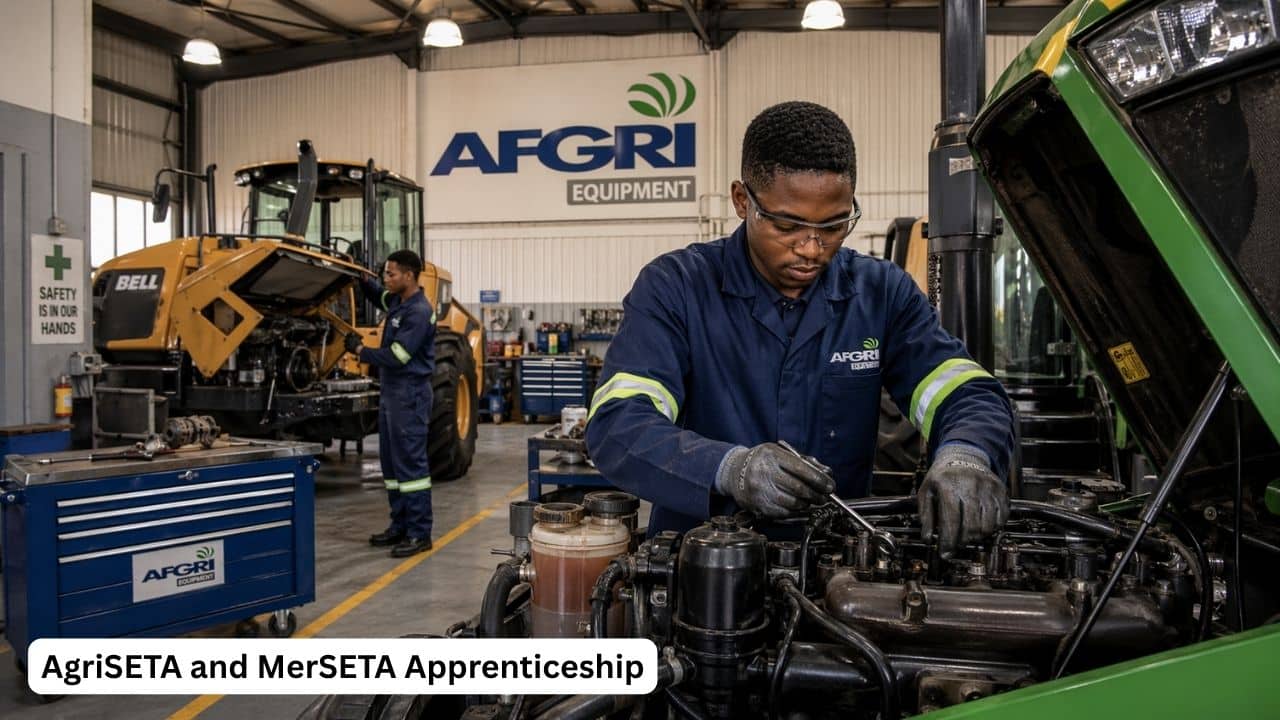
AFGRI Opens 40 AgriSETA and MerSETA Apprenticeship Opportunities for Future Mechanics
AFGRI has opened 40 AgriSETA and MerSETA apprenticeship opportunities for young South Africans who want to build a future in mechanical trades.
Apply for AFGRI Apprenticeships 2026 (X40 Posts)
AFGRI Equipment invites South African unemployed youth to apply for the Apprenticeship Programme 2026.
AFGRI Artisan Training Opportunities for Unemployed Youth 2026 (X40 Posts)
South Africa’s agricultural and earthmoving machinery sectors continue to face a shortage of qualified artisans.