Nampak Apprenticeships 2026 Open 4 Electrical and Fitter & Turner Places
Four aspiring artisans can begin building practical engineering careers through Nampak’s 2026 apprenticeship intake. Two places are available for Electrical apprentices and two for Fitter & Turner apprentices.

Nampak Apprenticeships 2026 Open 4 Electrical and Fitter & Turner Places is a learnership offered by Nampak (open nationally). Applications close on 18 Sept 2026.
Who can apply
- Mathematics
- Physical Science
- English as a second language
- A minimum mark of 50% in the required subjects
- NTC3 Engineering or higher
- Relevant trade theory as a subject
- Both your NTC3 certificate and transcript must clearly show your subjects and marks.
- Matric alone is therefore not enough for this intake.
Documents you will need
- Applicants need to submit a complete application pack.
- A curriculum vitae of no more than two pages
- Matric certificate clearly showing subjects and marks
- NTC3 certificate
- NTC3 transcript clearly showing subjects and marks
- Incomplete applications may not be considered.
- Before attaching anything, open each document and check that your marks, subjects and qualification information are easy to read.
How to apply
Applications are submitted directly to Nampak - we do not collect applications. Read the eligibility criteria, prepare your supporting documents, then complete your application on the official page.
Full details
Four aspiring artisans can begin building practical engineering careers through Nampak’s 2026 apprenticeship intake. Two places are available for Electrical apprentices and two for Fitter & Turner apprentices. Applicants need Matric with the required technical subjects plus NTC3 Engineering or higher, with successful candidates expected to start the programme in 2027.
The apprenticeships are based within Nampak Metals’ Engineering Department in Epping and combine technical learning with intensive workplace development.
Applications close on 18 September 2026.
Which Nampak apprenticeship trades are available?
Nampak is recruiting four apprentices across two engineering trades:
- Electrical - 2 places
- Fitter & Turner - 2 places
Applicants should choose the trade that matches their technical studies and career interests.
The programme is aimed at developing future artisans who can support industrial maintenance, equipment reliability and production operations.
What qualifications do applicants need?
Applicants need Matric with:
You also need at least:
Both your NTC3 certificate and transcript must clearly show your subjects and marks.
Matric alone is therefore not enough for this intake.
Why does your NTC3 trade theory matter?
An apprenticeship builds on the technical knowledge you have already gained.
Electrical applicants should have studies relevant to the electrical trade, while Fitter & Turner applicants should have an academic background that supports mechanical fitting and machining development.
Your trade theory subjects help demonstrate that you already have the foundation needed to progress into practical artisan training.
The apprenticeship is where technical theory begins turning into workplace competence.
What will apprentices learn?
Successful participants will complete the theoretical requirements associated with their chosen trade while gaining intensive practical training in a working industrial environment.
Development can include:
- Engineering maintenance
- Installations
- Troubleshooting
- Problem-solving
- Equipment inspections
- Production support
- Workplace safety
- Technical documentation
- Equipment reliability
- Team-based engineering work
Apprentices will also be expected to complete the required trade theory modules within the prescribed training period.
What does an Electrical apprentice do?
Electrical apprentices learn how industrial electrical systems and equipment are maintained, inspected and repaired.
Training can develop practical abilities connected to:
- Electrical installations
- Maintenance
- Fault finding
- Electrical equipment
- Industrial safety
- Technical troubleshooting
- Supporting production machinery
Electrical work requires careful attention to safety and accuracy.
Following procedures correctly is essential when working around industrial electrical systems.
What does a Fitter & Turner apprentice do?
Fitter & Turner apprentices develop mechanical skills used to maintain, repair and manufacture components for industrial machinery.
Training can involve:
- Mechanical fitting
- Machinery maintenance
- Measuring components
- Working with engineering tools
- Machining
- Installations
- Troubleshooting
- Reading technical information
- Supporting equipment reliability
Precision is particularly important in this trade.
Even small errors in measurements or component fit can affect how industrial equipment performs.
Why is equipment reliability important?
Manufacturing operations depend on machinery being available when production teams need it.
When equipment fails unexpectedly, production can slow down or stop completely.
Engineering teams therefore play an important role in maintaining machinery and resolving problems before they become larger failures.
Apprentices can learn how preventative maintenance, inspections and troubleshooting contribute to keeping equipment operating reliably.
Artisan work is not only about repairing broken machines. It is also about helping prevent breakdowns in the first place.
Which personal skills could help you succeed?
Applicants should have a basic understanding of engineering and be comfortable developing within a practical industrial environment.
Useful qualities include:
- Teamwork
- Organisation
- Systematic working habits
- Communication
- Good interpersonal skills
- Initiative
- Positive attitude
- Willingness to learn
- Basic computer literacy
- Ability to work independently when necessary
Apprentices will spend significant time learning from experienced technical teams.
Being willing to listen, ask questions and apply feedback can make a major difference.
Will apprentices need to work shifts?
Yes.
Applicants need to be prepared to:
- Work shifts when required
- Work overtime when necessary
Manufacturing operations do not always follow standard office hours.
Candidates should consider this before submitting, especially if they have transport or other commitments that could interfere with shift work.
Keep your curriculum vitae focused. Nampak limits it to two pages, so put your Matric subjects, marks, NTC3 qualification and relevant trade theory where they can be seen quickly. Remove unrelated information that does not strengthen your engineering application.
Which documents do you need?
Applicants need to submit a complete application pack.
Prepare:
Incomplete applications may not be considered.
Before attaching anything, open each document and check that your marks, subjects and qualification information are easy to read.
Why is the two-page curriculum vitae limit important?
This is not the time to send a five-page curriculum vitae filled with unnecessary information.
The strongest version should make your technical eligibility obvious.
Your curriculum vitae should clearly show:
- Full name
- Telephone number
- Email address
- Matric qualification
- Mathematics result
- Physical Science result
- English result
- NTC3 or higher qualification
- Relevant trade theory
- Basic computer skills
- Practical engineering exposure where applicable
Keep the layout clean and easy to scan.
Do applicants need previous engineering experience?
Extensive professional engineering experience is not listed as a minimum requirement.
The programme is designed to develop apprentices.
However, a basic understanding of engineering is expected.
If you completed workshop projects, practical college activities or other legitimate technical training, include that experience on your curriculum vitae.
Do not invent professional experience you do not have.
Is a stipend included?
A specific stipend or apprenticeship allowance has not been published.
Applicants should therefore avoid relying on payment figures circulating on social media or other websites.
Any remuneration arrangements should be confirmed during the recruitment or appointment process.
What should you check before applying?
Before sending your application, confirm that:
- You have Matric
- You completed Mathematics
- You completed Physical Science
- You meet the required 50% academic threshold
- You have NTC3 Engineering or higher
- You have relevant trade theory
- Your Matric certificate shows subjects and marks
- Your NTC3 certificate is attached
- Your NTC3 transcript shows subjects and marks
- Your curriculum vitae is no longer than two pages
- Your telephone number is correct
- Your email address works
- You are comfortable working shifts and overtime
Check every attachment before sending the email.
How do you submit your application?
Applications are submitted by email.
Send your complete application to:
Use the following subject line:
Application Apprentice Intake 2026
Attach your two-page curriculum vitae, Matric certificate, NTC3 certificate and NTC3 transcript.
Make sure all documents are included in the same application.
Never pay anyone who claims they can guarantee your selection.
When do applications close?
Applications close on 18 September 2026.
The application window is short, so eligible candidates should avoid waiting until the final day.
Applicants who still need to locate academic transcripts or update their curriculum vitae should prioritise these documents before sending their application.
Successful candidates are expected to begin the apprenticeship programme in 2027.
Why could this apprenticeship strengthen an artisan career?
Technical qualifications provide the theory, but becoming a capable artisan requires sustained practical development.
The Nampak apprenticeship provides an opportunity to work around industrial machinery while developing skills in maintenance, installations, troubleshooting and equipment reliability.
That practical exposure can help bridge the gap between technical college studies and real engineering responsibilities.
For applicants with the required NTC3 foundation, this could be the step that turns classroom knowledge into an artisan career pathway.
Final Thoughts
The Nampak Apprenticeships 2026 offer four technical training places for aspiring Electrical and Fitter & Turner artisans.
Two positions are available in each trade.
Applicants need Matric with Mathematics, Physical Science and English, with the required minimum marks, as well as NTC3 Engineering or higher with relevant trade theory.
Applications must include a curriculum vitae of no more than two pages, a Matric certificate, NTC3 certificate and transcript.
With applications closing on 18 September 2026, qualifying candidates should prepare a concise application pack and email all required documents before the deadline.
Frequently asked questions
What is the Nampak Apprenticeships 2026 Open 4 Electrical and Fitter & Turner Places?
The Nampak Apprenticeships 2026 Open 4 Electrical and Fitter & Turner Places is a learnership offered by Nampak for South African students and applicants interested in Engineering, IT/Computer Science, and Education/Teaching. Four aspiring artisans can begin building practical engineering careers through Nampak’s 2026 apprenticeship intake. Two places are available for Electrical apprentices and two for Fitter & Turner apprentices. You can read the full details, eligibility criteria, and application steps on this page before you apply.
Who qualifies for the Nampak learnership?
To qualify for the Nampak learnership, applicants generally need to meet a few key conditions. These include Mathematics, Physical Science, and English as a second language. It is open to applicants at Matric and TVET level. Read every requirement carefully on the official listing, because meeting all of them improves your chances of being shortlisted.
When does the Nampak learnership close?
According to our sources, the Nampak learnership closes on 18 September 2026. We last checked this listing on 18 September 2026. We always recommend verifying the closing date on the official listing, as providers sometimes extend or bring forward their deadlines.
What documents do I need to apply?
For the Nampak learnership you will typically need to prepare Applicants need to submit a complete application pack., A curriculum vitae of no more than two pages, Matric certificate clearly showing subjects and marks, and NTC3 certificate. Make sure any copies you submit are certified and clearly legible, as incomplete applications are often rejected. It also helps to scan everything in advance so you can upload or attach the documents quickly when you apply.
How do I apply for the Nampak learnership?
Applications are submitted by email. Send your complete application to: [email protected] Use the following subject line: Application Apprentice Intake 2026 Attach your two-page curriculum vitae, Matric certificate, NTC3 certificate and NTC3 transcript. Make sure all documents are included in the same application. Never pay anyone who claims they can guarantee your selection. Apply early and keep a copy of any reference number or confirmation you receive, in case you need to follow up.
Sources
This page summarises information published by:
You might also apply for
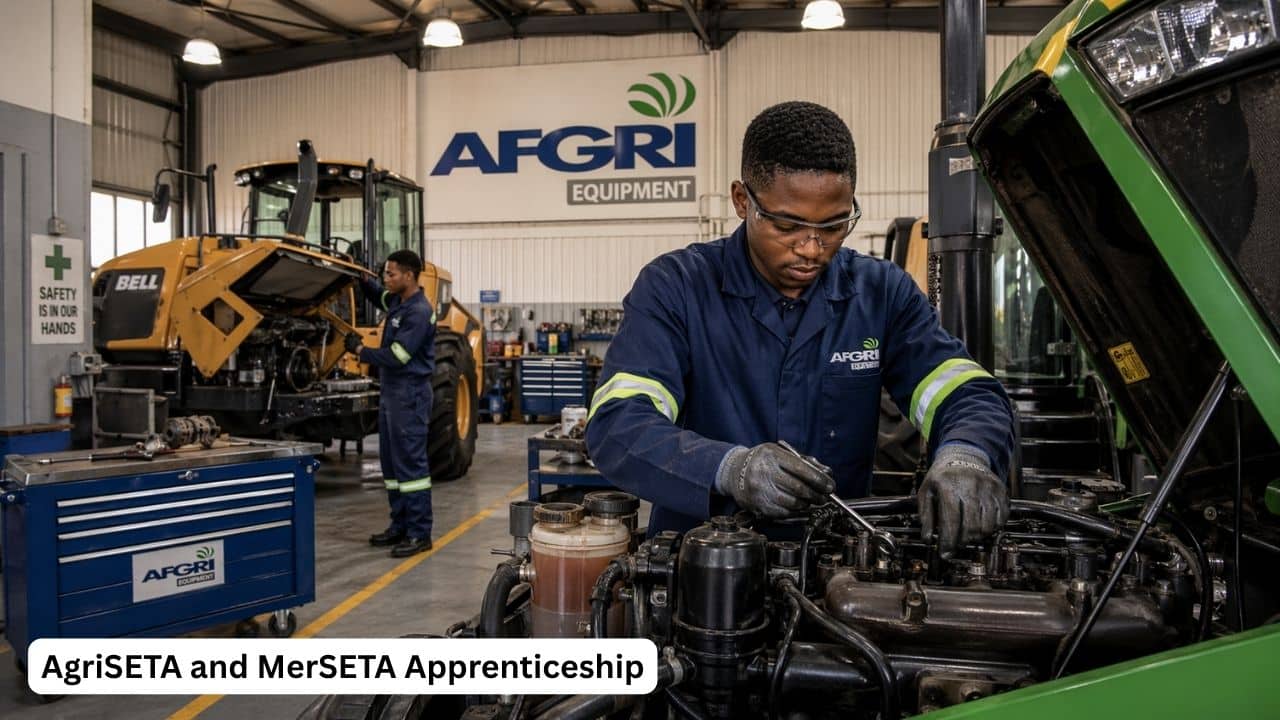
AFGRI Opens 40 AgriSETA and MerSETA Apprenticeship Opportunities for Future Mechanics
AFGRI has opened 40 AgriSETA and MerSETA apprenticeship opportunities for young South Africans who want to build a future in mechanical trades.
Apply for AFGRI Apprenticeships 2026 (X40 Posts)
AFGRI Equipment invites South African unemployed youth to apply for the Apprenticeship Programme 2026.
AFGRI Artisan Training Opportunities for Unemployed Youth 2026 (X40 Posts)
South Africa’s agricultural and earthmoving machinery sectors continue to face a shortage of qualified artisans.