Martin & East Matric Gap Year Programme 2027
Are you currently in Grade 12 and interested in Civil Engineering? If so, the Martin & East Matric Gap Year Programme 2027 could be one of the most valuable opportunities available to South African learners.
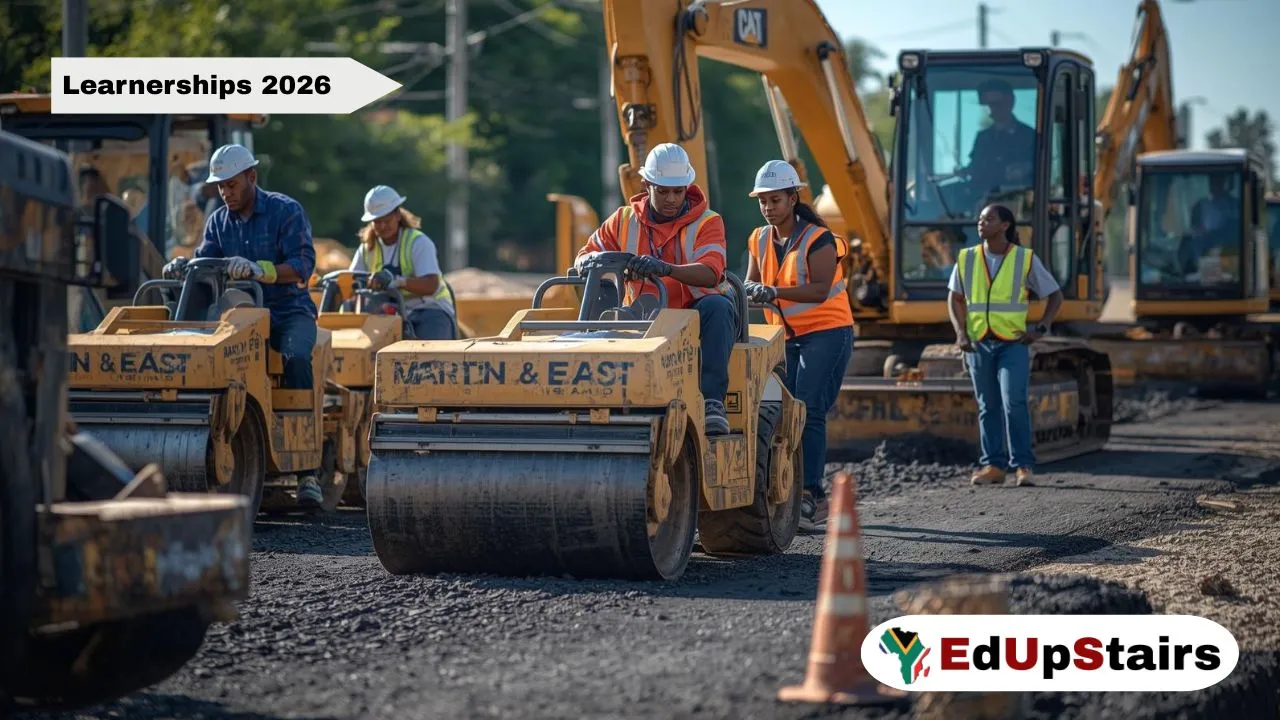
Martin & East Matric Gap Year Programme 2027 is a learnership offered by Martin & East Matric in Gauteng. Applications close on 30 Oct 2026.
Who can apply
- Be in Grade 12 during 2026
- Intend to study Civil Engineering in 2028
- Achieve a minimum of 60% in: Pure Mathematics, or Mathematics Literacy, or Technical Mathematics
- Achieve a minimum of 60% in Physical Science
- Pure Mathematics, or
- Mathematics Literacy, or
- Technical Mathematics
- Citizenship Requirement
- Be South African citizens
How to apply
Applications are submitted directly to Martin & East Matric - we do not collect applications. Read the eligibility criteria, prepare your supporting documents, then complete your application on the official page.
Full details
Are you currently in Grade 12 and interested in Civil Engineering? If so, the Martin & East Matric Gap Year Programme 2027 could be one of the most valuable opportunities available to South African learners.
Unlike a traditional gap year where students may struggle to find meaningful work experience, this programme allows successful candidates to earn a salary, gain hands-on experience in the construction industry, and potentially secure a bursary to study Civil Engineering at some of South Africa’s leading universities.
For learners who are passionate about roads, bridges, construction projects, and infrastructure development, this opportunity provides a direct pathway from high school to a professional engineering career.
Quick Overview
- Programme: Martin & East Matric Gap Year Programme 2027
- Company: Martin & East (Pty) Ltd
- Location: South Africa
- Application Closing Date: 30 October 2026
Who Can Apply?
- Current Grade 12 learners in 2026
- South African citizens
- Learners intending to study Civil Engineering in 2028
Benefits
- Earn a salary during the Gap Year
- Practical construction industry experience
- Placement on a Construction Roadworks and Supervision Learnership
- Opportunity to compete for bursary funding
Application Method
- Email CV and June 2026 Grade 12 results
Email Subject
- Scholar Recruitment 2027
Email Address
Contact Persons
- Megan Adonis
- Zelia Cyster
Why This Gap Year Programme Is Different
Many learners complete matric without a clear understanding of what engineering work involves on a daily basis.
This programme bridges that gap by exposing participants to real-world construction projects before they begin their tertiary studies.
Instead of going directly from school to university, successful candidates spend a year:
- Learning from experienced professionals
- Working on construction projects
- Understanding engineering principles in practice
- Developing workplace skills
- Building professional networks
- Earning an income
By the time participants enter university, they already have valuable industry exposure that many engineering students only gain after graduation.
Areas of Exposure During the Programme
Successful candidates may participate in various engineering and construction disciplines, including:
Road Construction and Rehabilitation
Participants may gain exposure to how roads are planned, built, repaired, and maintained.
This includes learning about:
- Road foundations
- Pavement structures
- Construction materials
- Site preparation
- Quality control processes
Bulk Earthworks and Landfills
Earthworks form the foundation of many construction projects.
Learners may observe and assist in:
- Excavation activities
- Site preparation
- Soil compaction
- Landfill development projects
Pipelines and Underground Services
Infrastructure below the ground is just as important as infrastructure above it.
Participants could learn about:
- Water pipelines
- Sewer systems
- Underground utilities
- Installation techniques
Bridges and Concrete Structures
Civil engineers play a crucial role in designing and constructing bridges and major concrete structures.
Exposure may include:
- Bridge construction activities
- Reinforced concrete work
- Structural inspections
- Engineering supervision
Road Surfacing and Maintenance
Maintaining road infrastructure is essential for economic growth and transportation safety.
Participants may observe:
- Asphalt surfacing
- Road repairs
- Maintenance planning
- Quality assurance processes
Trenchless Solutions
Modern construction increasingly uses trenchless technologies to reduce disruption and improve efficiency.
Learners may gain insight into innovative engineering methods used to install underground services.
Housing and Infrastructure Services
Exposure may also include low-cost housing developments and associated infrastructure projects that help improve communities.
Synthetic Playing Fields
Participants may see how specialised sporting facilities are designed and constructed.
Erosion Protection and Gabions
Environmental engineering solutions help prevent soil erosion and protect infrastructure.
Crushing and Screening
Construction materials must often be processed before use.
Learners may gain exposure to:
- Aggregate production
- Material screening
- Construction material quality control
Construction Roadworks and Supervision Learnership
An exciting aspect of this opportunity is that successful candidates will be placed on a Construction Roadworks and Supervision Learnership during the gap year.
This means participants will not simply observe projects.
They will receive structured workplace learning and industry-related training designed to improve their understanding of construction operations.
The learnership component adds significant value to a participant’s CV and future career prospects.
Requirements
To qualify for the Martin & East Matric Gap Year Programme 2027, applicants must meet the following criteria:
Academic Requirements
Applicants must:
Citizenship Requirement
Applicants must:
Bursary Opportunities After the Gap Year
One of the most attractive features of this programme is the possibility of receiving bursary funding after successful completion.
Bursaries are awarded based on:
- Overall site performance during the Gap Year
- Acceptance into an approved tertiary institution
- Internal selection processes conducted by Martin & East
This means strong performers may receive financial support to continue their Civil Engineering studies.
Sponsored Institutions
Students may be considered for funding when accepted into one of the following institutions:
- University of Cape Town
- Stellenbosch University
- University of Pretoria
- Cape Peninsula University of Technology
- Nelson Mandela University
Funded qualifications may include:
- Bachelor of Engineering (Civil)
- Bachelor of Science in Engineering (Civil)
- Bachelor of Engineering Technology (Civil)
- Diploma in Civil Engineering
How to Apply
Applicants must submit:
- Comprehensive CV
- June 2026 Grade 12 results
Application Email Details
Email Subject: Scholar Recruitment 2027
Email Address: [email protected]
Contact Persons
- Megan Adonis
- Zelia Cyster
Closing Date
Applications close on 30 October 2026.
Applicants are encouraged to submit their applications as early as possible rather than waiting until the closing date.
Documents You Should Prepare
Before applying, ensure you have:
- Updated CV
- Certified copy of South African ID
- June 2026 Grade 12 report
- Any academic achievement certificates
- Leadership certificates (if available)
- Community involvement certificates (if available)
Strong supporting documents can help demonstrate your commitment and potential.
Learnership Documents Checklist: Everything You Need Before Applying in South Africa
How to Move From Learnership to Permanent Employment in South Africa
Learnership Interview Questions and Answers: A Complete South African Guide
How to Write a Winning Motivational Letter for Learnership Applications in South Africa: A Complete Guide
How to Write a Winning CV for Learnership Applications in South Africa: A Complete Guide
What Happens After You Complete a Learnership (Your Next Move Matters)
Why Thousands Apply for Learnerships but Only a Few Get Selected
Common Learnership Scams in South Africa (and How to Avoid Them)
Do Learnerships Guarantee Jobs? What Really Happens After Completion
Difference Between Learnerships, Internships, Apprenticeships, In-Service Training & Work-Integrated Learning (WIL) Programmes
How Learnerships Work in South Africa (Complete Beginner Guide)
Can I Apply for a Learnership or Internship If I Have a Criminal Record?
How to Apply and Prepare for SETA Learnerships in South Africa for 2025
How Much is the Stipend Paid by SETA Learnerships in South Africa
If you are serious about pursuing Civil Engineering, do not treat this as just another application.
Take time to:
- Create a professional CV
- Highlight Mathematics and Science achievements
- Demonstrate leadership experience
- Show involvement in school activities
- Submit a complete application before the deadline
Programmes like this are highly competitive because they offer three major advantages:
- A salary during the gap year
- Real industry experience
- Potential bursary funding
Even if you eventually study elsewhere, the workplace exposure gained through this programme can provide a significant advantage over other first-year engineering students.
Frequently Asked Questions (FAQ)
- Who can apply?
Current Grade 12 learners in 2026 who are South African citizens and intend to study Civil Engineering in 2028.
- Is the programme paid?
Yes. Successful candidates will earn a salary during the Gap Year.
- What engineering field is targeted?
The programme specifically targets learners intending to pursue Civil Engineering studies.
- What marks are required?
Applicants must achieve a minimum of 60% in Mathematics (or Mathematics Literacy/Technical Mathematics) and Physical Science.
- Will I automatically receive a bursary?
No. Bursaries are awarded based on performance during the Gap Year, acceptance into approved institutions, and final selection decisions.
- When do applications close?
Applications close on 30 October 2026.
- Where do I send my application?
Applications must be emailed to [email protected] with the subject line “Scholar Recruitment 2027”.
You can also:
Disclaimer
This article is intended for informational purposes only. Application requirements, programme benefits, selection criteria, and closing dates may change at the discretion of Martin & East (Pty) Ltd. Applicants should verify all details directly with the employer before submitting an application.
EDUPSTAIRS IS A REGISTERED NON-PROFIT ORGANISATION NPO No: 232 - 182, PUBLIC BENEFIT ORGANISATION (PBO): 930066984. EDUPSTAIRS DOES NOT, IN ANY WAY OR FORM, SOLICIT MONEY OR CV’S FROM PEOPLE FOR JOBS. PLEASE BE AWARE OF PHONY JOB POSTINGS AND RECRUITMENT FRAUD. USE THE EDUPSTAIRS SCAM DETECTOR TOOL TO SPOT A SCAM BEFORE YOU APPLY
Frequently asked questions
What is the Martin & East Matric Gap Year Programme 2027?
The Martin & East Matric Gap Year Programme 2027 is a learnership offered by Martin & East Matric for South African students and applicants interested in Engineering, Accounting/Finance, and Built Environment/Construction. Are you currently in Grade 12 and interested in Civil Engineering? If so, the Martin & East Matric Gap Year Programme 2027 could be one of the most valuable opportunities available to South African learners. You can read the full details, eligibility criteria, and application steps on this page before you apply.
Who qualifies for the Martin & East Matric learnership?
To qualify for the Martin & East Matric learnership, applicants generally need to meet a few key conditions. These include Be in Grade 12 during 2026, Intend to study Civil Engineering in 2028, and Achieve a minimum of 60% in: Pure Mathematics, or Mathematics Literacy, or Technical Mathematics. It is open to applicants at Matric, Diploma, and Undergraduate level. Read every requirement carefully on the official listing, because meeting all of them improves your chances of being shortlisted.
When does the Martin & East Matric learnership close?
According to our sources, the Martin & East Matric learnership closes on 30 October 2026. We last checked this listing on 3 October 2026. We always recommend verifying the closing date on the official listing, as providers sometimes extend or bring forward their deadlines.
What documents do I need to apply?
Our sources do not list the exact documents required for the Martin & East Matric learnership, so treat the following as a typical guide rather than a confirmed list. Most South African applications ask for a certified copy of your ID, your matric certificate or latest results, an academic transcript, and proof of household income. Confirm the precise document checklist on the official listing before submitting, because requirements vary between providers.
How do I apply for the Martin & East Matric learnership?
Applicants must submit: Comprehensive CV June 2026 Grade 12 results Application Email Details Email Subject: Scholar Recruitment 2027 Email Address: [email protected] Contact Persons Megan Adonis Zelia Cyster Closing Date Applications close on 30 October 2026. Applicants are encouraged to submit their applications as early as possible rather than waiting until the closing date. Apply early and keep a copy of any reference number or confirmation you receive, in case you need to follow up.
Sources
This page summarises information published by:
You might also apply for

ALPLA Plastics Apprenticeships 2026
ALPLA Southern Africa invites suitably qualified South African candidates to apply for the Plastics Apprenticeship Programme 2026 in Lanseria, Gauteng.

Bell Equipment Apprenticeships 2026
Bell Equipment invites unemployed South African youth and suitably qualified applicants to apply for 12 Heavy Equipment Mechanic Apprenticeship opportunities for 2026.
Department of Transport Work Integrated Learning Programme 2026
The South African Department of Transport invites TVET College students who have completed relevant N6 qualifications to apply for the Work Integrated Learning (WIL) Programme 2026 / 2027.