Eskom Learner Artisan Apprenticeship 2026 Opens 12 Training Places
Twelve aspiring artisans have an opportunity to gain institutional and practical training through Eskom’s Learner Artisan Apprenticeship at Matimba Power Station. Applicants need Grade 12 plus a relevant N3, N4, N5, N6 or NCV Level 4 qualification, with at least 50% in Mathematics and 50% in Scie...

Eskom Learner Artisan Apprenticeship 2026 Opens 12 Training Places is a learnership offered by Eskom in Limpopo. Applications close on 21 Sept 2026.
Who can apply
- There are two main qualification routes.
How to apply
Applications are submitted directly to Eskom - we do not collect applications. Read the eligibility criteria, prepare your supporting documents, then complete your application on the official page.
Go to the application pageFull details
Twelve aspiring artisans have an opportunity to gain institutional and practical training through Eskom’s Learner Artisan Apprenticeship at Matimba Power Station. Applicants need Grade 12 plus a relevant N3, N4, N5, N6 or NCV Level 4 qualification, with at least 50% in Mathematics and 50% in Science. Applications close on 21 September 2026.
For young people who have already completed technical studies but still need structured workplace training, this programme creates a pathway into Eskom’s engineering and operational environment.
The available training fields range from electrical and instrumentation to fitting, welding, plumbing, civil work and several other artisan disciplines.
Which artisan trades are available?
Eskom is recruiting across a broad range of technical fields.
The 12 Learner Artisan places cover qualifications related to:
- Electrical
- Instrumentation
- Fitting
- Fitting and Turning
- Boilermaking
- Welding
- Plumbing
- Carpentry
- Rigging
- Civil
- Millwright
- Bricklaying
Applicants should choose a training field that matches their existing technical qualification.
Your N3 - N6 or NCV Level 4 studies should be relevant to the artisan discipline you want to pursue.
What qualifications do applicants need?
There are two main qualification routes.
N3 to N6 route
Applicants need:
- Grade 12
- N3, N4, N5 or N6 in a relevant trade field
- At least 50% in Mathematics
- At least 50% in Science
NCV Level 4 route
Applicants need:
- Grade 12
- NCV Level 4 in a relevant trade field
- At least 50% in Mathematics
- At least 50% in Science
Applicants must also be South African citizens.
Is Grade 12 alone enough?
No.
This intake requires Grade 12 plus an additional relevant technical qualification.
That means applicants with only Matric will not meet the full academic requirements.
You need either a relevant N3, N4, N5 or N6 certificate, or the required NCV Level 4 qualification.
Check both your qualification field and your Mathematics and Science marks before submitting.
What training will successful applicants receive?
Successful candidates will receive both:
- Institutionalised training
- Practical on-the-job training
This combination is important for artisan development because technical careers require more than classroom knowledge.
Institutional learning builds the theory and technical foundation, while workplace training helps participants understand how those principles are applied in a real operational environment.
At a power station, that can also mean learning to work within strict safety, maintenance and operational standards.
Why could this apprenticeship be valuable?
Many technical students complete N3, N4, N5, N6 or NCV studies but still need practical development before moving further along an artisan pathway.
A structured apprenticeship can help close that gap.
Participants can begin developing:
- Practical technical competence
- Workplace safety awareness
- Teamwork
- Professional communication
- Technical discipline
- Problem-solving
- Responsibility
- Experience working within a large industrial operation
The biggest advantage is the chance to turn technical theory into practical experience.
Which qualities could help applicants succeed?
Technical qualifications are essential, but attitude also matters.
Useful qualities include:
- Teamwork
- Integrity
- Professionalism
- Good communication
- Strong interpersonal skills
- Initiative
- Energy and enthusiasm
- Reliability
- Assertiveness
- Willingness to learn
Artisan environments depend heavily on people working safely and effectively together.
Being able to communicate, follow instructions and take responsibility for your work can therefore matter just as much as technical knowledge.
Why is teamwork important for learner artisans?
Artisans rarely operate completely independently in large industrial environments.
Electrical, mechanical, instrumentation, maintenance and operational teams often need to coordinate their work.
A learner may need to communicate with experienced artisans, supervisors, engineers and other technical teams while completing training.
Being a good team member means listening, communicating clearly and understanding that safety often depends on everyone following the correct procedures.
Itumeleng’s Insider Tip: Put your technical qualification, trade field and Mathematics and Science results near the top of your curriculum vitae. Recruiters should be able to confirm quickly that your N3 - N6 or NCV Level 4 studies match the artisan programme you selected.
Where will the training take place?
The programme is linked to Matimba Power Station in Lephalale, Limpopo.
Applicants should think carefully about their ability to participate at the site if selected.
Industrial training requires reliable attendance, so transport, accommodation and your ability to report consistently are practical considerations worth planning for in advance.
Is previous experience required?
Extensive previous technical experience is not listed as a minimum requirement.
The emphasis is on applicants who already have the required academic and technical foundation and are ready to continue developing through structured artisan training.
If you have completed relevant practical projects or workplace exposure during your studies, include them accurately on your curriculum vitae.
Do not exaggerate experience you do not have.
What should appear on your curriculum vitae?
Keep your curriculum vitae clear and easy to scan.
Include:
- Full name
- Active telephone number
- Professional email address
- Grade 12 qualification
- N3, N4, N5 or N6 qualification where applicable
- NCV Level 4 qualification where applicable
- Trade or technical field
- Mathematics result
- Science result
- Relevant practical experience
- Additional technical certificates
- Any relevant safety training
The most important eligibility information should not be buried at the bottom.
What should you check before submitting?
Before starting the online application, confirm that:
- You are a South African citizen
- You have Grade 12
- You have the required N3 - N6 or NCV Level 4 qualification
- Your qualification matches the trade you are applying for
- You achieved at least 50% in Mathematics
- You achieved at least 50% in Science
- Your curriculum vitae is updated
- Your telephone number is correct
- Your email address is active
- Your qualification information is accurate
Take time to review everything before completing the final submission.
How do you submit your application?
Applications are completed online through Eskom’s recruitment platform.
The listing reference is eskom_006971, while the programme reference is Appren x12 Mat Gx.
Applications must be submitted through the official Eskom online application portal.
Make sure you indicate the correct training programme or artisan field when completing your application.
Never pay anyone who claims they can guarantee your selection.
When do applications close?
Applications close on 21 September 2026.
With only a limited application window, eligible candidates should avoid waiting until the final day.
Technical qualification details and supporting information can take time to check, especially if you need to confirm your Mathematics and Science results before submitting.
What happens after submitting?
Applicants will go through Eskom’s recruitment process.
Successful candidates can then be placed within Eskom operations according to the programme and operational requirements.
Candidates who have not received feedback within 28 days after the closing date should consider their application unsuccessful.
Keep your telephone number and email address active throughout the recruitment period.
Final Thoughts
The Eskom Learner Artisan Apprenticeship 2026 offers 12 technical training opportunities for South Africans who already have the academic foundation needed to continue developing towards artisan careers.
Applicants need Grade 12 plus a relevant N3, N4, N5, N6 or NCV Level 4 qualification, together with at least 50% in Mathematics and 50% in Science.
Training fields include electrical, instrumentation, fitting, boilermaking, welding, plumbing, carpentry, rigging, civil, millwright and bricklaying.
With applications closing on 21 September 2026, qualifying candidates should check their technical qualifications carefully, update their curriculum vitae and complete the online application before the deadline.
Frequently asked questions
What is the Eskom Learner Artisan Apprenticeship 2026 Opens 12 Training Places?
The Eskom Learner Artisan Apprenticeship 2026 Opens 12 Training Places is a learnership offered by Eskom for South African students and applicants interested in Engineering, IT/Computer Science, and Science. Twelve aspiring artisans have an opportunity to gain institutional and practical training through Eskom’s Learner Artisan Apprenticeship at Matimba Power Station. Applicants need Grade 12 plus a relevant N3, N4, N5, N6 or NCV Level 4 qualification, with at least 50% in Mathematics and 50% in Scie... You can read the full details, eligibility criteria, and application steps on this page before you apply.
Who qualifies for the Eskom learnership?
To qualify for the Eskom learnership, applicants generally need to meet a few key conditions. These include There are two main qualification routes.. It is open to applicants at Matric and TVET level. Read every requirement carefully on the official listing, because meeting all of them improves your chances of being shortlisted.
When does the Eskom learnership close?
According to our sources, the Eskom learnership closes on 21 September 2026. We last checked this listing on 16 September 2026. We always recommend verifying the closing date on the official listing, as providers sometimes extend or bring forward their deadlines.
What documents do I need to apply?
Our sources do not list the exact documents required for the Eskom learnership, so treat the following as a typical guide rather than a confirmed list. Most South African applications ask for a certified copy of your ID, your matric certificate or latest results, an academic transcript, and proof of household income. Confirm the precise document checklist on the official listing before submitting, because requirements vary between providers.
How do I apply for the Eskom learnership?
Applications are completed online through Eskom’s recruitment platform. The listing reference is eskom_006971, while the programme reference is Appren x12 Mat Gx. Applications must be submitted through the official Eskom online application portal. Make sure you indicate the correct training programme or artisan field when completing your application. Never pay anyone who claims they can guarantee your selection. You can start your application using the official link provided on this page. Apply early and keep a copy of any reference number or confirmation you receive, in case you need to follow up.
Sources
This page summarises information published by:
You might also apply for
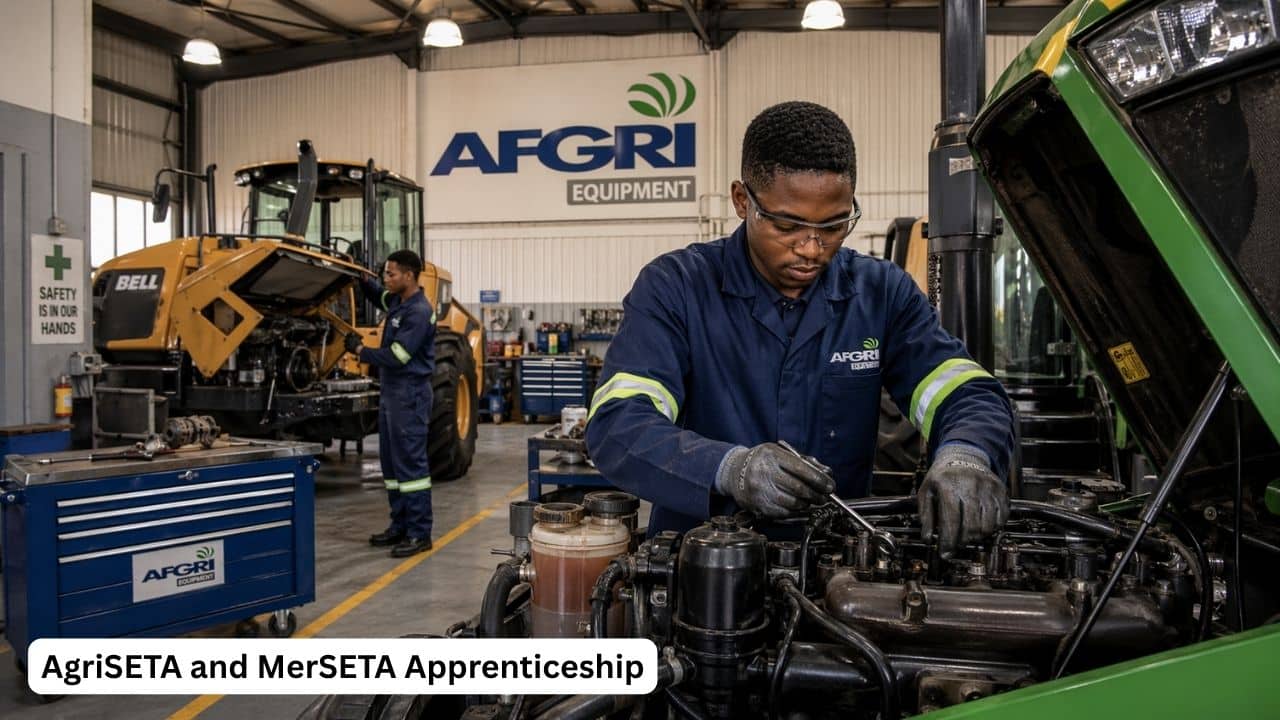
AFGRI Opens 40 AgriSETA and MerSETA Apprenticeship Opportunities for Future Mechanics
AFGRI has opened 40 AgriSETA and MerSETA apprenticeship opportunities for young South Africans who want to build a future in mechanical trades. With hands-on workshop exposure, structured training, and a path into tractor or earthmoving mechanics, this programme could be the breakthrough many asp...
Apply for AFGRI Apprenticeships 2026 (X40 Posts)
AFGRI Equipment invites South African unemployed youth to apply for the Apprenticeship Programme 2026. Apprenticeship Application Closing Date: 30 September 2026 Apprenticeship Locations: Multiple locations across South Africa About the AFGRI Apprenticeship Programme AFGRI Equipment is offering 4...

AFGRI Artisan Training Opportunities for Unemployed Youth 2026 (X40 Posts)
South Africa’s agricultural and earthmoving machinery sectors continue to face a shortage of qualified artisans. If you are interested in becoming a tractor mechanic or earthmoving mechanic, the AFGRI Equipment Artisan Training Opportunities offers one of the most practical and structured entry r...