Honours vs Postgraduate Diploma: Which One Should You Choose?

An honours degree and a postgraduate diploma sit on the same rung of the South African qualifications ladder, NQF Level 8. The difference is purpose. Honours is built to deepen one discipline and prepare you for research, while a postgraduate diploma is built for advanced, practice-focused study, often for people already working. Which one is right for you depends on where you want to go next: a master’s degree, a promotion, or a career change.
TL;DR
- Both qualifications are registered at NQF Level 8 and are normally one year of full-time study.
- Honours generally includes a research component. A postgraduate diploma generally does not require a dissertation or significant research project.
- Either can lead to a cognate master’s at some universities, but admission rules differ by institution and department, so check before you register.
- NSFAS does not fund any postgraduate qualification. Funding comes from university bursaries, employers and other funders.
- Choose honours for an academic or research route. Choose a postgraduate diploma for applied, career-focused upskilling.
Table of Contents
- The short version: how they differ
- What the NQF level really tells you
- Academic focus: research versus practice
- Entry requirements and duration
- Which one leads to a master’s degree?
- How employers see them
- Funding: what to check before you choose
- Find funding for your postgraduate year
- A simple way to decide
- Common mistakes to avoid
- FAQ
- Sources
The short version: how they differ
Both qualifications follow a bachelor’s degree (or, in some cases, an approved equivalent qualification). Both are postgraduate. Both are one year full-time at most universities. The real differences lie in what you study and what the qualification is designed to open up.
| Honours degree | Postgraduate diploma | |
|---|---|---|
| NQF level | 8 | 8 |
| Typical full-time duration | One year | One year |
| Main purpose | Consolidate and deepen knowledge in a discipline, build research capacity | Advanced reflection and development for practitioners in an area of specialisation |
| Research component | Generally included | Generally no dissertation or significant research project |
| Best suited to | Academic or research route, further master’s study | Applied upskilling, career change or advancement |
| Route to master’s | Meets the minimum entry for a cognate master’s at some universities | Same at some universities, sometimes with a bridging module |
The sections below unpack each row and explain what to check before you apply.
What the NQF level really tells you
South Africa’s Higher Education Qualifications Sub-Framework (HEQSF) registers both the Bachelor Honours Degree and the Postgraduate Diploma at NQF Level 8. That means they are pitched at the same level of complexity. A bachelor’s degree, by contrast, sits one level lower, at Level 7, and a master’s degree sits one level higher, at Level 9, according to the Government Gazette that published the framework.

That answers a question many readers ask: is an honours degree equivalent to a bachelor’s degree? No. Honours is a separate, higher qualification that you do after a bachelor’s. It is also not a “half master’s” in the formal sense; it is its own Level 8 qualification.
There is one caution. Sitting on the same level indicates broad comparability in the complexity of learning. It does not mean the two are identical in purpose, content or outcomes, as the same framework document makes clear. A postgraduate diploma is not a lesser honours, and honours is not a stronger diploma. They are different tools.
If NQF levels still feel abstract, our guide to what the NQF levels mean for your studies and career walks through every level from Higher Certificate to doctorate.
Academic focus: research versus practice
Nelson Mandela University describes the two qualifications in a way that captures the split well. According to its qualification types page, an honours degree consolidates and deepens knowledge in a discipline and develops research capacity. A postgraduate diploma enables working professionals to undertake advanced reflection and development through a systematic survey of current thinking, practice and research methods in an area of specialisation.
In plain terms:
- Honours trains you to think like a researcher in your field. You usually take advanced coursework and complete a research project or paper.
- A postgraduate diploma trains you to apply advanced knowledge in a professional setting. The coursework is typically more applied and more closely linked to a job or sector.
The research point is the cleanest dividing line. At Unisa, an honours degree generally includes a research module, unlike a postgraduate diploma. UCT takes a similar view: a postgraduate diploma can be comparable to some honours and master’s qualifications, but it does not require a dissertation or significant research project.
Why does that matter? Because the research module is the training ground for a master’s dissertation. If you want to write one, honours gives you rehearsal. If you do not, a diploma lets you skip that step and spend the year on applied content.
Entry requirements and duration
At Nelson Mandela University, an honours degree typically follows a bachelor’s degree, and both honours and postgraduate diplomas usually take one year of full-time study. Part-time study stretches that period, often to two years, but the exact structure is set by each university and programme.
Expect these common requirements, and confirm each on your chosen programme page:
- A relevant bachelor’s degree. Honours usually requires that your undergraduate major matches the honours subject. Postgraduate diplomas are often a little more flexible, particularly for people moving between related fields, but the department still decides.
- A minimum average. Many departments set a minimum mark in your final-year subjects. The figure varies widely between universities and fields.
- Selection. Places in popular programmes are limited, so meeting the minimum does not guarantee admission.
- Application deadlines. Postgraduate applications often close well before the academic year starts, and the dates differ by university. Check the official page for the current closing date.
Because programmes are not interchangeable, read the admission rules for the exact programme code rather than assuming a general rule. A postgraduate diploma in education, for example, has different entry logic from an honours in psychology.
Which one leads to a master’s degree?
This is where students make expensive mistakes, so be careful.
At Nelson Mandela University, completing either qualification meets the minimum entry requirement for a cognate master’s degree, usually in the area of specialisation of the qualification you completed. “Cognate” is the key word. A diploma in project management will not automatically open a master’s in chemistry.
Unisa adds a practical wrinkle. The research module in honours is intended to prepare you for master’s study, and postgraduate diploma graduates may need a bridging module if the relevant department specifies one.
So before you choose, do three things:
- Find the master’s programme you might want in future and read its admission requirements.
- Check whether it lists honours, a postgraduate diploma, or both.
- Email the department and ask in writing whether your planned qualification meets the entry requirement, and whether any bridging or extra research training applies.
If you are aiming for a research master’s, honours is the safer, more direct route. If you are aiming for a professional master’s or no further study at all, a diploma may serve you equally well.
How employers see them
Employers rarely care about the label as much as the content. A hiring manager in a technical or professional field will look at what you studied, whether the qualification is accredited, and what you can do with it. Public university programmes must be part of the institution’s approved programme and qualification mix, and the Council on Higher Education’s programme accreditation criteria set the quality standard against which programmes are assessed. Always confirm that a programme is accredited and registered before paying fees, particularly with private providers.
As a rule of thumb:
- Research, academia, policy analysis, data-heavy roles: honours signals research training.
- Management, education, finance, engineering practice, public administration and similar professions: a postgraduate diploma signals advanced applied skills in your sector.
- Career changers: a postgraduate diploma is often the faster way to add a recognised Level 8 credential in a new specialisation, subject to the department accepting your prior degree.
If you are unsure how a particular employer reads either, check job adverts in your target field. They usually state whether they want “honours”, “postgraduate qualification” or a specific diploma.
Funding: what to check before you choose
Funding often decides the choice, so look at it early.
NSFAS does not cover postgraduate study. The 2026 guidelines say NSFAS does not provide financial aid to applicants intending to enrol or enrolled in any postgraduate qualification. That includes both honours and postgraduate diplomas. If you were funded through NSFAS for your undergraduate degree, plan a new funding source now. You can read how the scheme works on our NSFAS page, but it is an undergraduate route.
University bursaries exist. Unisa, for example, offers a postgraduate diploma and honours bursary to qualifying South African students, subject to eligibility, academic performance and available funds. The stated average requirements are 50% or 60%, depending on the applicant category. The same page notes what the bursary does not cover: failed or repeating modules, historical debt, and extras such as textbooks and accommodation. Budget for those separately.
Other places to look:
- Your university’s postgraduate funding office, which often lists internal bursaries and merit awards.
- Employers. Many companies fund or part-fund a postgraduate diploma for staff, because it is practical and career-linked. Ask your HR or skills development facilitator.
- Sector bursaries and scholarships from companies, state entities and foundations. Some are limited to undergraduates, so read each eligibility checklist.
When you compare programmes, ask each funder two questions: does it fund honours, a postgraduate diploma, or both, and does it fund part-time study? A funder that supports one qualification but not the other may settle your decision for you.
Our perspective
We see the same pattern every year: students pick between honours and a postgraduate diploma on name alone, then discover too late that their funder, their target master’s or their employer cares about the difference. The qualification matters less than the fit.
At BursaryZA, we focus on verified funding opportunities because wasted applications cost young people time and money they do not have. Every listing shows eligibility requirements, closing dates and document needs, so you can tell quickly whether a bursary covers your level of study. We link directly to the official application page and never charge a fee or collect applications ourselves.
Our advice: decide your destination first, whether that is a research master’s, a promotion or a new field. Then pick the qualification that gets you there, and check funding for that exact qualification before you apply.
Nkosi
Find funding for your postgraduate year
Once you know which qualification you want, the next job is finding money for it. BursaryZA’s searchable database lists verified bursaries, scholarships, internships and learnerships, with eligibility checklists, closing dates, provider details and direct links to official application pages. You can filter by field, study level and location, so you see only opportunities that match where you are heading.
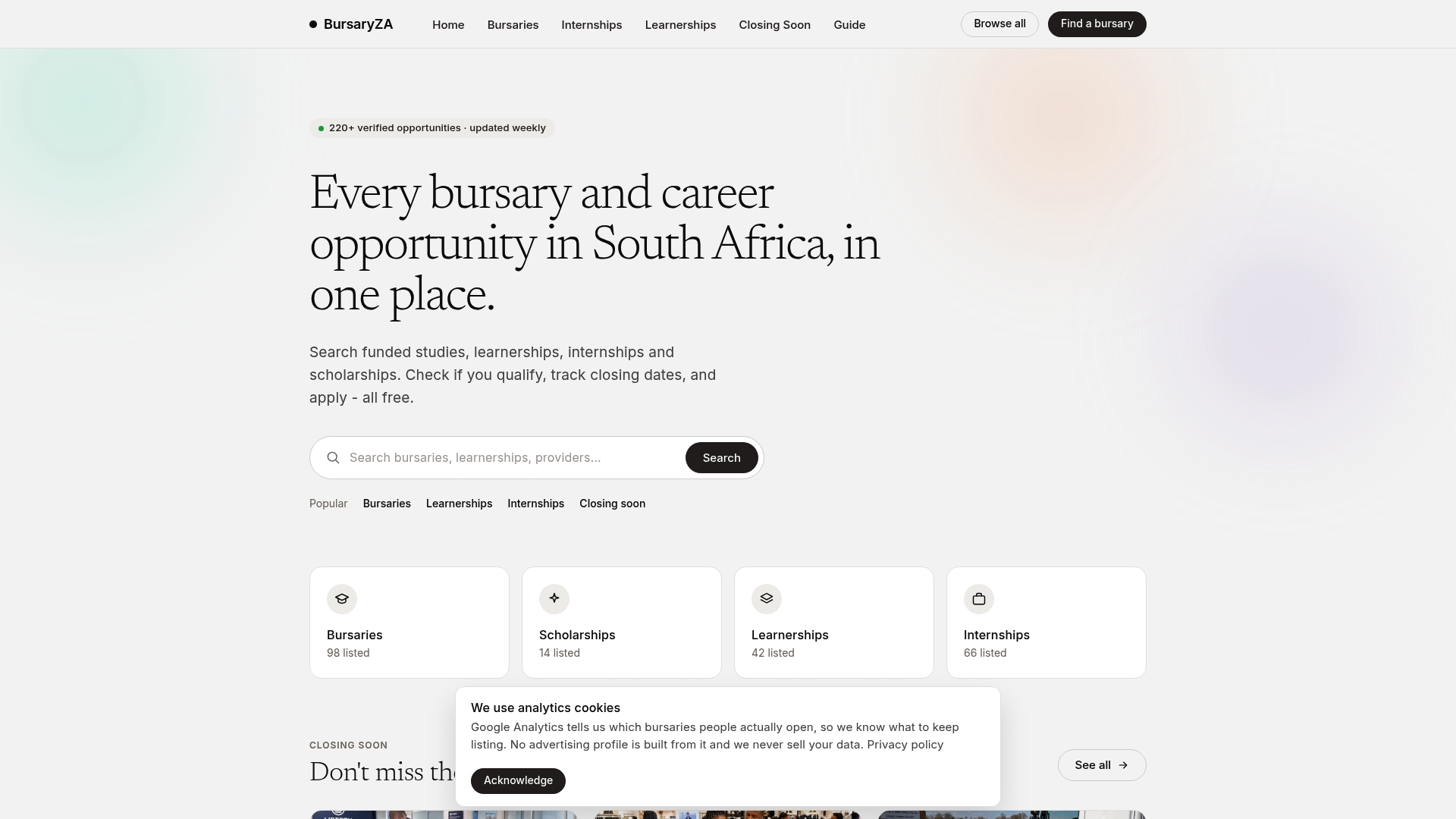
Start at the BursaryZA home page and filter by your study level. If you are exploring bursaries from specific sponsors, browse providers such as Mulilo or SIOC-CDT, and check each listing’s checklist to see whether postgraduate study is covered.
A simple way to decide
Work through these questions in order:
- Do you want a research master’s or a doctorate later? Choose honours, and confirm the master’s department accepts it.
- Are you already working in the field and want advanced practical skills? A postgraduate diploma is likely the better fit, and your employer may help pay.
- Are you changing fields? Ask the department whether a postgraduate diploma accepts your undergraduate degree. Honours usually demands a matching major.
- Does your target master’s mention honours specifically? If yes, follow its wording. If it accepts either, pick on content and funding.
- Which one can you fund? Check university bursaries, employer support and sector bursaries for that exact qualification before you commit.
If two options both pass those tests, choose the one with the content you will actually use in the next five years.
Common mistakes to avoid
- Assuming “same NQF level” means “interchangeable”. The level shows complexity, not purpose or outcomes.
- Skipping the master’s admission rules. A cognate master’s requires a related field, and some departments ask for a bridging module after a diploma.
- Counting on NSFAS. It does not fund postgraduate study, as noted above.
- Forgetting extra costs. Even where a bursary pays tuition, textbooks, accommodation and repeated modules may be yours to cover.
- Applying late. Postgraduate intakes are competitive and deadlines can be early. Confirm the current closing date on the university’s official page.
FAQ
Is an honours degree the same as a bachelor’s degree?
No. A bachelor’s degree is registered at NQF Level 7, while an honours degree is a postgraduate qualification at Level 8. You normally need a bachelor’s degree before you can start honours.
Is a postgraduate diploma higher than honours?
No. Both are registered at NQF Level 8, so they sit at the same level. They differ in purpose: honours builds research capacity, while a postgraduate diploma focuses on advanced applied study, generally without a dissertation.
Can I do a master’s degree after a postgraduate diploma?
Often yes, but it depends on the university and department. At Nelson Mandela University, either qualification meets the minimum entry for a cognate master’s. At Unisa, diploma graduates may need a bridging module if the department specifies one. Ask the master’s department in writing.
Does NSFAS pay for honours or a postgraduate diploma?
No. The NSFAS 2026 guidelines state that it does not provide financial aid for any postgraduate qualification. Look at university postgraduate bursaries, employer sponsorship and sector bursaries instead.
How long does each take?
Both usually take one year of full-time study at universities such as Nelson Mandela University. Part-time options generally take longer, so check the programme page for the exact structure.
Sources
- Honours and Postgraduate Diplomas, Unisa
- Programmes, UCT Postgraduate Hub
- A framework for qualifications in higher education (HEQSF annexure)
- Types of qualifications, Nelson Mandela University Postgrad
- NSFAS 2026 Bursary Guidelines
- Postgraduate diploma and honours bursary, Unisa
- Criteria for Programme Accreditation, CHE