Vhembe TVET College Occupational Programmes 2027 Open Across Five Campuses
Vhembe TVET College has opened applications for its 2027 Occupational Programmes, with 31 training options available across five campuses. Opportunities range from boilermaking, plumbing and electrical training to bookkeeping, tourism, poultry farming and early childhood development, while applic...

Vhembe TVET College Occupational Programmes 2027 Open Across Five Campuses is a learnership offered by Vhembe TVET College Occupational (open nationally). Applications close on 30 Sept 2026.
Who can apply
- The advertised occupational programmes range from NQF Level 3 to NQF Level 6.
- However, the level of the programme should not be confused with the school grade required for admission.
- NQF Level 3
- NQF Level 4
- NQF Level 5
- NQF Level 6
- For example, Water Process Controller appears at NQF Level 3, while several technical trades appear at NQF Level 4.
- Many administration, tourism and business qualifications sit at NQF Level 5. Meanwhile, Payroll Manager is offered at NQF Level 6.
- Therefore, applicants should consider both the programme itself and its qualification level when deciding what to study.
How to apply
Applications are submitted directly to Vhembe TVET College Occupational - we do not collect applications. Read the eligibility criteria, prepare your supporting documents, then complete your application on the official page.
Go to the application pageFull details
Vhembe TVET College has opened applications for its 2027 Occupational Programmes, with 31 training options available across five campuses. Opportunities range from boilermaking, plumbing and electrical training to bookkeeping, tourism, poultry farming and early childhood development, while applications remain open until 30 September 2026.
The programmes cover qualifications from National Qualifications Framework Level 3 to Level 6, giving applicants with different educational backgrounds several possible study routes. Entry requirements vary by programme and may start from Grade 9, Grade 10, Grade 11 or Grade 12.
Applications opened on 1 September 2026, so prospective students have the rest of September to identify a suitable programme and complete the application process.
However, applicants should not assume that one admission requirement applies to every course. The required school grade and other entry conditions depend on the occupational programme selected.
Which programmes are available at Makwarela Campus in 2027?
Makwarela Campus offers the widest selection in the 2027 occupational intake, with programmes spanning engineering trades, business, administration, hospitality and water services.
Available programmes include:
- Boilermaker - NQF Level 4
- Bookkeeper - NQF Level 4
- Business Development Officer - NQF Level 5
- Chef - NQF Level 5
- Conference and Events Organiser - NQF Level 5
- Diesel Mechanic - NQF Level 4
- Entrepreneurial Business Manager - NQF Level 4
- Human Resources Management Administrator - NQF Level 5
- Welder - NQF Level 4
- Hairdresser - NQF Level 4
- Bricklayer - NQF Level 4
- Management Assistant - NQF Level 5
- Office Administrator - NQF Level 5
- Plumber - NQF Level 4
- Payroll Manager - NQF Level 6
- Supply Chain Practitioner - NQF Level 5
- Water Process Controller - NQF Level 3
- Mechanical Fitter - NQF Level 4
Therefore, applicants interested in skilled trades have several options at Makwarela Campus.
At the same time, candidates who prefer business or administrative training can consider bookkeeping, payroll, supply chain, human resources or office administration.
What agricultural programmes are available at Mashamba Campus?
Mashamba Campus focuses on poultry-related occupational training for the advertised 2027 intake.
Applicants can choose between:
- Poultry Farmer (Broilers) - NQF Level 4
- Poultry Farmer (Layer Hen) - NQF Level 4
These programmes may particularly appeal to applicants interested in agriculture, food production or running poultry-related enterprises.
Moreover, occupational agricultural training can combine technical knowledge with practical skills that candidates can use in commercial farming or entrepreneurial environments.
Applicants should still check the specific admission requirements before choosing either programme.
Which tourism and public-service programmes are offered at Musina Campus?
Musina Campus has four programmes at NQF Level 5.
They are:
- Conference and Events Organiser - NQF Level 5
- Immigration Officer - NQF Level 5
- Tourist Information Officer - NQF Level 5
- Travel Professional - NQF Level 5
These options create a strong tourism, travel and service-oriented programme mix.
For example, applicants interested in tourism can consider the Tourist Information Officer or Travel Professional qualifications. Meanwhile, candidates drawn to events may prefer the Conference and Events Organiser programme.
Because admission requirements can differ, candidates should not select a programme based only on its NQF level.
Instead, check whether your school qualification meets the specific entry criteria.
What can students study at Mavhoi Campus?
Mavhoi Campus offers programmes in both skilled trades and administration.
The 2027 options are:
- Bricklayer - NQF Level 4
- Carpenter - NQF Level 4
- Electrician - NQF Level 4
- Office Administrator - NQF Level 5
As a result, the campus could appeal to applicants who want practical construction or electrical training as well as candidates interested in office-based careers.
Trade programmes such as electrical, carpentry and bricklaying require practical ability in addition to classroom learning.
Therefore, applicants should choose these routes because they genuinely want to develop hands-on occupational skills.
Which programmes are available at Shingwedzi Campus?
Shingwedzi Campus offers three occupational programmes for 2027:
- Bookkeeper - NQF Level 4
- Early Childhood Development Practitioner - NQF Level 4
- Management Assistant - NQF Level 5
The selection covers three distinct career areas.
Bookkeeping can suit applicants interested in financial record keeping, while Management Assistant training focuses on administrative workplace skills.
Meanwhile, the Early Childhood Development Practitioner programme provides a pathway for candidates interested in working with young children in early learning environments.
What qualification levels are available?
The advertised occupational programmes range from NQF Level 3 to NQF Level 6.
However, the level of the programme should not be confused with the school grade required for admission.
The intake includes programmes at:
For example, Water Process Controller appears at NQF Level 3, while several technical trades appear at NQF Level 4.
Many administration, tourism and business qualifications sit at NQF Level 5. Meanwhile, Payroll Manager is offered at NQF Level 6.
Therefore, applicants should consider both the programme itself and its qualification level when deciding what to study.
Can applicants qualify with Grade 9?
Potentially, yes.
Vhembe TVET College indicates that entry requirements vary according to the programme, with different opportunities potentially requiring Grade 9, Grade 10, Grade 11 or Grade 12.
However, this does not mean Grade 9 qualifies an applicant for every programme on the list.
Likewise, having Grade 12 does not automatically guarantee admission.
Applicants should first choose the programme they want and then confirm the exact admission requirement attached to it.
This approach can prevent candidates from applying for a programme that does not match their current qualification.
How should applicants choose the right occupational programme?
Applicants should start with the type of work they genuinely want to do.
For candidates who enjoy practical technical work, programmes such as:
- Electrician
- Boilermaker
- Welder
- Diesel Mechanic
- Mechanical Fitter
- Plumber
- Carpenter
- Bricklayer
may provide a better fit.
Meanwhile, applicants interested in office and business environments can consider:
- Bookkeeper
- Office Administrator
- Management Assistant
- Payroll Manager
- Supply Chain Practitioner
- Human Resources Management Administrator
- Business Development Officer
Similarly, candidates interested in hospitality and tourism can consider Chef, Travel Professional, Tourist Information Officer or Conference and Events Organiser.
Choosing according to genuine interests can matter because occupational programmes aim to develop skills for specific types of work.
Why are occupational programmes different from ordinary classroom courses?
Occupational programmes focus strongly on the knowledge and practical competence required for a particular occupation.
Therefore, the aim goes beyond passing classroom subjects.
Students may develop practical abilities directly connected to the occupation they selected, whether that involves electrical work, bookkeeping, poultry farming, plumbing or administration.
For that reason, applicants should think carefully about the work environment associated with each qualification.
Someone who enjoys practical mechanical work, for example, may find a trade programme more suitable than an administrative qualification.
On the other hand, a candidate who prefers working with records, documents and organisational systems may find bookkeeping or office administration more appropriate.
Itumeleng’s Insider Tip: Do not choose a programme simply because its name sounds attractive. First check the campus, qualification level and exact entry requirements. Then ask yourself whether you can genuinely see yourself doing that type of work. A carefully chosen occupational programme can give you much more value than applying randomly just to secure a college place.
Do the 2027 programmes include a stipend?
The advertised programme notice does not state that students will receive a stipend.
It also does not advertise a specific bursary or monthly allowance for these programmes.
Therefore, prospective students should not assume that enrolment automatically includes financial support.
If funding arrangements apply to a particular programme, applicants should rely on information supplied by Vhembe TVET College during the admission or registration process.
This is particularly important because stipend claims often circulate online without appearing in the actual programme advertisement.
When do Vhembe TVET College applications close?
Applications for the 2027 Occupational Programmes run from 1 September to 30 September 2026.
Therefore, candidates need to complete their applications before the end of September.
Waiting until the closing date can create avoidable problems.
For example, applicants could encounter:
- Internet connectivity problems
- Missing academic documents
- Incorrect personal information
- Difficulty choosing the correct programme
- Application system congestion
Consequently, candidates who already know what they want to study should start the process early.
How can candidates submit applications for 2027?
Prospective students can begin the process through the official Vhembe TVET College online application page.
Before starting, applicants should decide which occupational programme and campus best match their qualifications and career interests.
Candidates should also have their personal and academic information available so they can complete the process accurately.
Most importantly, applicants should avoid using unofficial links sent through unknown social-media pages or individuals.
The advertised application period ends on 30 September 2026.
Which campus should applicants select?
The correct campus depends on the programme.
For example, someone interested in becoming an Electrician should look at Mavhoi Campus, while Poultry Farmer programmes appear at Mashamba Campus.
Similarly, tourism and travel-related programmes appear at Musina Campus, while Makwarela offers the largest combination of technical, business and service qualifications.
Applicants should therefore confirm the campus before submitting their programme choice.
Selecting the wrong campus or qualification could complicate the application process.
What should candidates prepare before applying?
Although exact document requirements may depend on the application process, candidates should have their academic information ready.
It can also help to prepare clear digital copies of common admission documents so they are available if requested.
Most importantly, applicants should make sure the information supplied during registration matches their official documents.
Before final submission, check:
- Your personal details
- Selected programme
- Selected campus
- Highest school grade completed
- Academic results
- Contact number
- Email address
Accurate contact information matters because the college may need to communicate admission or registration information after applications close.
Why should applicants submit before the final day?
The application window provides candidates with the entire month of September.
Therefore, there is little benefit in deliberately waiting until 30 September.
Submitting earlier gives applicants time to resolve problems while the application period remains open.
In addition, applicants can review their programme choice more carefully instead of rushing through the process shortly before the deadline.
For candidates applying from areas with unreliable internet access, completing the process early becomes even more important.
Frequently Asked Questions
When do Vhembe TVET College applications close for 2027?
Applications for the advertised 2027 Occupational Programmes run from 1 September to 30 September 2026.
Can I apply with Grade 9?
Some programmes may accept applicants from Grade 9, while others may require Grade 10, Grade 11 or Grade 12. The exact requirement depends on the programme selected.
Which campuses offer the occupational programmes?
The advertised programmes are available at Makwarela, Mashamba, Musina, Mavhoi and Shingwedzi campuses.
Does Vhembe TVET College offer electrician training in 2027?
Yes. Electrician - NQF Level 4 is listed among the 2027 Occupational Programmes at Mavhoi Campus.
Do the occupational programmes pay a stipend?
The advertisement does not state that students will receive a stipend. Applicants should therefore avoid assuming that monthly financial support forms part of the programme.
Final Thoughts
The Vhembe TVET College Occupational Programmes 2027 intake offers a diverse selection of practical and career-focused qualifications across Makwarela, Mashamba, Musina, Mavhoi and Shingwedzi campuses.
With options ranging from electrician, boilermaker and diesel mechanic training to bookkeeping, poultry farming, tourism and early childhood development, applicants can choose from several occupational pathways.
However, entry requirements vary between programmes. Depending on the qualification, applicants may need Grade 9, Grade 10, Grade 11 or Grade 12.
Candidates should therefore confirm their eligibility before selecting a course rather than assuming the same requirement applies throughout the college.
Applications remain open until 30 September 2026. Prospective students who have identified a suitable programme should complete the process early and carefully check their campus and qualification choice before submitting.
Frequently asked questions
What is the Vhembe TVET College Occupational Programmes 2027 Open Across Five Campuses?
The Vhembe TVET College Occupational Programmes 2027 Open Across Five Campuses is a learnership offered by Vhembe TVET College Occupational for South African students and applicants interested in Engineering, Accounting/Finance, and Commerce/Business. Vhembe TVET College has opened applications for its 2027 Occupational Programmes, with 31 training options available across five campuses. Opportunities range from boilermaking, plumbing and electrical training to bookkeeping, tourism, poultry farming and early childhood development, while applic... You can read the full details, eligibility criteria, and application steps on this page before you apply.
Who qualifies for the Vhembe TVET College Occupational learnership?
To qualify for the Vhembe TVET College Occupational learnership, applicants generally need to meet a few key conditions. These include The advertised occupational programmes range from NQF Level 3 to NQF Level 6., However, the level of the programme should not be confused with the school grade required for admission., and NQF Level 3. It is open to applicants at Matric and TVET level. Read every requirement carefully on the official listing, because meeting all of them improves your chances of being shortlisted.
When does the Vhembe TVET College Occupational learnership close?
According to our sources, the Vhembe TVET College Occupational learnership closes on 30 September 2026. We last checked this listing on 13 September 2026. We always recommend verifying the closing date on the official listing, as providers sometimes extend or bring forward their deadlines.
What documents do I need to apply?
Our sources do not list the exact documents required for the Vhembe TVET College Occupational learnership, so treat the following as a typical guide rather than a confirmed list. Most South African applications ask for a certified copy of your ID, your matric certificate or latest results, an academic transcript, and proof of household income. Confirm the precise document checklist on the official listing before submitting, because requirements vary between providers.
How do I apply for the Vhembe TVET College Occupational learnership?
Prospective students can begin the process through the official Vhembe TVET College online application page. Before starting, applicants should decide which occupational programme and campus best match their qualifications and career interests. Candidates should also have their personal and academic information available so they can complete the process accurately. Most importantly, applicants should avoid using unofficial links sent through unknown social-media pages or individuals. The advertised application period ends on 30 September 2026. You can start your application using the official link provided on this page. Apply early and keep a copy of any reference number or confirmation you receive, in case you need to follow up.
Sources
This page summarises information published by:
You might also apply for
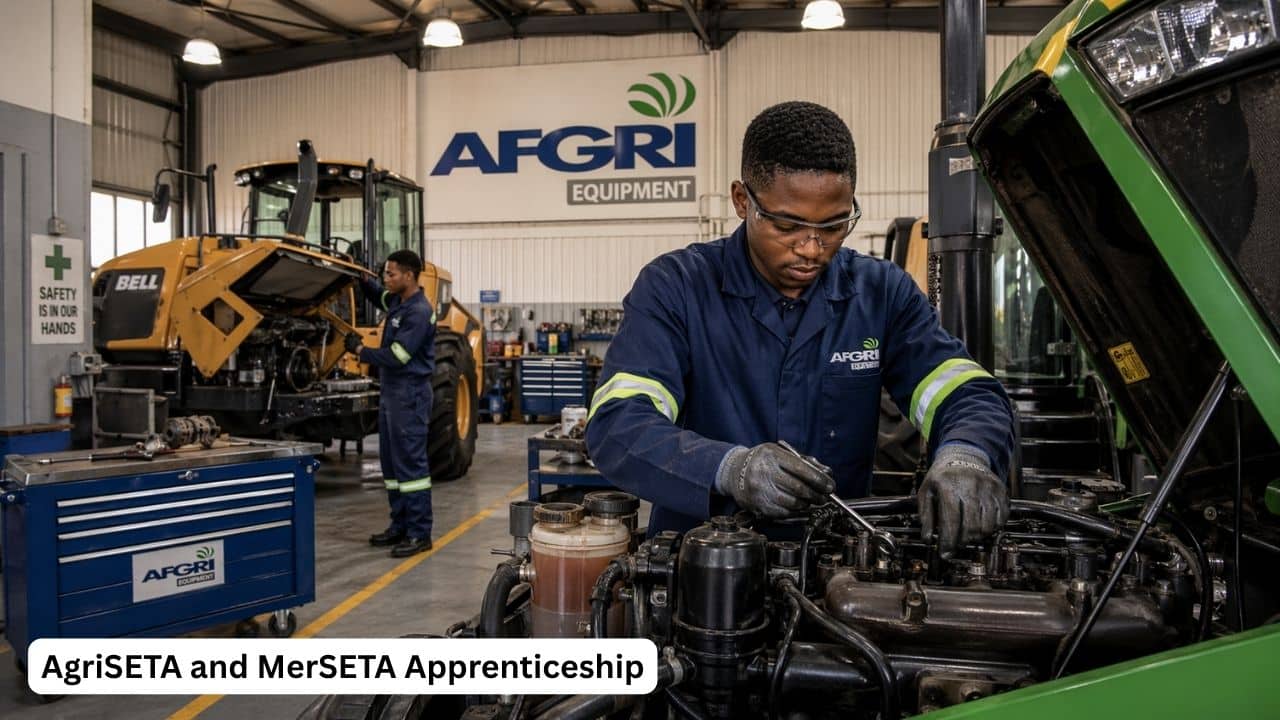
AFGRI Opens 40 AgriSETA and MerSETA Apprenticeship Opportunities for Future Mechanics
AFGRI has opened 40 AgriSETA and MerSETA apprenticeship opportunities for young South Africans who want to build a future in mechanical trades. With hands-on workshop exposure, structured training, and a path into tractor or earthmoving mechanics, this programme could be the breakthrough many asp...
Apply for AFGRI Apprenticeships 2026 (X40 Posts)
AFGRI Equipment invites South African unemployed youth to apply for the Apprenticeship Programme 2026. Apprenticeship Application Closing Date: 30 September 2026 Apprenticeship Locations: Multiple locations across South Africa About the AFGRI Apprenticeship Programme AFGRI Equipment is offering 4...

AFGRI Artisan Training Opportunities for Unemployed Youth 2026 (X40 Posts)
South Africa’s agricultural and earthmoving machinery sectors continue to face a shortage of qualified artisans. If you are interested in becoming a tractor mechanic or earthmoving mechanic, the AFGRI Equipment Artisan Training Opportunities offers one of the most practical and structured entry r...