Unitrans Truck Driver Learnership 2026: NQF Level 3
Unitrans is recruiting unemployed South African youth for a 12-to-18-month Truck Driver Learnership in KwaZulu-Natal, Cape Town and Gauteng, with applications closing on 7 September 2026. Candidates need Grade 12, a valid Code EC driver’s licence and a Professional Driving Permit covering categor...

Unitrans Truck Driver Learnership 2026: NQF Level 3 is a learnership offered by Unitrans Truck Driver in Gauteng. Applications close on 07 Sept 2026.
Who can apply
- The temporary learnership leads to an Occupational Certificate: Truck Driver at National Qualifications Framework Level 3. However, Unitrans has not disclosed a salary or stipend amount. Candidates should therefore confirm remuneration if they progress through the selection process.
- Learners who complete the training and pass the required assessments can work toward the Occupational Certificate: Truck Driver at National Qualifications Framework Level 3.
- The External Integrated Summative Assessment forms an important part of this process. It evaluates whether a learner can demonstrate the knowledge and practical competence required by the occupational qualification.
- However, participation alone does not guarantee certification. Learners must attend the compulsory training, complete the required driving hours and meet the assessment standards.
- Likewise, Unitrans does not promise permanent employment after the programme. The qualification and workplace experience may improve future prospects, but learners should not treat the learnership as a guaranteed appointment.
- Successful learners can work toward an Occupational Certificate in Truck Driving at National Qualifications Framework Level 3.
Documents you will need
- Unitrans requires certified supporting documents that are not older than three months. Candidates should check the certification dates before uploading anything.
- Their South African identification document.
- Their Code EC driver’s licence.
- Their Professional Driving Permit.
- Their Matric certificate.
- Any additional qualifications included in the application.
- Candidates should ensure that every document remains clear and readable. In addition, the names and identification details should match across the application form, licence and certificates.
- Previous professional driving exposure.
- Road-safety training.
- Logistics or transport studies.
- Customer-service experience.
- Experience working shifts.
- Familiarity with telematics or digital systems.
- A reliable and safety-conscious work record.
- Itumeleng’s Insider Tip: Check both the expiry date on your Professional Driving Permit and the certification date on every supporting document. A valid licence attached to an outdated certified copy could delay an otherwise suitable application.
How to apply
Applications are submitted directly to Unitrans Truck Driver - we do not collect applications. Read the eligibility criteria, prepare your supporting documents, then complete your application on the official page.
Go to the application pageFull details
Unitrans is recruiting unemployed South African youth for a 12-to-18-month Truck Driver Learnership in KwaZulu-Natal, Cape Town and Gauteng, with applications closing on 7 September 2026. Candidates need Grade 12, a valid Code EC driver’s licence and a Professional Driving Permit covering categories D, G and P to be considered.
The temporary learnership leads to an Occupational Certificate: Truck Driver at National Qualifications Framework Level 3. However, Unitrans has not disclosed a salary or stipend amount. Candidates should therefore confirm remuneration if they progress through the selection process.
Importantly, this is not a beginner driving course for candidates who still need a heavy-vehicle licence. Unitrans wants licensed drivers who can develop professional road-freight skills through classroom learning, workplace training and supervised driving experience.
Why is this different from an ordinary driving course?
Unitrans designed the programme to prepare professional truck drivers for a transport industry that increasingly relies on technology, telematics and data-driven fleet management.
Candidates must already hold a valid Code EC driver’s licence and the required Professional Driving Permit. The learnership will then develop broader occupational competence, including safety, efficiency, customer service and modern fleet systems.
Successful learners will need to combine technical driving ability with:
- A safety-first approach.
- Sound judgement on the road.
- Strong customer-service awareness.
- Independent decision-making.
- Practical problem-solving.
- Confidence when using technology.
- Reliability and discipline.
- Pride in professional driving.
Consequently, holding the correct licence meets only part of the entry requirement. Candidates must also demonstrate that they can handle the responsibility of operating commercial vehicles.
Who can enter the Unitrans Truck Driver Learnership?
Unitrans is targeting unemployed South African youth who have completed Grade 12 or an equivalent National Certificate.
Candidates must meet the following requirements:
- Hold South African citizenship.
- Have a valid Code EC driver’s licence.
- Hold a Professional Driving Permit covering categories D, G and P.
- Have a certified copy of their Matric certificate.
- Meet the medical fitness requirements.
- Remain available for shifts, weekends and public holidays.
- Commit to completing the full learnership.
A degree or diploma in logistics, supply chain management, transport economics or a related field can strengthen an application. However, Unitrans does not make a tertiary qualification compulsory.
The programme does not publish a specific age range. Therefore, candidates should avoid assuming an age limit that does not appear in the eligibility requirements.
What will learners complete during the programme?
The learnership runs for between 12 and 18 months. During that period, learners will combine classroom theory, workplace instruction and practical time behind the wheel.
Face-to-face classroom attendance forms a compulsory part of the programme. As a result, candidates must remain available for in-person training rather than expecting a fully online course.
Learners will need to:
- Attend the required classroom sessions.
- Complete structured workplace training.
- Record at least 100 practical driving hours.
- Operate vehicles safely and efficiently.
- Follow legislated road-safety requirements.
- Apply energy-efficiency principles.
- Complete the required competence assessments.
- Complete the External Integrated Summative Assessment.
The minimum 100 driving hours represent practical workplace learning rather than ordinary personal driving. Therefore, learners should expect supervisors to monitor their safety, judgement and professional conduct.
What qualification could successful learners receive?
Learners who complete the training and pass the required assessments can work toward the Occupational Certificate: Truck Driver at National Qualifications Framework Level 3.
The External Integrated Summative Assessment forms an important part of this process. It evaluates whether a learner can demonstrate the knowledge and practical competence required by the occupational qualification.
However, participation alone does not guarantee certification. Learners must attend the compulsory training, complete the required driving hours and meet the assessment standards.
Likewise, Unitrans does not promise permanent employment after the programme. The qualification and workplace experience may improve future prospects, but learners should not treat the learnership as a guaranteed appointment.
Why does Unitrans want drivers who understand technology?
Modern trucks increasingly use computerised systems to monitor routes, fuel use, safety and vehicle performance. Therefore, professional drivers need more than practical steering and vehicle-control skills.
Unitrans wants learners who feel comfortable using telematics and onboard systems as its fleet continues to modernise.
For example, a professional driver may need to interpret electronic information, follow digital instructions or report operational issues through a fleet-management system.
Candidates do not need to present themselves as technology experts. Nevertheless, they should show a willingness to learn and adapt to new systems.
How should candidates prepare the required documents?
Unitrans requires certified supporting documents that are not older than three months. Candidates should check the certification dates before uploading anything.
They need to prepare certified copies of:
Candidates should ensure that every document remains clear and readable. In addition, the names and identification details should match across the application form, licence and certificates.
A tailored curriculum vitae can also highlight:
Itumeleng’s Insider Tip: Check both the expiry date on your Professional Driving Permit and the certification date on every supporting document. A valid licence attached to an outdated certified copy could delay an otherwise suitable application.
What should candidates consider before committing?
Truck driving often requires schedules that differ from ordinary office hours. Unitrans specifically requires learners who can work shifts, weekends and public holidays.
Candidates should therefore consider whether their transport, family responsibilities and personal availability will allow them to complete the programme consistently.
They should also confirm:
- The training site linked to their placement.
- The expected starting date.
- The shift structure.
- The stipend or salary amount.
- Any uniform or protective-equipment arrangements.
- Whether they must cover transport or accommodation costs.
- How Unitrans will schedule the classroom sessions.
- The conditions attached to workplace driving hours.
These questions can help candidates understand the full commitment before accepting a learnership agreement.
Where must candidates submit their applications?
Applications close on 7 September 2026.
Candidates must submit their information and certified supporting documents through the official Unitrans online recruitment portal.
Before submitting, candidates should verify their licence information, Professional Driving Permit categories and certification dates. Finally, they should save any confirmation or reference number generated by the portal.
What questions may candidates still have?
How long does the Unitrans Truck Driver Learnership run?
The structured programme runs for between 12 and 18 months.
What qualification does the learnership offer?
Successful learners can work toward an Occupational Certificate in Truck Driving at National Qualifications Framework Level 3.
Can candidates enter without a Code EC driver’s licence?
No. Candidates need a valid Code EC driver’s licence and a Professional Driving Permit covering categories D, G and P.
Does Unitrans provide a stipend?
Unitrans has not disclosed a stipend or salary amount for the learnership. Candidates should request confirmation during the selection process.
How many practical driving hours must learners complete?
Learners must record at least 100 practical workplace driving hours before completing their final assessment.
Final Thoughts
The Unitrans Truck Driver Learnership 2026 offers licensed unemployed youth a structured route toward a recognised Level 3 occupational certificate and professional road-freight experience.
However, candidates must already hold a Code EC driver’s licence and the required Professional Driving Permit. They must also commit to face-to-face training, shift work, at least 100 practical driving hours and the final occupational assessment.
Those who meet the requirements should prepare recently certified documents and complete their submission before 7 September 2026.
Frequently asked questions
What is the Unitrans Truck Driver Learnership 2026: NQF Level 3?
The Unitrans Truck Driver Learnership 2026: NQF Level 3 is a learnership offered by Unitrans Truck Driver for South African students and applicants interested in Commerce/Business, IT/Computer Science, and Health Sciences/Medicine. Unitrans is recruiting unemployed South African youth for a 12-to-18-month Truck Driver Learnership in KwaZulu-Natal, Cape Town and Gauteng, with applications closing on 7 September 2026. Candidates need Grade 12, a valid Code EC driver’s licence and a Professional Driving Permit covering categor... You can read the full details, eligibility criteria, and application steps on this page before you apply.
Who qualifies for the Unitrans Truck Driver learnership?
To qualify for the Unitrans Truck Driver learnership, applicants generally need to meet a few key conditions. These include The temporary learnership leads to an Occupational Certificate: Truck Driver at National Qualifications Framework Level 3. However, Unitrans has not disclosed a salary or stipend amount. Candidates should therefore confirm remuneration if they progress through the selection process., Learners who complete the training and pass the required assessments can work toward the Occupational Certificate: Truck Driver at National Qualifications Framework Level 3., and The External Integrated Summative Assessment forms an important part of this process. It evaluates whether a learner can demonstrate the knowledge and practical competence required by the occupational qualification.. It is open to applicants at Matric, Diploma, and Undergraduate level. Read every requirement carefully on the official listing, because meeting all of them improves your chances of being shortlisted.
When does the Unitrans Truck Driver learnership close?
According to our sources, the Unitrans Truck Driver learnership closes on 7 September 2026. We last checked this listing on 3 September 2026. We always recommend verifying the closing date on the official listing, as providers sometimes extend or bring forward their deadlines.
What documents do I need to apply?
For the Unitrans Truck Driver learnership you will typically need to prepare Unitrans requires certified supporting documents that are not older than three months. Candidates should check the certification dates before uploading anything., Their South African identification document., Their Code EC driver’s licence., and Their Professional Driving Permit.. Make sure any copies you submit are certified and clearly legible, as incomplete applications are often rejected. It also helps to scan everything in advance so you can upload or attach the documents quickly when you apply.
How do I apply for the Unitrans Truck Driver learnership?
Applications for the Unitrans Truck Driver learnership are handled through the official application link shown on this page. Follow the steps on the provider's website carefully and make sure every required field and document is completed before you submit. Apply early and save any confirmation or reference number you receive so you can track your application.
Sources
This page summarises information published by:
You might also apply for
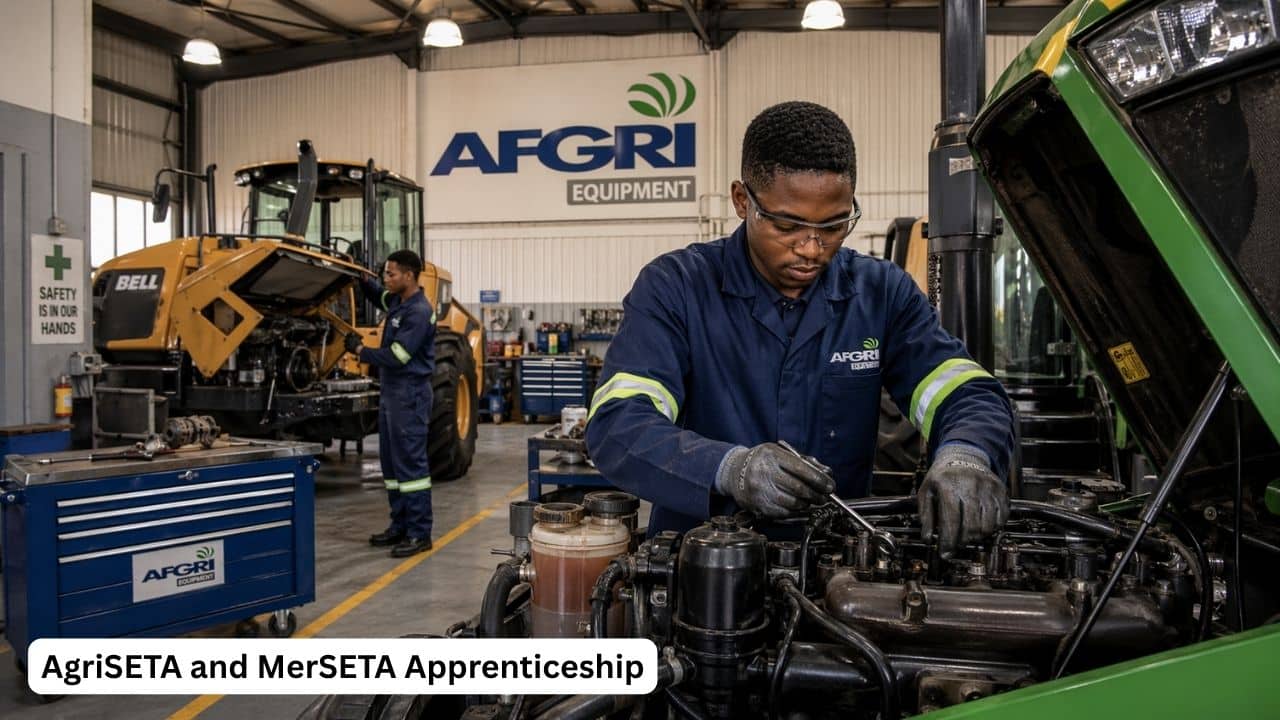
AFGRI Opens 40 AgriSETA and MerSETA Apprenticeship Opportunities for Future Mechanics
AFGRI has opened 40 AgriSETA and MerSETA apprenticeship opportunities for young South Africans who want to build a future in mechanical trades. With hands-on workshop exposure, structured training, and a path into tractor or earthmoving mechanics, this programme could be the breakthrough many asp...

AFGRI Artisan Training Opportunities for Unemployed Youth 2026 (X40 Posts)
South Africa’s agricultural and earthmoving machinery sectors continue to face a shortage of qualified artisans. If you are interested in becoming a tractor mechanic or earthmoving mechanic, the AFGRI Equipment Artisan Training Opportunities offers one of the most practical and structured entry r...
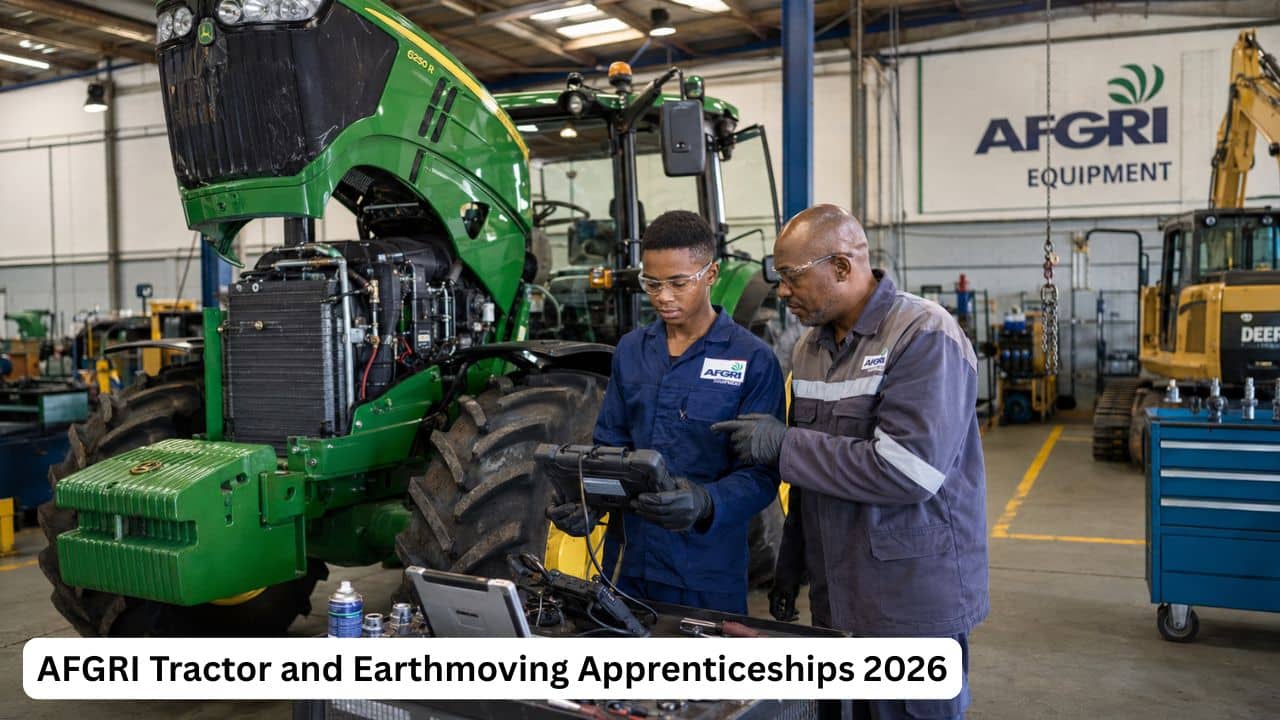
AFGRI Equipment Opens 40 Tractor and Earthmoving Apprenticeships for 2026
AFGRI Equipment is recruiting 40 Tractor and Earthmoving Apprentices for a three-year training pathway across its South African branch network. Candidates need Grade 12 with English and Mathematics or Technical Mathematics, plus a valid driver’s licence.