Transnet Work Integrated Learnership (WIL) Training Programme 2026: Technical Learner Opportunities
South African engineering students and recent graduates who need practical workplace exposure have an opportunity to apply for the Transnet Work Integrated Learning (WIL) Training Programme 2026. Transnet is recruiting Work Integrated Technical Learners for placements in Durban, East London, Port...
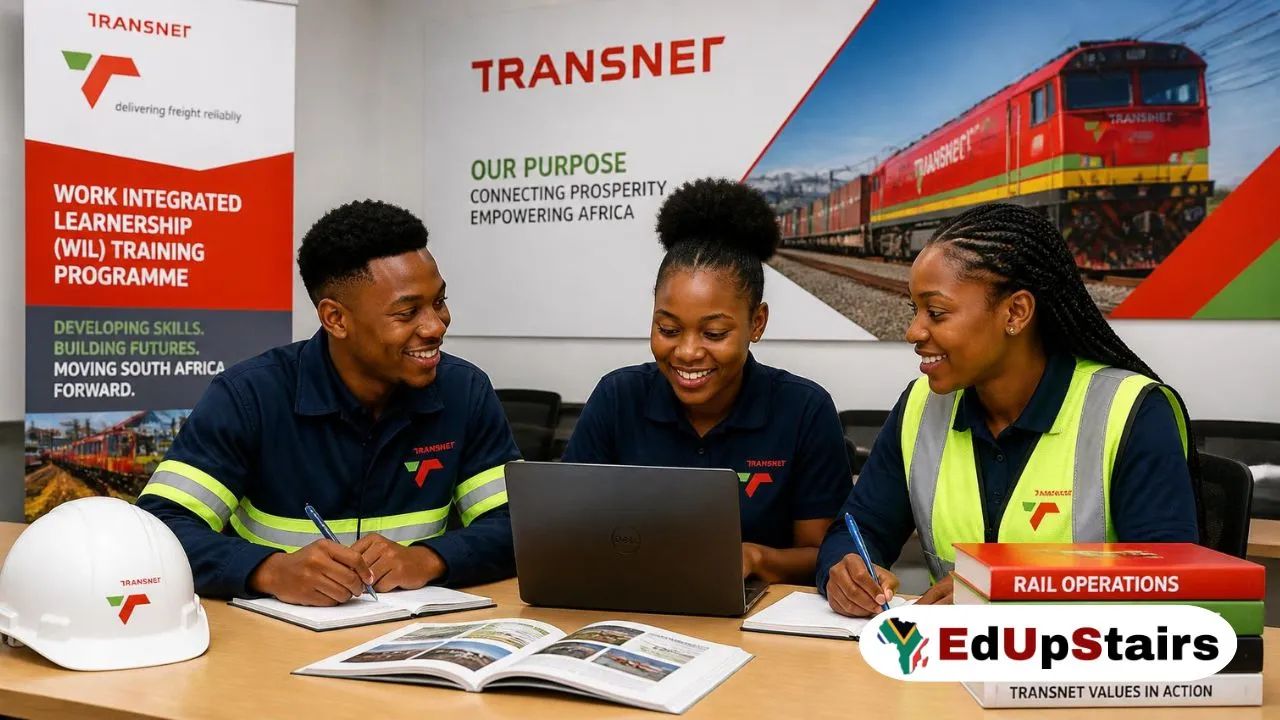
Transnet Work Integrated Learnership (WIL) Training Programme 2026: Technical Learner Opportunities is a learnership offered by Transnet Work Integrated in KwaZulu-Natal. Applications close on 25 Aug 2026.
Who can apply
- The following requirements come directly from the information supplied for the Transnet opportunity.
- A Matric certificate
- BEng Tech/National Diploma: S4-S5
- Completed all theoretical coursework in one of the specified engineering disciplines
- South African citizenship
- An age between 18 and 35 years
- Applicants should pay close attention to the wording of the academic requirement.
- The vacancy states: B Eng Tech/National Diploma: S4-S5 completed all theoretical coursework in the relevant disciplines.
- Do not assume that simply being enrolled for an engineering qualification automatically makes you eligible.
- Before applying, compare your academic record and current study status against the stated requirement.
- If your institution uses terminology that differs from S4 or S5, you should determine whether your academic progress corresponds with the level required by the programme.
- The programme specifically identifies Electrical (Heavy Current), Mechanical and Industrial Engineering.
- Do not assume that every engineering discipline automatically qualifies.
- The advert lists Electrical Engineering (Heavy Current), Mechanical Engineering and Industrial Engineering, subject to the stated qualification and theoretical coursework requirements.
- Can someone with Matric only apply?
How to apply
Applications are submitted directly to Transnet Work Integrated - we do not collect applications. Read the eligibility criteria, prepare your supporting documents, then complete your application on the official page.
Go to the application pageFull details
South African engineering students and recent graduates who need practical workplace exposure have an opportunity to apply for the Transnet Work Integrated Learning (WIL) Training Programme 2026.
Transnet is recruiting Work Integrated Technical Learners for placements in Durban, East London, Port Elizabeth and Ngqura. The programme runs for 12 months and is aimed at candidates with relevant engineering studies who have completed their theoretical coursework and need practical exposure in a professional working environment.
This is particularly relevant for young people who have studied Electrical Engineering (Heavy Current), Mechanical Engineering or Industrial Engineering and want to bridge the gap between classroom learning and actual workplace experience.
Applications close on 25 August 2026, and Transnet specifically states that applicants are responsible for ensuring that Human Resources receives their applications before the closing date.
Quick Overview
- Programme: Work Integrated Technical Learner
- Organisation: Transnet
- Operating Division: Transnet Corporate Centre
- Employee Group: Trainee
- Department: TA Youth Development
- Programme duration: 12 months
- Locations: Durban, East London, Port Elizabeth and Ngqura
- Reporting to: Specialist: Youth Development
- Grade: TN
- Reference Number: req5703
- Fields: Electrical Engineering (Heavy Current), Mechanical Engineering and Industrial Engineering
- Minimum academic level: BEng Tech/National Diploma with S4-S5 and theoretical coursework completed
- Citizenship: South African citizens
- Age requirement: 18 - 35 years
- Closing date: 25 August 2026
What Is the Transnet Work Integrated Learning Programme?
Work Integrated Learning Trainee Programme is designed to give students and recent graduates practical workplace experience.
Participants will have an opportunity to apply knowledge gained during their studies in a real working environment.
The programme is intended to improve employability through:
- Hands-on workplace training
- Mentorship
- Exposure to industry-specific activities
- Supervised task execution
- Professional development
- Practical problem-solving
- Interaction with experienced professionals
The programme will run for 12 months.
For candidates whose engineering studies require workplace exposure, this type of programme can provide an important transition between academic study and professional employment.
Official Requirements
The following requirements come directly from the information supplied for the Transnet opportunity.
Applicants must have:
The engineering disciplines listed are:
Electrical Engineering - Heavy Current
Candidates who have studied Electrical Engineering with a Heavy Current focus may apply.
Heavy-current electrical engineering generally relates to electrical power, equipment and systems rather than primarily low-power electronic systems.
Mechanical Engineering
Mechanical Engineering students who meet the academic requirements may also apply.
The discipline can involve machinery, mechanical systems, maintenance, manufacturing, design and other technical areas, depending on the specific workplace environment.
Industrial Engineering
Industrial Engineering candidates are also included.
Industrial engineering commonly deals with improving systems, processes, productivity and operational efficiency. That can make practical workplace exposure particularly useful because many industrial engineering principles are best understood when applied to actual operations.
Important Clarification About Qualifications
Applicants should pay close attention to the wording of the academic requirement.
The vacancy states: B Eng Tech/National Diploma: S4-S5 completed all theoretical coursework in the relevant disciplines.
Do not assume that simply being enrolled for an engineering qualification automatically makes you eligible.
Before applying, compare your academic record and current study status against the stated requirement.
If your institution uses terminology that differs from S4 or S5, you should determine whether your academic progress corresponds with the level required by the programme.
Where Are the WIL Positions Located?
The programme identifies opportunities in:
- Durban
- East London
- Port Elizabeth
- Ngqura
Applicants should consider location carefully before submitting an application.
The vacancy information supplied does not specify relocation assistance or accommodation. Candidates should therefore not assume that either will be provided.
Edupstairs Application Guidance
If you live outside the advertised locations, think practically about whether you could participate for the full 12-month period if selected.
Consider:
- Accommodation
- Daily transport
- Travel costs
- Proximity to the workplace
- Your ability to report to work consistently
Do not claim to be available for a location if you would realistically be unable to take up the placement.
What Will Successful Learners Do?
The programme is not limited to observing employees. Participants can expect exposure to practical tasks, projects, reporting, research and workplace collaboration.
- Task Execution
Learners may:
- Assist with specific departmental or work-stream projects
- Perform routine operational activities under supervision
- Support documentation and reporting
- Assist with administrative functions
This is where attention to detail becomes important. Even seemingly basic administrative activities can form part of larger engineering or operational processes.
- Learning and Development
Participants will be expected to:
- Attend training sessions
- Participate in workshops
- Take part in mentorship activities
- Shadow experienced professionals
- Participate in problem-solving exercises
Shadowing experienced employees can be particularly valuable for students because it allows them to observe how professionals make decisions, communicate technical information and handle operational challenges.
- Communication and Collaboration
Learners may interact with:
- Internal teams
- Customers
- Suppliers
- Other stakeholders
They may also be expected to:
- Provide progress updates
- Respond to queries
- Assist colleagues
- Communicate information relating to assigned tasks
Technical competence alone is rarely enough in a professional engineering environment. Engineers frequently need to communicate with technicians, managers, suppliers, contractors and non-technical stakeholders.
- Research and Analysis
Participants may be required to:
- Conduct research
- Collect data
- Analyse information
- Assist with business decisions
- Prepare reports
- Develop presentations
- Support process-improvement activities
The programme specifically mentions the use of Microsoft Office tools, making basic computer literacy important.
- Compliance and Professional Conduct
Learners will also be expected to:
- Follow company policies and procedures
- Observe applicable safety requirements
- Maintain professional and ethical standards
- Protect confidential information
- Demonstrate integrity when completing tasks
Safety should be taken particularly seriously in technical and operational environments.
Competencies Transnet Is Looking For
Applicants should demonstrate the following competencies:
- Good written communication
- Good verbal communication
- Basic computer skills
- Ability to work effectively within a team
- Problem-solving ability
- Attention to detail
- Willingness to learn
- Interpersonal skills
These requirements provide useful clues about how candidates should prepare their CVs.
How to Tailor Your CV for This WIL Programme
Do not submit a completely generic CV if you can avoid it.
Your CV should make it easy for a recruiter to confirm that you meet the academic requirements.
Near the top of your CV, clearly indicate your engineering qualification.
For example: National Diploma: Mechanical Engineering - Theoretical Coursework Completed
Then provide your institution and relevant study information.
Your CV can also highlight relevant academic projects, practical assignments, laboratory experience and technical software exposure where applicable.
Useful skills to mention, where genuinely applicable, may include:
- Microsoft Word
- Microsoft Excel
- Microsoft PowerPoint
- Technical report writing
- Data analysis
- Engineering calculations
- Team projects
- Research
- Problem-solving
- Health and safety awareness
Never add a skill simply because it appears useful for the vacancy. Only include skills you actually possess.
Academic Projects Can Strengthen Your Application
One of the biggest mistakes inexperienced applicants make is believing they have nothing to put on a CV because they have never held a formal job.
Your academic work can still demonstrate relevant capabilities.
If you completed a meaningful engineering project, consider including a short Academic Projects section.
Explain:
- What the project involved
- What problem you were trying to solve
- What your individual responsibilities were
- Which technical tools or methods you used
- Whether you worked individually or as part of a team
- What the outcome was
This gives recruiters more information about your ability to apply what you have learned.
Documents Applicants Should Prepare
The supplied vacancy information confirms the qualification requirements but does not provide a complete document checklist in the information supplied here.
Applicants should therefore follow the document instructions shown on the official Transnet recruitment system.
It is sensible to have the following available where requested:
- Updated CV
- Matric certificate
- Relevant engineering qualification documents
- Academic record/transcript
- Proof of completion of theoretical coursework
- Identification documents where required
Do not upload documents that the recruitment system does not request merely because they appear on this guidance list.
How to Apply
Applications should be submitted through the official Transnet recruitment process for the Work Integrated Technical Learner vacancy here
When searching for the opportunity, use: Reference Number: req5703
The closing date is: 25 August 2026
Transnet states that it is the applicant’s responsibility to make sure HR receives the application before the closing date.
For that reason, applicants should avoid waiting until the final few hours.
Online recruitment systems can become slow when large numbers of applicants attempt to apply simultaneously.
Before submitting:
- Check that your contact information is correct.
- Confirm that your engineering discipline matches the advert.
- Ensure your qualification information is accurate.
- Upload the correct documents requested by the system.
- Check that uploaded documents are readable.
- Review your application before final submission.
- Keep evidence or confirmation of submission where the system provides it.
Common Application Mistakes to Avoid
Applying without the required engineering qualification
The programme specifically identifies Electrical (Heavy Current), Mechanical and Industrial Engineering.
Do not assume that every engineering discipline automatically qualifies.
Ignoring the theoretical coursework requirement
The advert specifically refers to candidates who have completed the required theoretical coursework.
Check your academic status carefully.
Submitting an outdated CV
Your CV should reflect your latest academic progress, contact information and relevant skills.
Uploading unreadable documents
Scans should be clear enough for recruiters to read names, qualification information and results.
Using an unprofessional email address
Use a straightforward email address based on your name where possible.
Missing the closing date
The deadline is 25 August 2026.
Applying early reduces the risk of technical problems affecting your submission.
Exaggerating technical experience
If you have classroom or laboratory exposure but no industrial experience, describe it accurately.
Recruiters understand that WIL candidates are entering the workplace to gain experience.
Why WIL Matters for Engineering Students
Engineering education provides theoretical foundations, but professional workplaces introduce additional dimensions.
During workplace-based learning, students may begin developing an understanding of:
- Professional engineering environments
- Operational procedures
- Workplace safety
- Documentation standards
- Reporting structures
- Project coordination
- Technical communication
- Team dynamics
- Time management
- Workplace accountability
These competencies can later help when applying for junior engineering, technician, trainee or graduate opportunities.
A 12-month placement can also give participants concrete workplace experiences to discuss in future interviews.
Instead of answering interview questions entirely from classroom scenarios, candidates may eventually be able to reference actual projects, deadlines, teamwork situations and operational challenges.
Tools you may find useful:
View Other Employment Opportunities here
Need Help?
Edupstairs Advice
Treat this application as the beginning of your professional engineering career rather than simply another online form.
Before applying, make sure a recruiter can answer three questions quickly from your CV:
- What engineering discipline did you study?
- Have you completed the required theoretical coursework?
- Do you meet the citizenship and age requirements?
If those answers are buried deep inside a complicated CV, simplify it.
Candidates should also prepare for the possibility of an interview or assessment.
Review your academic projects and be ready to explain situations where you:
- Solved a technical problem
- Worked successfully in a team
- Met a difficult deadline
- Paid close attention to safety or detail
- Used data to make a decision
- Learned something unfamiliar quickly
- Communicated technical information to another person
Your examples do not necessarily have to come from formal employment. University and college projects can provide strong examples for an entry-level WIL candidate.
Frequently Asked Questions
- What is the Transnet Work Integrated Learning Programme?
It is a 12-month workplace-based programme intended to provide students and recent graduates with practical experience and an opportunity to apply academic knowledge in a professional environment.
- When does the Transnet WIL Programme close?
Applications close on 25 August 2026.
- How long is the programme?
The programme runs for 12 months.
- Where are the opportunities available?
The advertised locations are Durban, East London, Port Elizabeth and Ngqura.
- Which engineering qualifications are accepted?
The advert lists Electrical Engineering (Heavy Current), Mechanical Engineering and Industrial Engineering, subject to the stated qualification and theoretical coursework requirements.
No. Although a Matric certificate is required, the vacancy also requires the relevant BEng Tech/National Diploma S4-S5 level and completed theoretical coursework as specified.
- What is the age requirement?
Applicants must be between 18 and 35 years old.
- Do applicants have to be South African citizens?
Yes. South African citizenship is listed as a requirement.
- Is previous work experience required?
The information supplied for this opportunity does not specify a minimum amount of previous employment experience. Applicants should therefore rely on the official recruitment listing for any additional conditions.
- What is the Transnet vacancy reference number?
The reference number is req5703.
- Is a stipend stated?
A stipend amount was not specified in the information supplied for this article. Applicants should not rely on unofficial stipend figures unless confirmed by Transnet.
- Does Transnet provide accommodation?
Accommodation or relocation assistance was not specified in the supplied vacancy information. Applicants should therefore not assume that accommodation will be provided.
- Can applicants from other provinces apply?
The information supplied does not state a province-of-residence restriction. However, applicants should consider whether they can realistically participate at one of the advertised locations for the programme period.
- Can students who have not completed their theoretical subjects apply?
The stated requirement specifically refers to applicants who have completed all theoretical coursework. Candidates should check their academic status against this requirement before applying.
You can also:
Disclaimer
This article is an independent Edupstairs opportunity explainer prepared from the vacancy information supplied for the Transnet Work Integrated Technical Learner programme. Edupstairs is not Transnet and does not control recruitment, selection, application deadlines or appointment decisions.
Applicants should verify the vacancy and all application requirements through Transnet’s official recruitment channels before submitting personal information.
Where information such as the stipend, accommodation arrangements or relocation assistance was not included in the supplied vacancy information, this article does not invent or estimate those details.
Editorial Integrity
Edupstairs independently explains employment, training, bursary, internship, learnership and workplace-learning opportunities to help South African applicants understand what an official advertisement means in practical terms.
In this article, programme requirements, locations, qualifications, duration, competencies, duties and the closing date are based on the supplied Transnet vacancy information.
Sections labelled or described as Edupstairs Application Guidance provide independent applicant guidance rather than additional Transnet requirements.
Edupstairs does not guarantee selection and does not add unsupported eligibility requirements to an official advertisement.
EDUPSTAIRS IS A REGISTERED NON-PROFIT ORGANISATION NPO No: 232 - 182, PUBLIC BENEFIT ORGANISATION (PBO): 930066984. EDUPSTAIRS DOES NOT, IN ANY WAY OR FORM, SOLICIT MONEY OR CV’S FROM PEOPLE FOR JOBS. PLEASE BE AWARE OF PHONY JOB POSTINGS AND RECRUITMENT FRAUD. USE THE EDUPSTAIRS SCAM DETECTOR TOOL TO SPOT A SCAM BEFORE YOU APPLY
Frequently asked questions
What is the Transnet Work Integrated Learnership (WIL) Training Programme 2026: Technical Learner Opportunities?
The Transnet Work Integrated Learnership (WIL) Training Programme 2026: Technical Learner Opportunities is a learnership offered by Transnet Work Integrated for South African students and applicants interested in Engineering, Commerce/Business, and IT/Computer Science. South African engineering students and recent graduates who need practical workplace exposure have an opportunity to apply for the Transnet Work Integrated Learning (WIL) Training Programme 2026. Transnet is recruiting Work Integrated Technical Learners for placements in Durban, East London, Port... You can read the full details, eligibility criteria, and application steps on this page before you apply.
Who qualifies for the Transnet Work Integrated learnership?
To qualify for the Transnet Work Integrated learnership, applicants generally need to meet a few key conditions. These include The following requirements come directly from the information supplied for the Transnet opportunity., A Matric certificate, and BEng Tech/National Diploma: S4-S5. It is open to applicants at Matric, Diploma, and Undergraduate level. Read every requirement carefully on the official listing, because meeting all of them improves your chances of being shortlisted.
When does the Transnet Work Integrated learnership close?
According to our sources, the Transnet Work Integrated learnership closes on 25 August 2026. We last checked this listing on 20 August 2026. We always recommend verifying the closing date on the official listing, as providers sometimes extend or bring forward their deadlines.
What documents do I need to apply?
Our sources do not list the exact documents required for the Transnet Work Integrated learnership, so treat the following as a typical guide rather than a confirmed list. Most South African applications ask for a certified copy of your ID, your matric certificate or latest results, an academic transcript, and proof of household income. Confirm the precise document checklist on the official listing before submitting, because requirements vary between providers.
How do I apply for the Transnet Work Integrated learnership?
Applications should be submitted through the official Transnet recruitment process for the Work Integrated Technical Learner vacancy here When searching for the opportunity, use: Reference Number: req5703 The closing date is: 25 August 2026 Transnet states that it is the applicant’s responsibility to make sure HR receives the application before the closing date. For that reason, applicants should avoid waiting until the final few hours. Online recruitment systems can become slow when large numbers of applicants attempt to apply simultaneously. Before submitting: Check that your contact information is correct. Confirm that your engineering discipline matches the advert. Ensure your qualification information is accurate. Upload the correct documents requested by the system. Check that uploaded documents are readable. Review your application before final submission. Keep evidence or confirmation of submission where the system provides it. You can start your application using the official link provided on this page. Apply early and keep a copy of any reference number or confirmation you receive, in case you need to follow up.
Sources
This page summarises information published by:
You might also apply for
AFGRI Opens 40 AgriSETA and MerSETA Apprenticeship Opportunities for Future Mechanics
AFGRI has opened 40 AgriSETA and MerSETA apprenticeship opportunities for young South Africans who want to build a future in mechanical trades. With hands-on workshop exposure, structured training, and a path into tractor or earthmoving mechanics, this programme could be the breakthrough many asp...

AFGRI Artisan Training Opportunities for Unemployed Youth 2026 (X40 Posts)
South Africa’s agricultural and earthmoving machinery sectors continue to face a shortage of qualified artisans. If you are interested in becoming a tractor mechanic or earthmoving mechanic, the AFGRI Equipment Artisan Training Opportunities offers one of the most practical and structured entry r...
AFGRI Equipment Opens 40 Tractor and Earthmoving Apprenticeships for 2026
AFGRI Equipment is recruiting 40 Tractor and Earthmoving Apprentices for a three-year training pathway across its South African branch network. Candidates need Grade 12 with English and Mathematics or Technical Mathematics, plus a valid driver’s licence.