Transnet TVET Non-Technical Work Integrated Learning (WIL) Programme 2026 Intake
Transnet is inviting eligible South African TVET College students and recent graduates to apply for the Transnet TVET Non-Technical Work Integrated Learning (WIL) Programme 2026, an 18-month workplace training opportunity available in Cape Town, Durban, Port Elizabeth (Gqeberha) and Kimberley. Th...
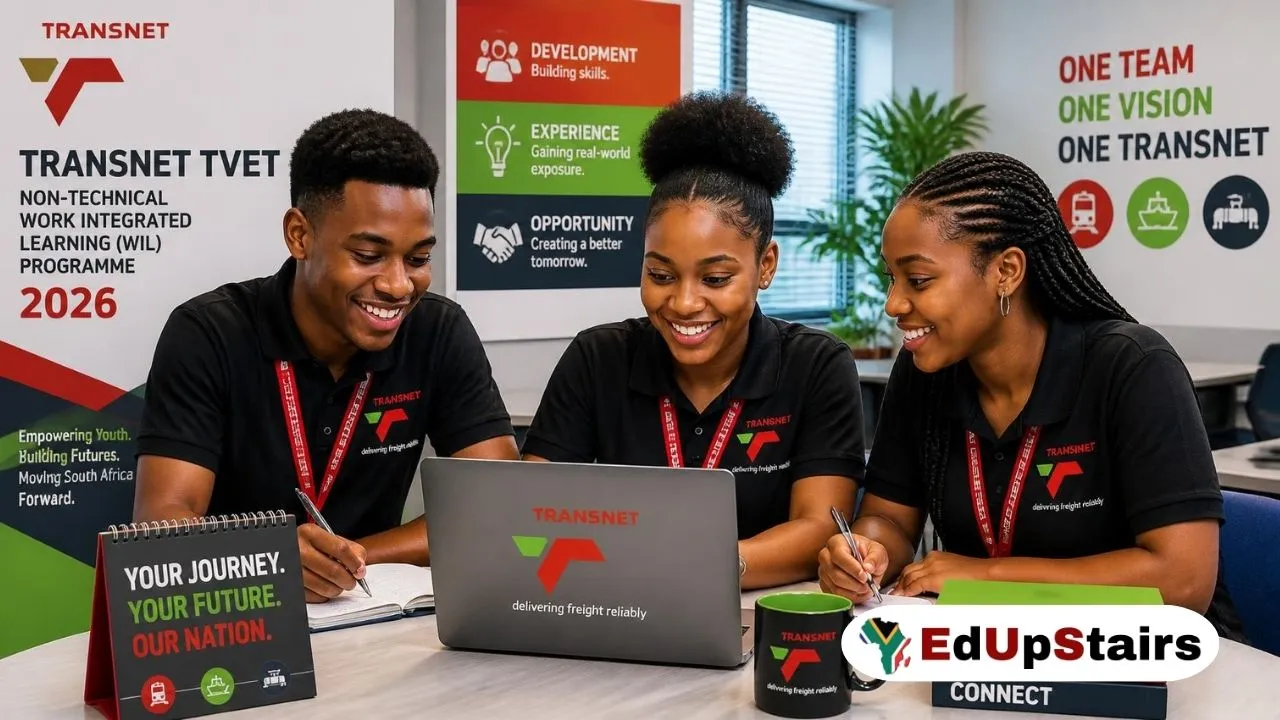
Transnet TVET Non-Technical Work Integrated Learning (WIL) Programme 2026 Intake is a learnership offered by Transnet TVET Non-Technical Work in Western Cape. Applications close on 09 Sept 2026.
Who can apply
- Matric
- Completed theoretical N4 to N6 qualification
- Institution letter requesting Work Integrated Learning
- The following requirements are taken directly from the official Transnet advertisement.
- South African citizenship
- Be between 18 and 35 years old
- Matric Certificate
- Completed all theoretical N4 to N6 studies in one of the following: Human Resource Management Marketing Financial Management Office Management
- Human Resource Management
- Marketing
- Financial Management
- Office Management
- In-Service Training (WIL) letter from their institution
- Certified copy of South African ID
- Certified Matric Certificate
- Full academic record
- Applicants must: Have no bursary obligations with another company
- Preference will be given to: Persons living with disabilities.
- South African citizens aged between 18 and 35 who meet the qualification requirements.
- Which qualifications are accepted?
- How long is the programme?
How to apply
Applications are submitted directly to Transnet TVET Non-Technical Work - we do not collect applications. Read the eligibility criteria, prepare your supporting documents, then complete your application on the official page.
Go to the application pageFull details
Transnet is inviting eligible South African TVET College students and recent graduates to apply for the Transnet TVET Non-Technical Work Integrated Learning (WIL) Programme 2026, an 18-month workplace training opportunity available in Cape Town, Durban, Port Elizabeth (Gqeberha) and Kimberley.
This opportunity is particularly important for TVET College students who have completed their theoretical N4 - N6 studies in Human Resources (HR) or Financial Management and need practical workplace exposure.
The programme provides successful candidates with an opportunity to gain experience within Transnet while developing practical workplace, administrative, communication and professional skills.
Applications close on 9 September 2026.
Applicants should submit their applications as early as possible. Transnet states that it is the applicant’s responsibility to ensure that Human Resources receives the application before the advertisement closes.
Transnet WIL Programme 2026: Quick Overview
What Is the Transnet TVET Work Integrated Learning Programme?
The Transnet Work Integrated Learning Programme is designed to bridge the gap between classroom-based TVET College education and actual workplace experience.
Many TVET College students complete the theoretical component of their NATED/Report 191 qualifications but still require practical workplace experience.
This is where programmes such as Transnet WIL become particularly valuable.
According to the programme description, the WIL Trainee Programme aims to provide students and recent graduates with practical workplace experience that allows them to apply their academic knowledge in a real working environment.
Successful candidates will spend approximately 18 months gaining workplace exposure, receiving mentorship and participating in activities related to the operations of the organisation.
The programme is therefore more than simply an internship-style placement. It gives participants an opportunity to develop workplace competencies that can strengthen their employability after completing the programme.
Who Can Apply for the Transnet WIL Programme 2026?
This particular intake is aimed at non-technical TVET College learners.
Applicants must have completed all the theoretical subjects for an applicable TVET College programme from N4 through N6.
The advertised fields are:
- Human Resources
- Financial Management
Applicants must also have a Matric certificate or equivalent qualification.
Importantly, the advertisement specifies that candidates should have completed all theoretical subjects.
This means students who are still busy completing their N4, N5 or N6 theoretical subjects should carefully check their eligibility before applying.
Transnet WIL Programme 2026 Requirements
Applicants should meet the following requirements:
- Have a Matric certificate or equivalent.
- Have completed the theoretical component of a relevant TVET College qualification.
- Have completed N4 - N6.
- Have studied Human Resources or Financial Management.
- Be a South African citizen.
- Be between 18 and 35 years old.
- Have no bursary obligation with another company.
- Be able to provide the required supporting documentation.
Transnet also states that preference will be given to People with Disabilities.
Applicants should remember that meeting the minimum requirements does not automatically guarantee selection. Applications may be screened according to the requirements of the programme and Transnet’s recruitment processes.
Documents You Should Prepare
Before starting the application, candidates should make sure that their supporting documents are ready.
The advertisement specifically requests proof of:
- Certified Matric certificate
- Academic record
- Certified ID copy
Your academic record is particularly important because Transnet needs to establish whether you have completed the required theoretical N4 - N6 subjects.
Applicants should ensure that uploaded documents are clear, readable and complete.
Do not wait until the closing date to start looking for certificates or academic records.
Explore TVET Colleges and Programmes on Edupstairs
Students interested in opportunities such as the Transnet WIL Programme can also use the Edupstairs TVET Colleges Explorer to research South Africa’s public TVET Colleges.
Explore TVET Colleges here:
https://www.edupstairs.org/tvet-colleges/
The Edupstairs TVET Colleges platform allows prospective and current students to explore individual colleges, programmes, campuses, admission information and other student resources.
This can be particularly useful for students who want to understand the different pathways available through the TVET College system.
For example, students interested in Financial Management, Human Resources, Business Management and related NATED programmes can explore colleges and their available programmes before deciding where to study.
Edupstairs has also developed individual college pages containing structured information about programmes, campuses and application resources.
This means the TVET College Explorer can be useful not only to students looking for a college, but also to students trying to understand how their qualifications connect with opportunities such as Work Integrated Learning, internships and workplace experience programmes.
Why Work Integrated Learning Matters for TVET Students
One of the biggest challenges facing some TVET College students is moving from theoretical education into the workplace.
Completing N4, N5 and N6 provides the theoretical foundation, but workplace exposure can be equally important.
A structured WIL programme allows students to experience how organisations operate while developing competencies employers expect from entry-level employees.
The Transnet programme specifically aims to expose participants to practical assignments, projects, administration, reporting, professional communication and workplace problem-solving.
These are transferable skills that can be valuable well beyond Transnet.
What Will Transnet WIL Learners Do?
Successful candidates may be required to assist with projects within their assigned department or workstream.
Participants can expect exposure to activities such as routine operational tasks performed under supervision and administrative functions involving documentation and reporting.
Learners may also participate in:
- Training sessions
- Workshops
- Mentorship programmes
- Workplace projects
- Data collection
- Market research
- Reporting
- Presentations
- Process-improvement initiatives
Another important component of the programme is job shadowing.
Participants may shadow experienced professionals to understand how different roles and business functions operate in practice.
Developing Practical Business Skills
The programme also provides opportunities for learners to develop analytical and problem-solving skills.
Depending on their placement, trainees may interact with customers, suppliers and internal Transnet teams to better understand business requirements.
They may also be expected to provide updates about assigned projects and tasks.
Some trainees could serve as contact points for queries and assistance within their work environments.
These activities can help learners develop professional communication and stakeholder-management skills.
MS Office, Reports and Presentations
Participants may also be required to prepare reports and presentations using Microsoft Office applications.
For this reason, applicants should have at least basic computer literacy.
Students who are not confident using programmes such as:
- Microsoft Word
- Microsoft Excel
- Microsoft PowerPoint
- Email applications
should consider improving these skills.
Even basic proficiency can make the transition into a professional office environment considerably easier.
Transnet WIL Programme Competencies
Transnet lists several competencies expected from applicants.
Candidates should demonstrate:
Good written and communication skills
You should be able to communicate professionally with colleagues, supervisors and other stakeholders.
Basic computer skills
Many administrative and financial functions depend heavily on computers and digital systems.
Teamwork
Candidates must be able to work effectively as part of a team.
Problem-solving skills
Workplace challenges often require employees to analyse situations and identify practical solutions.
Attention to detail
This is particularly important in administrative, HR and financial environments.
Willingness to learn
WIL is fundamentally a learning opportunity, so participants should be open to feedback, mentorship and new responsibilities.
Interpersonal skills
Learners will interact with different people across the organisation and therefore need appropriate interpersonal skills.
Where Are the Transnet WIL Positions Located?
The advertised Work Integrated Non-Technical Learner opportunities are available across:
- Cape Town
- Durban
- Port Elizabeth (Gqeberha)
- Kimberley
Applicants should carefully check the location of the position they are applying for.
Candidates should also consider practical issues such as transport, accommodation and their ability to report to the relevant workplace for the duration of the programme.
How Long Is the Transnet WIL Programme?
The programme runs for 18 months.
This provides successful candidates with substantial exposure to the workplace compared with shorter programmes lasting only a few weeks or months.
During this period, participants can gain practical experience, build professional networks and develop a stronger understanding of how their TVET College studies are applied in an organisational environment.
How to Apply
Apply for the Transnet TVET Non-Technical Work Integrated Learning (WIL) Programme 2026 Intake here
Before submitting your application:
- Read the complete vacancy advertisement.
- Confirm that you meet the qualification requirements.
- Prepare your certified ID copy.
- Prepare your certified Matric certificate.
- Obtain your TVET College academic record.
- Check that your N4 - N6 theoretical subjects have been completed.
- Complete all required sections of the application.
- Upload the correct documents.
- Review the application before submitting it.
- Submit well before the deadline.
Do not submit incomplete, unreadable or incorrect documents.
Transnet WIL Closing Date
The closing date is: 9 September 2026
This deadline should be taken seriously.
Transnet specifically states that it is the applicant’s responsibility to ensure that Human Resources receives the application before the closing date of the advertisement.
Applicants should therefore avoid waiting until the final hours of 9 September 2026.
Recruitment portals can experience heavy traffic close to deadlines, and technical problems should not be assumed to result in an extension.
Is This a Technical Transnet Learnership?
No.
This particular opportunity is advertised as a Work Integrated Non-Technical Learner programme.
The specified qualifications are:
TVET College N4 - N6 Human Resources
and
TVET College N4 - N6 Financial Management.
Applicants with engineering or other technical qualifications should therefore not assume that this particular reference applies to them.
They should instead look for Transnet opportunities specifically aligned with their qualifications.
Is This Opportunity Suitable for N6 Students Looking for Workplace Experience?
Potentially, yes - and this is one of the most important aspects of the programme.
The advertisement specifically requires applicants to have completed all theoretical subjects from a TVET College N4 - N6 programme in the specified fields.
For eligible students seeking practical exposure after completing their theoretical studies, this makes the programme particularly relevant.
However, applicants should always distinguish between participating in workplace training and automatically qualifying for a National Diploma. Any diploma-completion requirements must still be confirmed against the applicable TVET/DHET requirements and the learner’s own academic circumstances.
Tools you may find useful:
View Other Employment Opportunities here
Need Help?
Edupstairs Advice to Applicants
The Transnet TVET Non-Technical Work Integrated Learning Programme 2026 is highly relevant to young people who have completed N4 - N6 theoretical studies but still need meaningful workplace exposure.
If you qualify, do not treat the application as something to complete quickly on the closing date.
Prepare your documents first.
Make sure your academic record clearly demonstrates your completed studies. Check your contact information carefully, and ensure that the telephone number and email address on your application remain active.
Most importantly, apply only with truthful information and authentic documentation.
For students who are still deciding where or what to study, use the Edupstairs TVET Colleges Explorer to research South African TVET Colleges, programmes, campuses and study pathways:
https://www.edupstairs.org/tvet-colleges/
Building the right theoretical qualification is the first step. Opportunities such as Transnet WIL can then help bridge the important gap between TVET College education and the workplace.
Frequently Asked Questions
- What is the Transnet TVET WIL Programme 2026?
It is an 18-month Work Integrated Learning programme designed to provide eligible TVET College students and recent graduates with practical workplace experience.
- When do applications close?
Applications close on 9 September 2026.
The WIL programme runs for 18 months.
The advertisement specifies TVET College N4 - N6 Human Resources and Financial Management.
- Do I need Matric?
Yes. Applicants must have a Matric certificate or equivalent.
- Can I apply if I have only completed N4?
The advertisement requires applicants to have completed all theoretical subjects and specifies N4 - N6. Applicants who have not completed the required theoretical component should therefore not assume they qualify.
- What is the age requirement?
Applicants must be between 18 and 35 years old.
- Do I need to be South African?
Yes. Applicants must be South African citizens.
- Where will successful candidates be placed?
The advertised locations are Cape Town, Durban, Port Elizabeth (Gqeberha) and Kimberley.
- What is the Transnet WIL reference number?
The reference number is req5790.
- Are people with disabilities encouraged to apply?
Yes. The advertisement specifically states that preference will be given to People with Disabilities.
- What documents are required?
Applicants should prepare a certified Matric certificate, academic record and certified copy of their ID.
- Can I apply if another company has funded my studies?
The advertisement states that applicants must have no bursary obligation with another company.
- Where can I explore TVET Colleges in South Africa?
Students can use the Edupstairs TVET Colleges Explorer:
https://www.edupstairs.org/tvet-colleges/
The platform allows students to explore public TVET Colleges, courses, campuses, requirements and application resources.
You can also:
Disclaimer
Edupstairs is an independent educational and opportunities information platform and is not Transnet. Applicants should verify the vacancy, application instructions, requirements and closing date through the official Transnet recruitment platform before submitting an application.
Never pay anyone who promises to secure a Transnet WIL placement, interview or job opportunity.
Editorial Integrity
Edupstairs publishes opportunity explainers to help applicants understand official advertisements, eligibility requirements and application processes. We do not guarantee selection, influence recruitment decisions or charge applicants for access to employment opportunities.
EDUPSTAIRS IS A REGISTERED NON-PROFIT ORGANISATION NPO No: 232 - 182, PUBLIC BENEFIT ORGANISATION (PBO): 930066984. EDUPSTAIRS DOES NOT, IN ANY WAY OR FORM, SOLICIT MONEY OR CV’S FROM PEOPLE FOR JOBS. PLEASE BE AWARE OF PHONY JOB POSTINGS AND RECRUITMENT FRAUD. USE THE EDUPSTAIRS SCAM DETECTOR TOOL TO SPOT A SCAM BEFORE YOU APPLY
Frequently asked questions
What is the Transnet TVET Non-Technical Work Integrated Learning (WIL) Programme 2026 Intake?
The Transnet TVET Non-Technical Work Integrated Learning (WIL) Programme 2026 Intake is a learnership offered by Transnet TVET Non-Technical Work for South African students and applicants interested in Engineering, Accounting/Finance, and Commerce/Business. Transnet is inviting eligible South African TVET College students and recent graduates to apply for the Transnet TVET Non-Technical Work Integrated Learning (WIL) Programme 2026, an 18-month workplace training opportunity available in Cape Town, Durban, Port Elizabeth (Gqeberha) and Kimberley. Th... You can read the full details, eligibility criteria, and application steps on this page before you apply.
Who qualifies for the Transnet TVET Non-Technical Work learnership?
To qualify for the Transnet TVET Non-Technical Work learnership, applicants generally need to meet a few key conditions. These include Matric, Completed theoretical N4 to N6 qualification, and Institution letter requesting Work Integrated Learning. It is open to applicants at Matric, TVET, and Diploma level. Read every requirement carefully on the official listing, because meeting all of them improves your chances of being shortlisted.
When does the Transnet TVET Non-Technical Work learnership close?
According to our sources, the Transnet TVET Non-Technical Work learnership closes on 9 September 2026. We last checked this listing on 3 September 2026. We always recommend verifying the closing date on the official listing, as providers sometimes extend or bring forward their deadlines.
What documents do I need to apply?
Our sources do not list the exact documents required for the Transnet TVET Non-Technical Work learnership, so treat the following as a typical guide rather than a confirmed list. Most South African applications ask for a certified copy of your ID, your matric certificate or latest results, an academic transcript, and proof of household income. Confirm the precise document checklist on the official listing before submitting, because requirements vary between providers.
How do I apply for the Transnet TVET Non-Technical Work learnership?
Apply for the Transnet TVET Non-Technical Work Integrated Learning (WIL) Programme 2026 here Reference Number: req5565 Prepare the following: Updated CV Certified South African ID Certified Matric certificate Full academic record Institution WIL letter Any other required supporting documents Submit your application before: 11 August 2026 The advertisement states that it is the applicant’s responsibility to ensure that Human Resources receives the application before the closing date. You can start your application using the official link provided on this page. Apply early and keep a copy of any reference number or confirmation you receive, in case you need to follow up.
Sources
This page summarises information published by:
You might also apply for
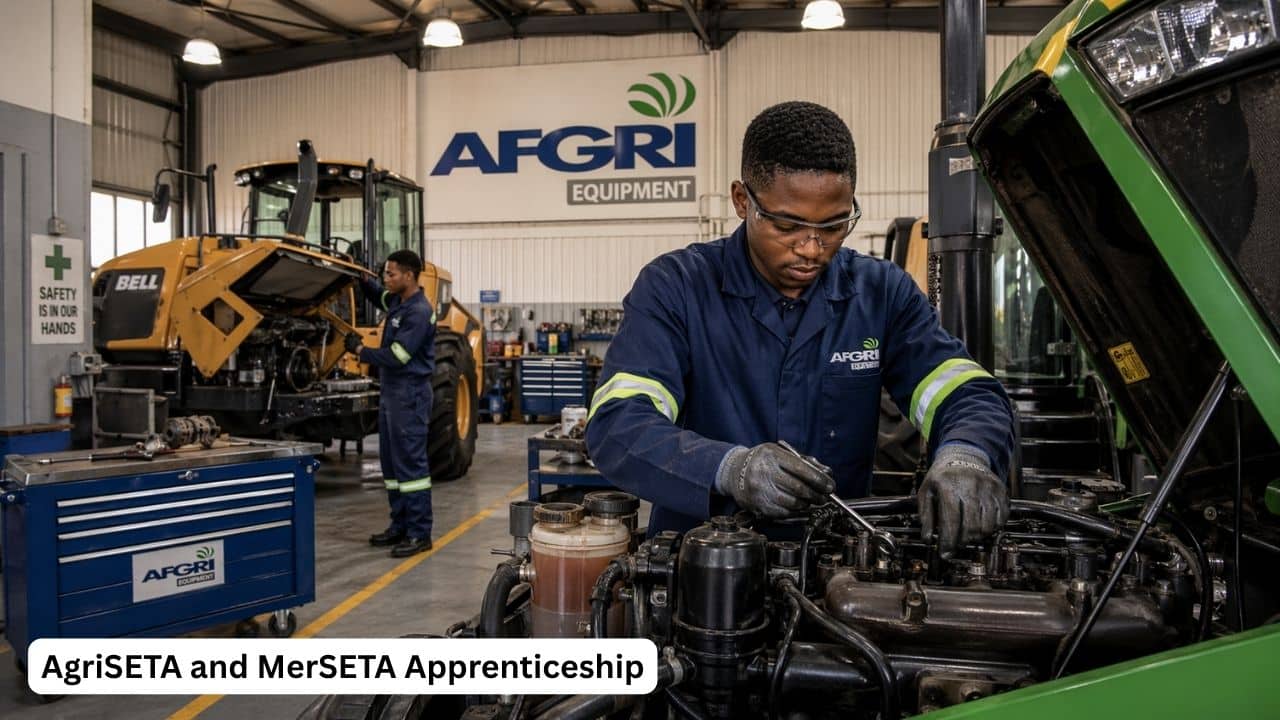
AFGRI Opens 40 AgriSETA and MerSETA Apprenticeship Opportunities for Future Mechanics
AFGRI has opened 40 AgriSETA and MerSETA apprenticeship opportunities for young South Africans who want to build a future in mechanical trades. With hands-on workshop exposure, structured training, and a path into tractor or earthmoving mechanics, this programme could be the breakthrough many asp...
Apply for AFGRI Apprenticeships 2026 (X40 Posts)
AFGRI Equipment invites South African unemployed youth to apply for the Apprenticeship Programme 2026. Apprenticeship Application Closing Date: 30 September 2026 Apprenticeship Locations: Multiple locations across South Africa About the AFGRI Apprenticeship Programme AFGRI Equipment is offering 4...

AFGRI Artisan Training Opportunities for Unemployed Youth 2026 (X40 Posts)
South Africa’s agricultural and earthmoving machinery sectors continue to face a shortage of qualified artisans. If you are interested in becoming a tractor mechanic or earthmoving mechanic, the AFGRI Equipment Artisan Training Opportunities offers one of the most practical and structured entry r...