Find Verified Pharmacy Bursaries in South Africa With Bursaryza

Yes, verified pharmacy bursaries are available to South African students at both undergraduate and postgraduate level. The fastest path forward is checking a verified bursary database like Bursaryza alongside official provider pages, since most awards require South African citizenship, a minimum academic average, and often a specific study year before you can apply.
TL;DR:
- Most bursaries cover tuition and registration fees, but many restrict eligibility to South African citizens, certain study years, and specific age ranges.
- Application deadlines usually fall between August and October, with funding responses taking six to twelve weeks, and renewal requirements are annual.
- Undergraduates should prioritize corporate bursaries with fewer research prerequisites, while postgraduates focus on professional, university, or industry research funding.
- Proper documentation, certification, and timely submission are critical, with common rejections caused by incomplete financial disclosures or unverified copies.
- Using verified platforms like Bursaryza can drastically reduce missed opportunities, as they check eligibility, deadlines, and provide deadline alert features.
Table of Contents
- What Types of Pharmacy Bursaries Are Available in South Africa?
- What Do Pharmacy Bursaries Cover, and Who Qualifies?
- How Do You Apply for a Pharmacy Bursary Step by Step?
- When Do Pharmacy Bursary Applications Open in South Africa?
- What Postgraduate Pharmacy Bursaries Exist, and How Are They Different?
- What Common Mistakes Cause Bursary Applications to Fail?
- What Bursaryza Has Learned From Watching Thousands of Applications
- Find Verified Pharmacy Bursaries Faster With Bursaryza
- Where to Verify Official Pharmacy Bursary Details
- Sources
What Types of Pharmacy Bursaries Are Available in South Africa?
Pharmacy funding in South Africa comes from four distinct sources, and each one comes with different strings attached. Knowing which category you’re applying to changes how you prepare your documents and what you can expect after graduation.
Corporate bursaries are funded by pharmaceutical companies and retail pharmacy chains that want to build their own talent pipeline. The Clicks Foundation bursary programme is the best known example, covering registration, tuition, and prescribed textbooks for BPharm students. Aspen Pharmacare runs a similar scheme at selected institutions, with coverage that can include full tuition and part of your book costs.
Professional-society bursaries come through bodies like the Pharmaceutical Society of South Africa. The Foundation for Pharmaceutical Education funds both undergraduates from second year and postgraduate researchers, and it’s administered with a stricter academic and means-tested lens than most corporate schemes.
University and faculty awards sit inside your own institution’s financial aid office and often overlap with National Student Financial Aid Scheme funding, though eligibility rules and amounts vary by campus.
Trusts and disability-targeted funds exist specifically for students with disabilities or from historically disadvantaged backgrounds, and several corporate bursaries build these preferences directly into their selection criteria.
If you’re an undergrad with financial need, prioritize corporate bursaries first. They tend to move faster and carry fewer research prerequisites. Postgraduate students should go straight to professional-society and university research funding, since those pools are built for thesis-stage work.
What Do Pharmacy Bursaries Cover, and Who Qualifies?
Coverage varies more than most applicants expect, and reading the fine print before you apply saves you from an unpleasant surprise in your second semester.
Most bursaries cover:
- Tuition fees, often up to 100% for the duration of the degree
- Registration fees at the start of each academic year
- Prescribed textbooks, though usually only a portion rather than the full cost
- Accommodation, which some corporate schemes include and others leave out entirely
A key eligibility pattern to watch for: several major bursaries, including the Clicks Foundation award, require applicants to be between 19 and 35 years old, a South African citizen, and not already holding another bursary. That last rule surprises a lot of applicants who assume they can stack multiple awards.
The eligibility gates you’ll run into repeatedly:
- South African citizenship, verified by ID document
- A minimum study year, commonly second year and above for foundation-administered awards
- An academic average threshold, often in the 60 to 65% range depending on the provider
- Age limits, typically capping around 35
- A declaration that you hold no other bursary or scholarship at the time of application
Here’s the distinction that matters most long-term: some bursaries carry no post-graduation obligation, while others require a fixed period of service, often at a public-sector pharmacy or the sponsor’s own facilities. The Clicks Foundation bursary is generally structured as a no-obligation award, meaning you walk away debt-free with no work-back clause. Always read the contract’s service clause before you sign, because that single paragraph determines whether your first job out of university is your choice or someone else’s.
How Do You Apply for a Pharmacy Bursary Step by Step?
Getting the paperwork right the first time is what separates applicants who get funded from applicants who get a rejection email citing “incomplete documentation.” Here’s the order that actually works.
- Gather your academic records first. Certified transcripts and your latest results statement take the longest to process, so request them from your faculty office weeks before the deadline.
- Prepare your identity and citizenship documents. A certified copy of your South African ID is non-negotiable across nearly every provider.
- Build your household income evidence. If your household earns a formal salary, payslips and a recent IRP5 usually suffice. If income is informal or self-employed, you’ll need a sworn affidavit or a simple balance sheet documenting earnings, since foundations like FPE explicitly reject a payslip-only submission from informal earners.
- Get everything certified. Most bursary providers require certification by a Commissioner of Oaths or a police station commissioner, not just any notary. Book this early. Commissioners get busy in the weeks before major deadlines.
- Name your files clearly. Use a format like “Surname_Initial_ID_Document.pdf” so administrators can identify your submission instantly rather than opening ten unlabeled scans.
- Submit through the correct portal, whether that’s an online form, email, or postal application, and always request a delivery or read receipt.
- Confirm receipt within five working days. If you haven’t heard back, follow up once by email with your reference number attached, not by calling repeatedly.
Pro Tip: Keep a dedicated folder, digital and physical, with every certified document, submission confirmation, and email thread tied to each application. When a provider asks for a resubmission six weeks later, you want that evidence trail ready in under two minutes, not scattered across three email accounts.
When Do Pharmacy Bursary Applications Open in South Africa?
Timing your applications around known windows keeps you from missing a deadline by a week because you assumed “sometime in spring” was good enough.
- Corporate bursaries typically open in the final quarter of the year. The Clicks Foundation bursary commonly opens around October 1 and closes at the end of that month, though exact dates shift year to year.
- University and faculty-administered awards often follow the academic intake cycle, opening between August and October for the following year’s enrollment.
- Selection panels generally take six to twelve weeks to respond after a deadline closes, so don’t panic if you haven’t heard anything a month later.
- Renewal isn’t automatic anywhere. Expect to reapply annually, resubmit updated academic transcripts, and prove you’ve maintained the required GPA threshold.
Set a reminder for both your target providers’ windows and your own renewal date. A bursary application calendar makes that far less painful than tracking a dozen provider websites by hand.
What Postgraduate Pharmacy Bursaries Exist, and How Are They Different?
Postgraduate funding runs on a different clock and a different document set than undergraduate bursaries, and treating them the same way is the most common mistake MPharm and PhD applicants make.
Three main sources fund postgraduate pharmacy study:
- Foundation grants, including FPE’s postgraduate research support, which is separate from its undergraduate track and judged on research merit rather than household income alone
- University research scholarships, usually tied to a specific funded project inside a department
- Industry research funding, where a pharmaceutical company sponsors a specific line of inquiry relevant to its own product pipeline
The documents differ sharply from undergraduate applications. Instead of income affidavits, you’ll need a research proposal, a letter of support from your intended supervisor, and academic references speaking to your research capability rather than just your grades.
Timing matters more here too. Many university grants are matched to a supervisor’s already-funded project, so contacting a potential supervisor and your faculty’s postgraduate administrator months before the formal deadline often reveals stipend opportunities that never get advertised publicly.
What Common Mistakes Cause Bursary Applications to Fail?
Most rejections aren’t about merit. They’re about paperwork, and every one of these is avoidable.
- Submitting uncertified copies when the provider explicitly required certification
- Leaving the financial declaration section incomplete, particularly around informal household income
- Failing to disclose an existing bursary or scholarship, which can trigger withdrawal even after funds are already disbursed
- Missing the annual GPA threshold and not notifying the provider before the renewal deadline
- Assuming a leave of absence or a failed module won’t affect funding status without checking the provider’s specific policy
If you receive another award mid year, tell your bursary provider immediately. FPE and similar foundations can adjust or withdraw funding when undisclosed income crosses a set threshold, and staying silent turns a manageable adjustment into a repayment demand.
Pro Tip: If you fail a module or need to take a leave of absence, email your provider before your academic result is finalized, not after. Providers are far more flexible with students who disclose problems early than with those who let a transcript speak for itself.
What Bursaryza Has Learned From Watching Thousands of Applications
Verified listings matter more than most students realize until they’ve wasted three weeks chasing a bursary that closed two months earlier or never existed as advertised. That’s the gap Bursaryza exists to close.
Three quick wins consistently separate funded applicants from rejected ones: get your income affidavit sworn early rather than scrambling in the final week, join PSSA as a student member immediately if you’re targeting FPE funding since it’s a prerequisite, and keep your transcript request submitted to your faculty before deadline season rather than during it.
None of this requires luck. It requires sequencing, and most applicants only learn the sequence after their first rejection.
— Nkosi
Find Verified Pharmacy Bursaries Faster With Bursaryza
Bursaryza is the fastest way to cut through outdated bursary listings and dead application links that waste your limited application window. Every listing on the platform gets checked against the provider’s own eligibility criteria, closing date, and application portal, so you’re never applying to a bursary that quietly closed three weeks ago.
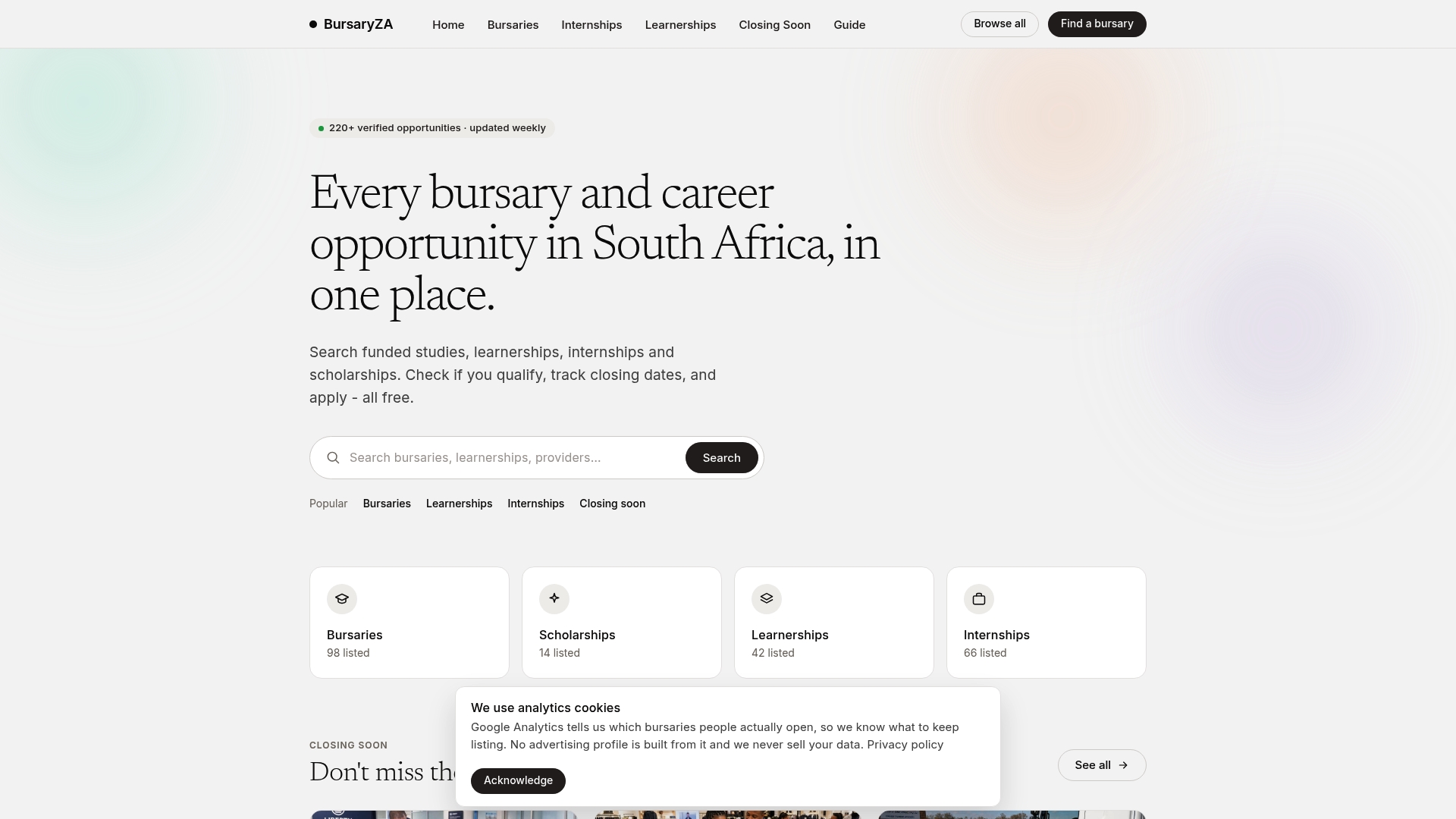
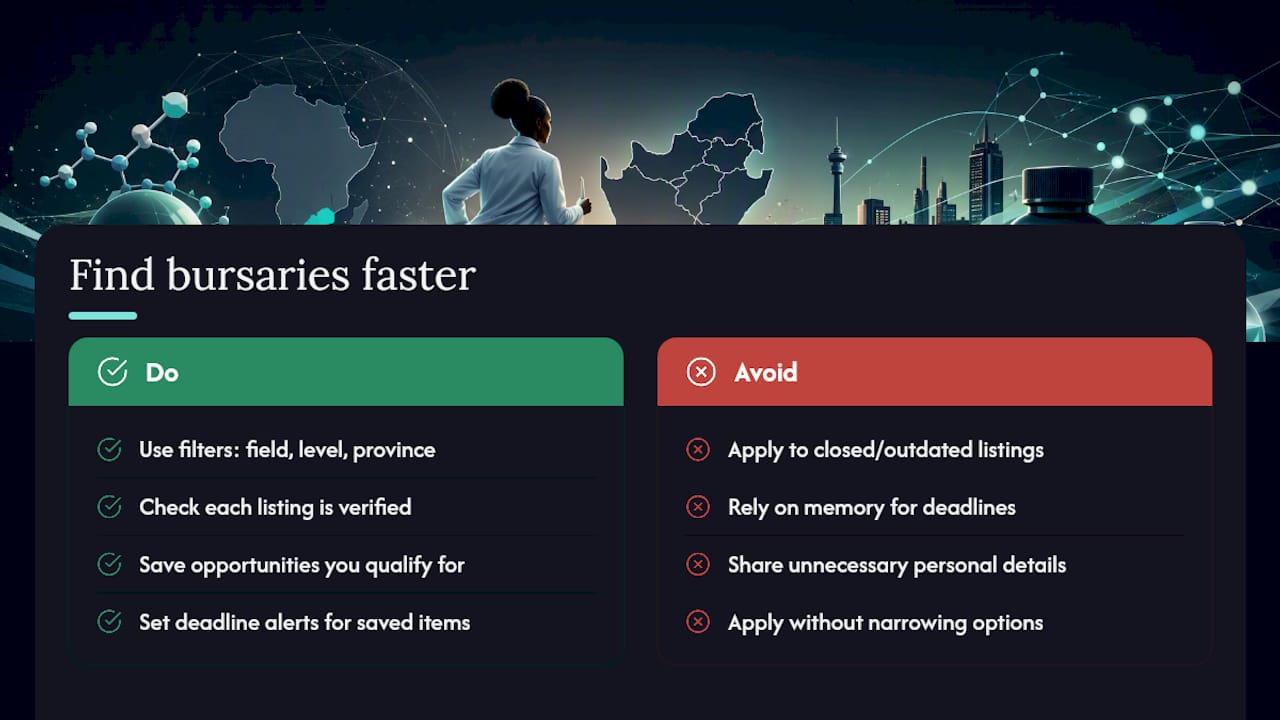
You can filter opportunities by field of study, study level, and province, which matters if you’re a BPharm student in Gauteng or the Western Cape trying to narrow a long list down to the five bursaries you actually qualify for. Save the ones you’re eligible for and set deadline alerts so you’re not relying on memory during exam season, when bursary deadlines have a habit of slipping your mind entirely. Your details stay private and are never shared beyond what’s needed to track your saved opportunities.
Head to the pharmacy bursaries and opportunities listing to see what’s currently open, or check the health sciences and medicine bursary hub if you want to compare pharmacy funding against related health-field awards before you commit your application hours.
Where to Verify Official Pharmacy Bursary Details
Cross-checking against a provider’s own page before you submit anything is the single habit that prevents most last-minute application disasters. Bursary terms change year to year, and a blog post from two years ago won’t reflect this year’s age limit or required documents.
Check these sources directly before finalizing any application:
- The Pharmaceutical Society of South Africa’s FPE bursary page for current undergraduate and postgraduate eligibility rules
- Aspen Pharmacare’s bursary applications page for eligible institutions and current coverage details
- Your own university’s financial aid office for institution-specific awards that rarely appear in national bursary roundups
Official pages update faster than any third-party guide, including this one, so treat them as the final word on dates and document requirements every single time.