Mining Learnerships in South Africa: How to Apply and Qualify
Yes, registered mining learnerships are offered across South Africa right now, and applying costs nothing. Check the MQA bursaries and learnership listings, the DMPR learning opportunities page, and company career portals, then apply through the official link with your ID, certified documents, CV, and proof of residence ready to go.
TL;DR:
- Most mining learnerships require applicants to be between 18 and 35 years old and from local communities near the mine, often requiring proof of residence.
- Applications are only considered when submitted through official employer portals or government sites with clear closing dates, reference numbers, and no application fees.
- Be prepared with certified copies of your ID and academic certificates, a detailed CV, proof of residence, and relevant certificates before postings open.
- After application, candidates face health screenings, psychometric tests, and interviews; booking a fitness check beforehand improves chances of passing medical assessments.
- Using verified platforms like Bursaryza streamlines the search process, but each application must be submitted individually for each posting with all required documents in order.
Table of Contents
- Where to Find Genuine Mining Learnerships in South Africa
- Who Qualifies for a Mining Learnership?
- What Documents Do You Need, and When Should You Apply?
- What Happens After You Apply: Medicals, Tests, and Qualifications
- How BursaryZA Helps You Apply With Confidence
- What Actually Determines Whether You Get Shortlisted
- Find Verified Mining Learnerships Faster With BursaryZA
- Sources
Where to Find Genuine Mining Learnerships in South Africa
Start with the two bodies that oversee training in this sector. The Mining Qualifications Authority registers learnerships and runs bursary schemes for the mining and minerals industry, which makes its bursary and learnership listings a reliable first stop because anything posted there has already passed through sector oversight. The DMPR’s learning-opportunities page is the second, publishing government and industry training notices you won’t always find on a private job board.
From there, go straight to employer career portals. Gold Fields advertises Learner Miner positions through its own careers site and asks for CVs and supporting documents, never a fee. Sibanye-Stillwater runs learnerships through its in-house Academy, and Implats posts its Learner Miner programme through its own careers page too.
A valid posting always has these markers:
- A closing date stated clearly, not “ongoing”
- A reference number tied to that specific opening
- An official company domain or government address, not a generic email service
- No mention of an application, registration, or “processing” fee anywhere
Third-party sites like YouthSpace often republish postings such as the South Deep Learner Miner Learnership, which is fine for spotting opportunities, but always confirm the details on the employer’s own page before you submit anything.
Who Qualifies for a Mining Learnership?
Most postings set the bar at Grade 10 to Grade 12, roughly NQF levels 1 through 4, though technical streams like fitting or electrical often want an N1 to N3 certificate from a technical college on top of that. Read the qualification line on each posting carefully. Some ask for “Grade 12 with Mathematics and Physical Science,” others simply want “Grade 10 minimum with mechanical aptitude.”
Host-community rules show up often and matter. Gold Fields and similar employers give preference to applicants from communities near the mine, tied to transformation commitments they’ve made locally. That usually means you’ll need a proof of residence, sometimes a letter from a local councilor or traditional authority confirming where you live.
Other things to watch for in the fine print:
- Age limits, often 18 to 35
- South African citizenship or a valid work permit
- No criminal record for roles near explosives or security-sensitive areas
- Physical fitness suited to underground or open-pit conditions
If a posting doesn’t specify residency, don’t assume it’s open nationally. Email the contact listed and ask directly.
What Documents Do You Need, and When Should You Apply?
Prepare your paperwork before postings even open, because the difference between a shortlisted candidate and a missed deadline is often just readiness. Here’s the order to work through:
- Certified copy of your ID (not older than three months in most cases)
- Certified copy of your Grade 12 certificate or latest academic transcript
- Updated CV listing any prior mine exposure, training, or relevant experience
- Proof of residence, especially if the posting states a host-community preference
- Any previous mining-related certificates or letters of experience
- A reference number copied exactly as it appears on the posting
Submit only through the official portal or the recruitment email listed on that specific posting, and use the exact reference number every time. Screenshot or save a confirmation of submission. Large recruitment drives frequently split into separate postings with different closing dates and reference numbers for the same intake, so apply to each one individually rather than assuming one application covers them all.
Pro Tip: Set a reminder to check your shortlisted employers’ career pages weekly during recruitment season. Mining companies sometimes post several intakes a year with only days between opening and closing.
Never pay to apply. Legitimate learnerships in mining are free, and any request for an “administration fee” or “processing charge” is a scam, full stop.
What Happens After You Apply: Medicals, Tests, and Qualifications
Getting shortlisted is only step one. Mining employers run risk based medical assessments, and Heat Tolerance Screening is standard for underground roles because working temperatures underground can disqualify people who are otherwise perfectly capable on paper. This single screening step eliminates candidates more often than academic shortfalls do, according to how Gold Fields structures its Learner Miner selection process.
Expect these hurdles after the initial shortlist:
- A psychometric assessment testing reasoning and mechanical aptitude
- SAPS clearance for roles touching explosives or security areas
- A panel interview, often including a practical or site-based component
- Final occupational health clearance before your start date
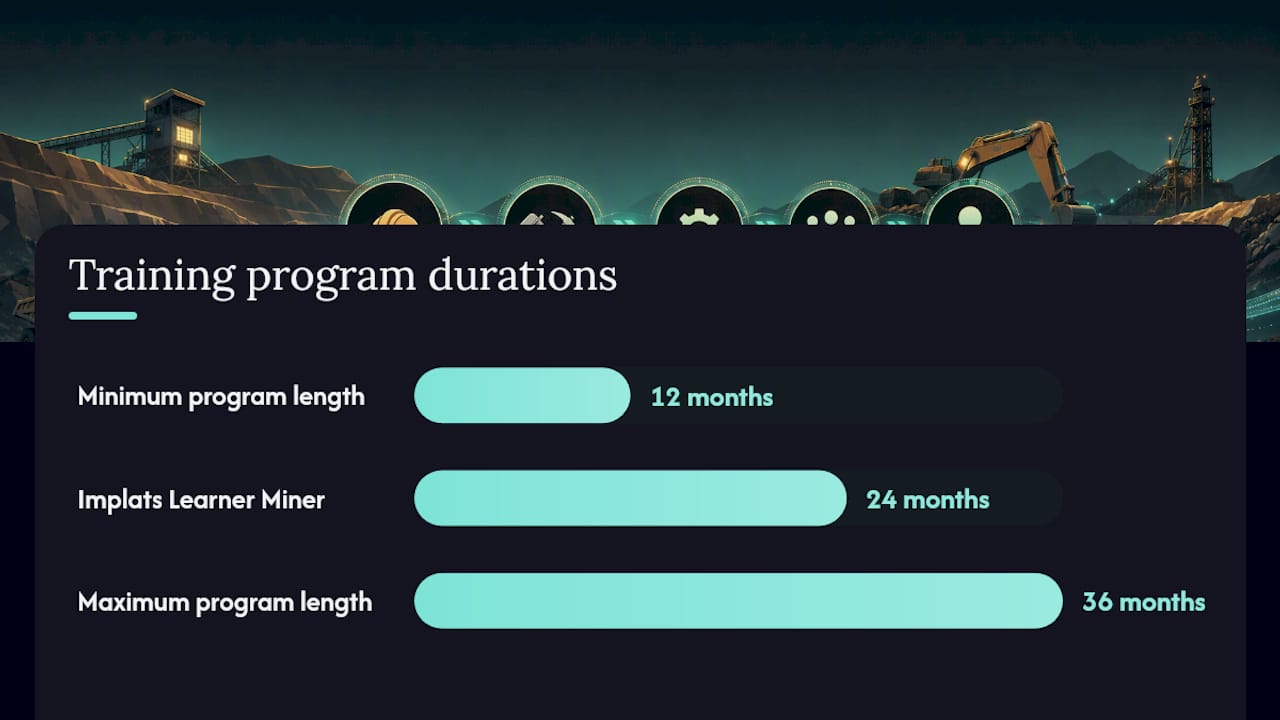
Programs typically run 12 to 36 months depending on the qualification stream. Implats’ Learner Miner programme runs around 24 months and leads to a recognized occupational qualification, sometimes including a Blasting Certificate for roles that require one. If you’re worried about medical disqualification, book a general fitness check with a clinic before you apply so any issue surfaces while you still have time to address it.
How BursaryZA Helps You Apply With Confidence
Chasing down five different employer portals and two government pages every week isn’t a realistic habit for most people, which is exactly why centralizing verified listings saves real time. Bursaryza checks each mining learnership listing against the employer’s own posting before it goes live, so you’re not relying on a screenshot from a forwarded WhatsApp message.
Here’s how to put that to work:
- Filter the learnerships page by field to isolate mining and related technical streams
- Set an alert so you’re notified before a closing date, not after
- Copy the reference number and apply directly through the official link listed, never a third-party form
- Check the engineering bursaries page too, since many mining employers fund engineering study alongside their learnerships
Using a verified aggregator like this cuts down the time it takes to find a legitimate posting, but you still confirm every detail on the employer’s own page before submitting anything.
What Actually Determines Whether You Get Shortlisted
Most advice on mining learnerships focuses almost entirely on academic requirements, and that’s the part candidates worry about least productively. Grade 12 with maths and science gets your application read. It does not get you hired. What actually separates shortlisted candidates from the rest is whether they pass the Heat Tolerance Screening and psychometric assessment, and almost nobody prepares for those in advance.
If you’re serious about a learnerships in mining, book a basic fitness and cardiovascular check before you even apply. It costs little and tells you early whether HTS is likely to be a problem, instead of finding out after weeks of waiting for a response.

The other blind spot is treating a single application as sufficient. Large intakes split into multiple postings with separate reference numbers for the same round of hiring. Apply to every relevant one you find, because employers don’t cross-reference your name across postings for you.
Where the industry gets this right is transparency. Legitimate learnerships publish closing dates, reference numbers, and requirements openly, and they never charge a fee. Treat any deviation from that as your signal to walk away.
— Nkosi
Find Verified Mining Learnerships Faster With BursaryZA
Bursaryza is the practical shortcut for South African job seekers tired of chasing scattered postings across a dozen company websites. Instead of manually checking MQA, DMPR, and five separate employer portals every week, you get verified listings with eligibility checklists and direct application links in one place, so you spend your time preparing documents instead of hunting for openings.
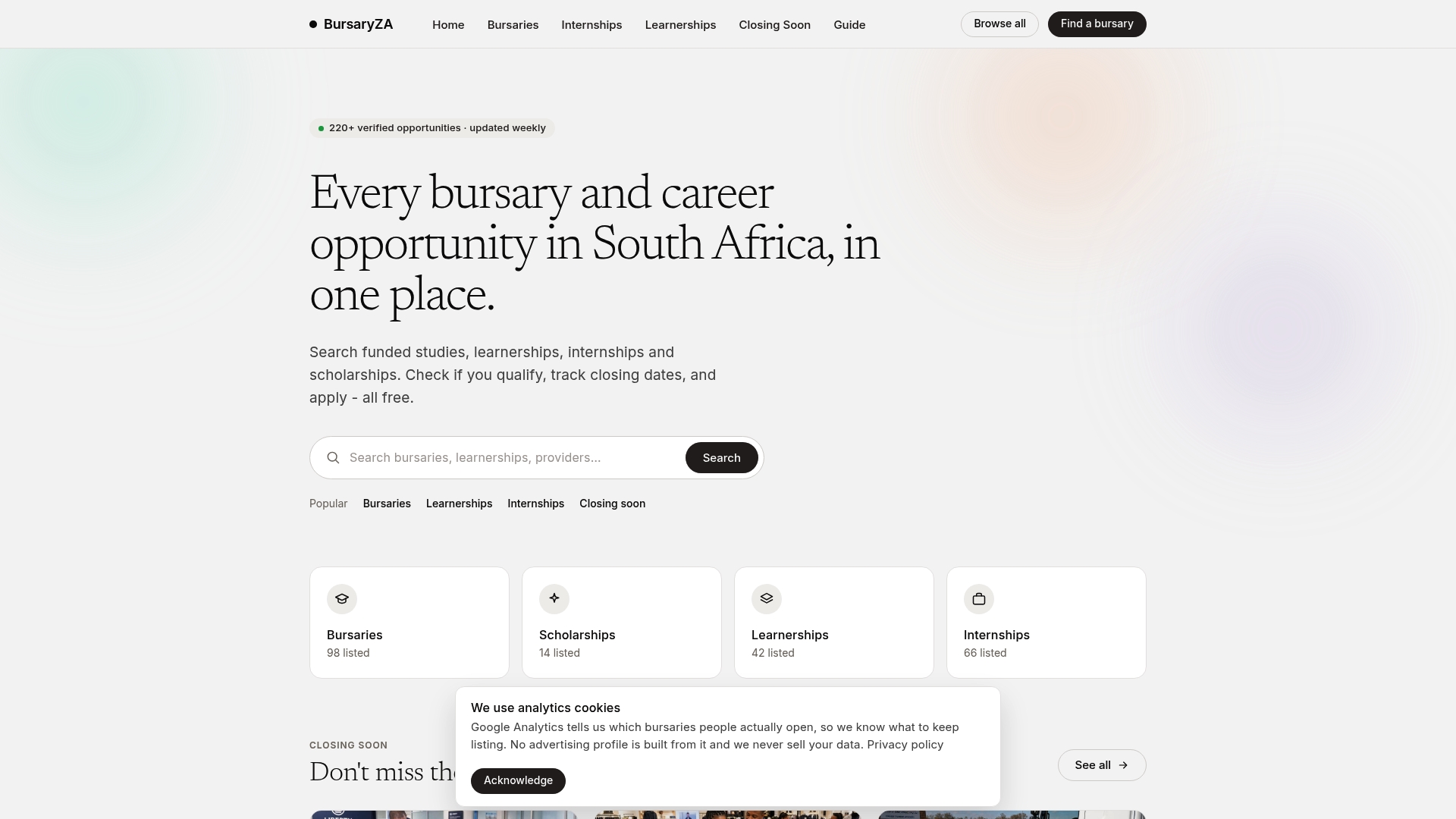
Head to the learnerships page, filter for mining and related technical fields, and subscribe for alerts so you never miss a closing date again. If you’re also weighing funded study options to pair with a learnership, browse current bursaries or check province-specific listings on the Gauteng opportunities page if host-community preference applies to you. For background on how occupational certifications factor into long-term career progression, GetVoucher’s certification guide is a useful read once you’re through the door. Start with the mining learnerships listing today and get your application in before the next closing date passes.
Sources
- Gold Fields careers — Learner Miner posting
- MQA bursaries and learnership listings
- Sibanye-Stillwater careers — South Africa
- DMPR learning opportunities
- Implats — Learner Miner job posting