Students: Practice 6 to 10 STAR Answers for Internship Interviews

Practice the most common internship interview questions out loud, and lean on the STAR method for anything behavioral. Pick 6 to 10 questions from the list below and rehearse them tonight. This guide walks through the exact questions you’ll likely face, how to structure your answers, what to ask in return, and how to handle the moment your mind goes blank.
TL;DR:
- Tailor each answer to the specific internship role and use the STAR method to effectively showcase your experience and problem-solving skills.
- Practice 6 to 10 key questions aloud, focusing on delivering a concise, personal narrative with measurable outcomes to make a strong impression.
- Prepare 2 to 3 insightful questions about the team or projects to demonstrate genuine interest and curiosity during the interview.
- Verify your virtual setup an hour before, use notes discreetly, and look directly at the camera to maintain good eye contact in remote interviews.
- Follow up promptly with a personalized thank-you email referencing something specific from the conversation to stand out and reinforce your interest.
Table of Contents
- Quick Takeaways and Day-of Checklist
- Common Internship Interview Questions and How to Answer Them
- How to Structure a Strong Behavioral Answer (STAR Method)
- How to Prepare for an Internship Interview
- Smart Questions to Ask Your Interviewer
- What Employers Actually Look for in Interns
- How to Handle Unexpected or Difficult Questions
- Tips for Virtual or Remote Internship Interviews
- A Straight Answer from Someone Who’s Seen Both Sides of This
- Find Verified Internship Listings on BursaryZA
- Sources
Quick Takeaways and Day-of Checklist
You don’t need to memorize fifty answers. You need five habits done well.
- Use STAR (Situation, Task, Action, Result) for anything behavioral, not just “tell me about a time.”
- Tailor every answer to the actual job description, not a generic internship pitch.
- Prepare 2 to 3 questions to ask the interviewer. Silence at the end reads as disinterest.
- Show curiosity by referencing something specific about the team or project, not just the company name.
- Send a thank-you email within 24 hours that references something specific from the conversation.
Preparation guides consistently recommend narrowing your focus to 6 to 10 rehearsed answers rather than trying to script a response for every possible question. That’s a manageable number to actually practice out loud, twice.
Day-of checklist: confirm arrival time or test your video link an hour early, lay out your outfit the night before, print two copies of your resume, bring a pen and small notebook, and have the interviewer’s contact info handy in case you’re running late. If you can, run a five-minute mock interview with a friend that same morning. It won’t feel like enough. It usually is.
Common Internship Interview Questions and How to Answer Them
Most internship interviews pull from the same core set of prompts, just reworded. Once you recognize the pattern, you stop being surprised by any of them.
1. Tell me about yourself. What they’re really asking: can you summarize your background in under two minutes without rambling?
- Lead with your major and year, not your hometown.
- Connect one or two experiences directly to the role you’re interviewing for.
- End on why you’re here, not just where you’ve been. Sample blueprint: “I’m a junior studying [major] with a focus on [specific area]. I got interested in this field through [class or project], and that led me to [relevant experience]. Now I’m looking for a role like this one where I can apply that.”
2. Why are you interested in this internship? Interviewers want proof you researched the company, not a template answer that could apply to any employer.
- Name a specific project, product, or value the company is known for.
- Connect it to something in your own experience or goals.
- Avoid generic lines like “I want to gain experience.” Starter sentence: “I’ve been following [specific company initiative or product], and it lines up with the kind of work I want to do because…”
3. What are your career goals? This checks whether the internship fits into a real plan, not just a resume line.
- Keep it realistic and specific to the industry, not vague (“I want to be successful”).
- Mention how this internship is a logical next step.
- It’s fine to admit you’re still exploring, as long as you show direction.
4. What skills make you a good fit for this role? Interviewers are matching your answer against the job description in their head.
- Pick 2 to 3 skills, not five, and back each with a quick example.
- Mirror language from the actual posting where it’s true.
- Skip soft, unprovable claims like “I’m a hard worker” with nothing attached.
5. Tell me about relevant coursework or a project. This is a proxy for “can you actually do the technical parts of this job?”
- Pick the project closest to the internship’s actual responsibilities.
- Mention a tool, method, or outcome, not just the topic.
- Quantify results where you can (grade, adoption, time saved).
6. Describe a time you worked on a team. (STAR-applicable) They’re testing collaboration under real conditions, not just group project memories.
- Set up the team’s size and goal briefly.
- Spend most of your time on your specific action.
- Close with a measurable result: grade, deadline hit, output shipped.
7. Describe a challenge you overcame. (STAR-applicable) This reveals problem-solving instinct and resilience, both hard to fake.
- Choose a real obstacle, not a manufactured one.
- Focus on what you personally changed or decided.
- State the outcome even if it was partial or delayed.
8. Tell me about a time you showed leadership. (STAR-applicable) Leadership doesn’t require a title. Interviewers know most students haven’t managed anyone.
- Informal leadership counts: organizing a study group, running a club event.
- Emphasize the decision you made under pressure or ambiguity.
- Tie the result back to the group, not just your own performance.
9. What are your strengths and weaknesses? This tests self-awareness more than it tests the actual weakness you name.
- Pick a real weakness with a specific fix in progress.
- Avoid the classic dodge (“I’m a perfectionist”) as it often reads as rehearsed.
- Keep the strength relevant to the role, backed by one example.
10. How do you prioritize your work? Interviewers want a system, not a personality trait.
- Name an actual method (calendar blocking, task lists, deadlines first).
- Give one concrete example of juggling school, work, and a deadline.
- Mention how you handle it when priorities shift last minute.
11. Role-specific technical or situational questions. These vary by field, from “walk me through this spreadsheet formula” to “how would you handle an unhappy client.” Research the job description closely and map it to coursework, certifications, or tools you’ve used, even at a basic level.
12. Where do you see yourself in a few years? This is a softer version of the career goals question, usually checking for realistic ambition, not a five-year master plan.
13. Do you have any questions for us? Never say no. This is covered in detail further down, but treat it as mandatory, not optional.
Pro Tip: Write your STAR answers on index cards using just three or four bullet words per component. Reading a full script kills your delivery, but a few trigger words keep you on track.
How to Structure a Strong Behavioral Answer (STAR Method)
Behavioral questions (“tell me about a time…”) reward structure over eloquence. The STAR method breaks your answer into four parts, each with its own job:
- Situation (10 to 15 seconds): the context, briefly. Class project, part-time job, club role.
- Task (10 to 15 seconds): what you specifically needed to accomplish.
- Action (30 to 45 seconds): what you actually did, step by step. This is the longest part.
- Result (15 to 20 seconds): the outcome, ideally with a number attached.
Example 1, teamwork: “Our marketing class was assigned a client project with a two-week deadline (Situation). I was responsible for the social media portion, but two teammates fell behind on research (Task). I restructured our timeline, took on part of the research myself, and set daily fifteen-minute check-ins (Action). We submitted on time and got the second-highest grade in the section (Result).”
Example 2, overcoming a challenge: “I was managing our student club’s budget when we lost a major sponsor three weeks before an event (Situation). I needed to close a $400 gap without cutting the event (Task). I pitched two smaller local businesses and negotiated in-kind donations instead of cash (Action). We covered the full gap and the event ran as planned (Result).”
For a 30 to 60 second answer, compress Situation and Task into one sentence and spend most of your time on Action and Result. For a fuller two-minute answer, add one detail about what you’d do differently.
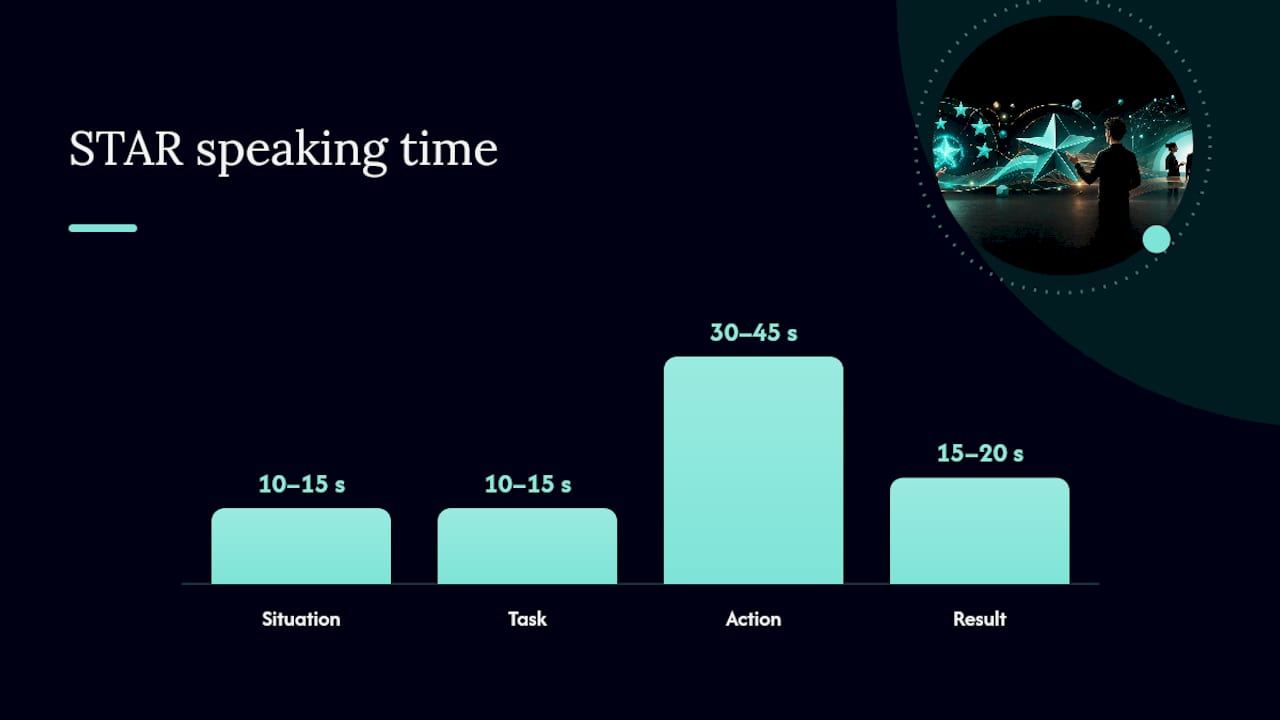
Pro Tip: Interviewers remember the Result. If you’re running short on time, cut detail from the Situation, never from the Result.
How to Prepare for an Internship Interview
Preparation works best on a timeline, not the night before.
- One week out: Research the company’s recent news, mission, and the specific team you’d join. Map the job description line by line against 4 to 6 examples from coursework, jobs, or volunteer work. Draft 6 to 10 STAR stories and trim your resume to one page.
- 48 to 24 hours before: Run a full mock interview with a friend, family member, or a recording app on your phone. Confirm your outfit is ready. If it’s a virtual interview, test your camera, microphone, and internet connection now, not five minutes before.
- Practice method: Recording yourself and watching it back is uncomfortable and extremely effective. It exposes filler words (“um,” “like”) faster than any other method. A peer mock interview works nearly as well if recording feels too awkward.
- Notecards: Fine for a few trigger words per STAR story. Never write full sentences. Reading kills eye contact and makes you sound scripted.
- After the interview: Send a thank-you email within 24 hours. Reference one specific thing discussed, restate your interest, and keep it under 150 words.
Smart Questions to Ask Your Interviewer
The end of the interview is your chance to gather real information, not just a formality.
- “What does a typical week look like for someone in this role?” reveals day-to-day reality behind the job posting.
- “How is success measured for interns here?” tells you what the company will actually evaluate you on.
- “What kind of mentorship or feedback structure do interns get?” surfaces whether you’ll actually learn something.
- “What’s a project a recent intern worked on that made an impact?” shows you the ceiling for this role.
- “Is there a path from this internship to a full-time offer?” signals long-term intent, and interviewers usually respect the directness.
- “What do you enjoy most about working here?” is a low-risk question that often gets an honest, revealing answer.
Close with: “What are the next steps in the process, and when should I expect to hear back?” It’s practical, and it leaves the conversation on a forward-looking note instead of trailing off.
What Employers Actually Look for in Interns
Beyond the specific answer content, interviewers are scanning for a handful of underlying traits.
- Learnability: can you pick up new tools or concepts quickly? Show it with “I learned [tool] in [course] and applied it to [project].”
- Reliability: did you show up, meet deadlines, follow through? Concrete examples beat claims every time.
- Teamwork and communication: do you explain ideas clearly and listen well? Reference a specific collaboration, not a general statement.
- Relevant foundational skills: basic technical or subject knowledge tied to the role.
- Attitude: curiosity and coachability read louder than confidence alone.
Red flags to avoid: bad-mouthing a previous employer or professor, vague non-answers to direct questions, and claiming skills you can’t back up if asked a single follow-up.
How to Handle Unexpected or Difficult Questions
Every internship interview eventually throws something you didn’t prep for, and how you handle that moment often matters more than the answer itself.
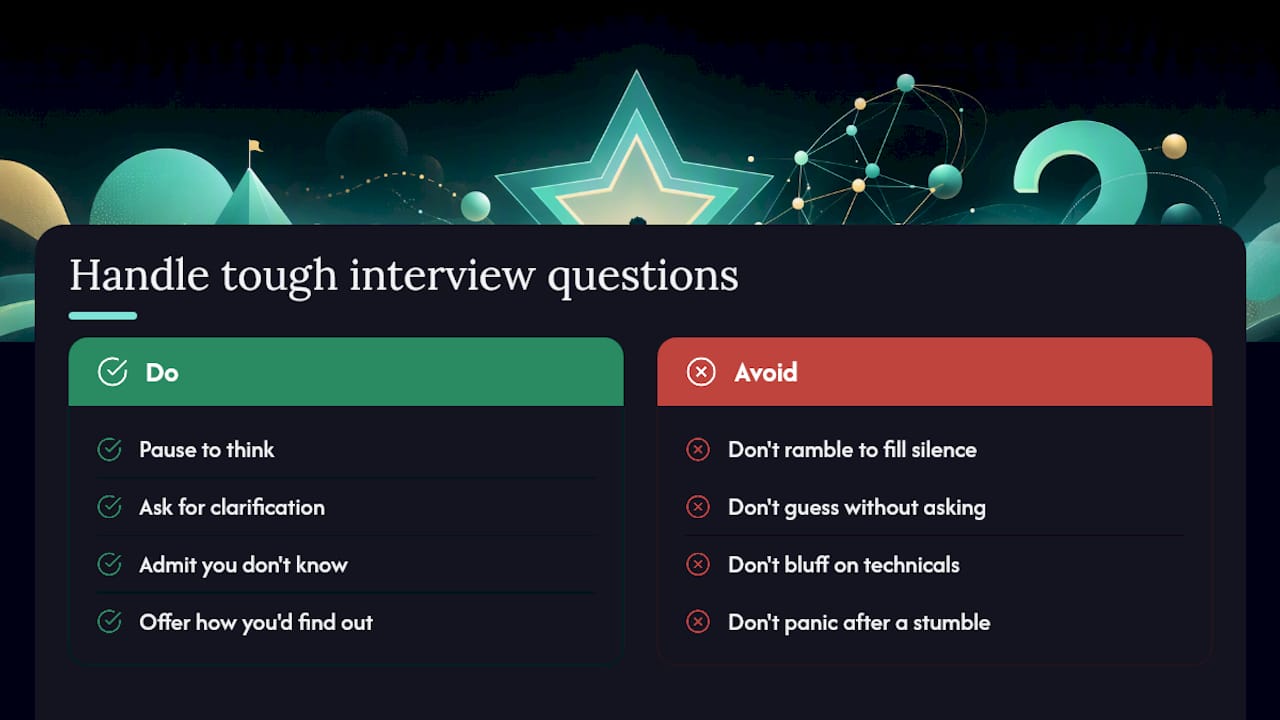
First, it’s fine to pause. A three-second silence feels endless to you and completely normal to the interviewer. Use it to think, rather than filling the space with “um” while you scramble.
If the question is unclear, ask for clarification instead of guessing. “Just to make sure I understand, are you asking about…” buys you time and shows you listen carefully before responding.
If you genuinely don’t know something technical, say so directly, then pivot to how you’d find the answer. “I haven’t worked with that specific tool, but I’ve picked up similar software quickly in the past by…” is far stronger than bluffing, which interviewers usually spot anyway.
For curveball or oddball questions (“what’s your favorite failure?”), treat them like disguised behavioral questions. They’re still fishing for self-awareness or resilience, just with unusual framing. Answer the intent behind the question, not the literal words.
If you stumble mid-answer, it’s fine to say “let me restart that” and give a cleaner version. Interviewers remember composure far more than a single imperfect sentence.
Tips for Virtual or Remote Internship Interviews
Remote interviews carry their own failure points that have nothing to do with your actual answers.
Test your setup at least an hour beforehand: camera angle, microphone, lighting, and internet connection. A tech check the morning of is not enough time to fix a broken webcam or a dead router.
Choose a plain, quiet background, or use a simple blurred virtual background if your space is cluttered. Sit facing a light source rather than a window behind you, which turns you into a silhouette.
Keep your notes and resume open on a second screen or printed nearby, out of camera view, so you’re not obviously reading. Close every other tab and app that might ping or pop up mid-call.
Look at the camera lens, not the interviewer’s video window, when you’re speaking. It feels unnatural at first, but it’s the closest thing to eye contact you can offer remotely.
Have a backup plan. If the video platform crashes, know the phone number or backup link in advance, and mention it upfront: “If we lose connection, I’ll call this number right away.”
A Straight Answer from Someone Who’s Seen Both Sides of This
Most students over-prepare answers and under-prepare follow-up. Practicing STAR twice out loud beats reading it silently ten times. The habit that actually separates candidates isn’t the perfect answer. It’s sending a specific, personal thank-you email while everyone else sends nothing or a generic template. If you want a next step after you nail the interview, internship listings on a reputable platform are a solid place to start hunting for the roles worth this much prep.
— Nkosi
Find Verified Internship Listings on BursaryZA
BursaryZA is the alternative to scrolling scattered job boards and unverified listings for students who want internship openings that are actually current and legitimate. Every listing on the platform comes with an eligibility checklist, a closing date, and a direct application link, so you’re not guessing whether a posting is still open or whether you even qualify before you invest hours prepping for it.
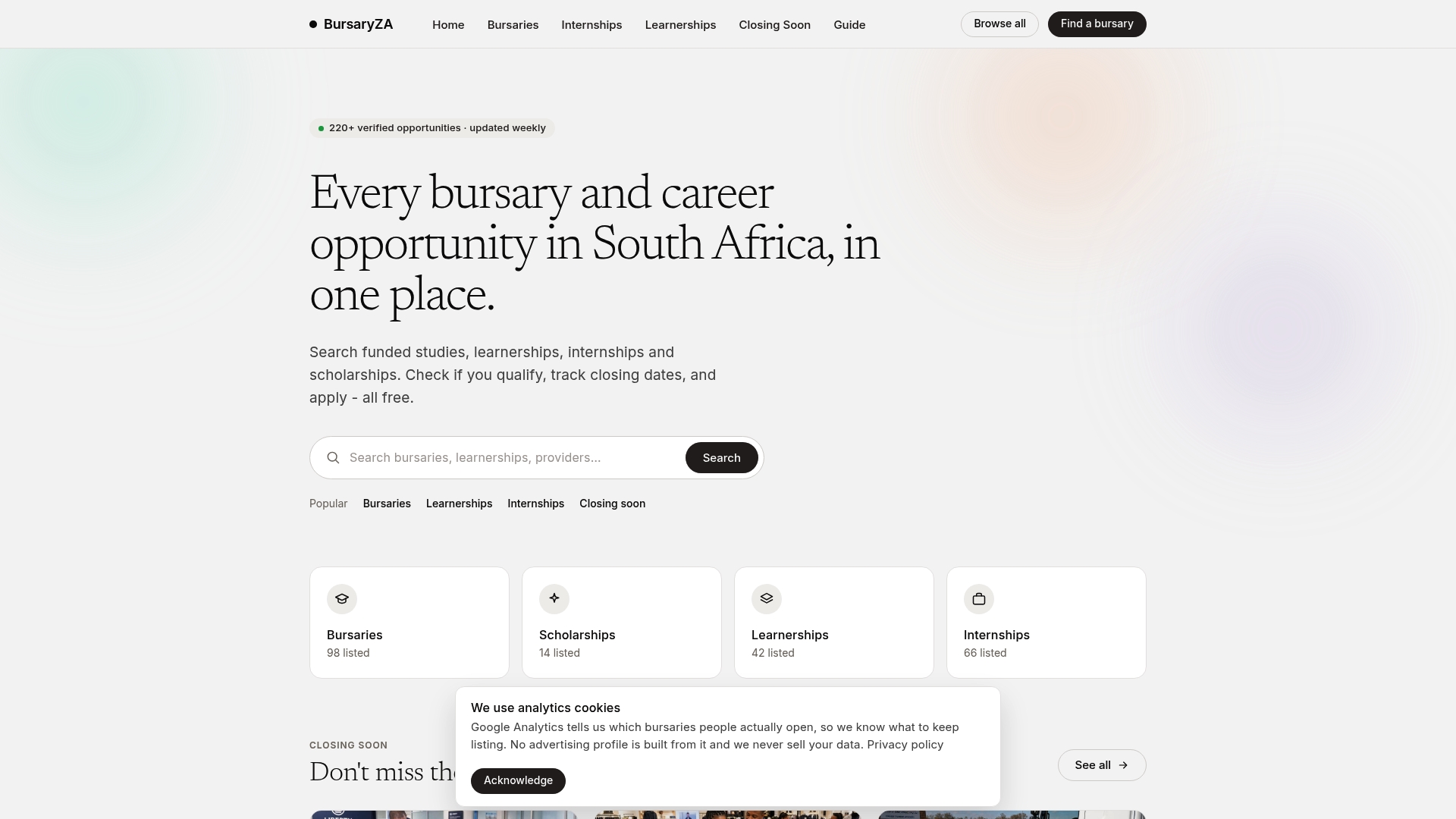
If you’re ready to put this preparation to use, browse current internship openings to see roles like the Vox Telecommunications technical internship, or check the bursaries page if you’re also weighing funding options alongside work experience. Start with one listing, read its eligibility checklist against your own profile, and apply before the closing date passes.
Sources
- 7 Internship Interview Questions and How to Answer Them
- 30+ Questions You’ll Be Asked in an Internship Interview