5 Filters to Pick a Bursary in South Africa and Avoid Work Back Clauses

The right bursary comes down to three things: you meet the eligibility and financial-need bar, it funds a field you’re actually studying, and you can live with its obligations. Start by checking your eligibility and the closing date on a verified bursary listing today, since deadlines close faster than most applicants expect. If you qualify for NSFAS, treat it as your funding floor, not your final answer.
TL;DR:
- Prioritize bursaries with higher competition like NSFAS, but treat them as baseline funding while applying to other generous options with work-back obligations.
- Focus on bursaries that match your eligibility, study field, and household income thresholds, especially when deadlines are approaching quickly.
- Prepare certified documents and craft tailored motivation letters early, avoiding generic applications that reduce your chances of success.
- Verify bursary legitimacy by checking official websites, avoiding offers that request fees or seem too good to be true.
- Use dedicated platforms to filter opportunities by eligibility, location, and closing dates to apply efficiently and increase your chances of securing funding.
Table of Contents
- How Do You Compare and Prioritize Bursaries?
- What Types of Bursaries Should You Know About?
- What Documents Do You Need and When Should You Apply?
- How Do You Write a Motivation Letter and CV That Get Noticed?
- How Do You Verify a Bursary and Spot Scams?
- How Does BursaryZA’s Verification and Matcher Help You Shortlist Faster?
- Lessons From Watching Thousands of Bursary Applications
- Ready to Search Verified Bursaries?
- Where to Verify Eligibility Rules and Deadlines
- Sources
How Do You Compare and Prioritize Bursaries?
Ranking bursaries isn’t about applying to the most funders. It’s about applying to the right ones in the right order, so your time goes toward applications you can actually win.
Work through these five filters before you submit anything:
- Eligibility match first. Confirm citizenship, study level, field of study, and academic minimums before you touch the application. NSFAS, for instance, sets household income thresholds at R350,000 a year for most applicants and R600,000 for applicants with disabilities, so check where your household falls before assuming you qualify.
- Coverage versus gaps. Some bursaries pay tuition only. Others cover accommodation, a monthly allowance, and books. Know exactly what’s left for you or your family to fund.
- Obligations and exclusivity. Read the fine print on work-back clauses, repayment triggers, and whether accepting one offer blocks you from accepting another.
- Realistic competitiveness. A bursary with 3,000 applicants and 15 slots is a different bet than one with 200 applicants and 40 slots. Weigh your academic record and fit honestly.
- Deadline urgency. Sort your shortlist by closing date, not by how appealing the funder sounds.
Selection administrators typically judge applications on academic potential, financial need, and how well your intended program matches the bursary’s mandate, so your shortlist should mirror those same three filters before you write a single word of your application.
Pro Tip: Build a simple spreadsheet with columns for closing date, coverage, obligations, and your estimated chance of success. Sort by deadline weekly. It takes ten minutes and prevents the single biggest mistake: missing a strong-fit bursary because you were busy chasing a long-shot one.
What Types of Bursaries Should You Know About?
Not all bursaries work the same way, and picking the wrong type for your circumstances can cost you more than a rejection. It can cost you years of work-back commitment you didn’t plan for.
- NSFAS functions as South Africa’s largest need-based scheme, covering tuition, accommodation, and a living allowance for qualifying students. Most guides recommend treating it as your baseline funding while still applying elsewhere, since it doesn’t require repayment or bonding.
- Corporate bursaries (from mining houses, banks, engineering firms) tend to offer fuller coverage, including allowances and sometimes vacation work, but almost always come with a work-back period after graduation.
- Government and departmental bursaries, such as Funza Lushaka for teaching students, are typically tied to a public-sector placement once you qualify. That’s a career decision as much as a funding one.
- Private and NGO bursaries are usually smaller and more niche, targeting specific communities, disciplines, or personal circumstances, and they rarely carry bonding conditions.
The trade-off is simple to state and harder to live with: bigger coverage almost always means bigger obligation. Corporate bursaries often include employment bonding periods, whereas private trusts usually do not, so weigh the money against the career path before you sign anything.
What Documents Do You Need and When Should You Apply?
Bursary administrators reject a surprising number of otherwise-strong applications simply because a document is missing or improperly certified. Prepare these before applications open, not after:
- Certified copy of your ID (certification must be recent, usually within three months at a police station or Commissioner of Oaths).
- Matric certificate or current academic transcript.
- Proof of household income, such as payslips or a SASSA letter, since financial need is verified against actual documentation.
- Proof of residence and your university acceptance or registration letter.
- A tailored CV and motivation letter, ready to adapt per funder.
Most bursary windows open between September and January for the following academic year, though some corporate programs open earlier and close by June. Applying in the first two weeks a window opens beats applying in the final week almost every time, since some funders process on a rolling basis.
Pro Tip: Keep every certified document scanned in one digital folder labeled by year. Recertifying paperwork every time a new bursary opens wastes weeks you don’t have during peak application season.
How Do You Write a Motivation Letter and CV That Get Noticed?
A generic motivation letter is the fastest way to lose a spot you were otherwise qualified for. Funders read hundreds of these, and copy-paste submissions are easy to spot.
Structure your letter around four moves: open with who you are and what you’re studying, state specifically why this course and this funder (not “I need money for school”), explain your financial circumstances honestly, and close with what you intend to do with the qualification. Specificity beats emotion every time.
Your CV should stay under two pages and lead with academic achievements, relevant subjects or modules, and any leadership or volunteer work, formatted cleanly rather than densely. Incomplete or vague documentation remains one of the most common reasons bursary applications get disqualified, so treat this document as seriously as the letter itself.
A few more moves that raise your odds:
- Brief your referees in advance. Tell them which bursary, what it funds, and what evidence (academic, character, financial) they should highlight.
- If shortlisted for an interview, research the funder’s business or mandate beforehand and prepare two or three specific questions of your own.
- Send a short thank-you follow-up after interviews. It’s a small gesture that funders notice.
- Never reuse one motivation letter word-for-word across five applications. Change the opening paragraph at minimum.
How Do You Verify a Bursary and Spot Scams?
Fraudulent listings and outdated bursary pages waste applicants’ time every year, and some go further, asking for money upfront. Verify before you apply, not after you’ve handed over documents.
Check that the funder has an official domain, a working contact number, and a published application portal, not just a social media post or forwarded email. Using aggregators that verify listings and post confirmation checklists cuts down significantly on time wasted chasing dead links or fake offers.
Red flags worth memorizing:
- Any request for an “application fee,” processing payment, or payment through a third-party agent.
- Offers that sound too generous relative to the funder’s size or public profile.
- Sponsor details that can’t be confirmed through an independent search.
On the terms side, read work-back and repayment clauses carefully; and if you already hold NSFAS funding, you’re required to declare any other funding you receive, since NSFAS rules require disclosure of additional bursaries or scholarships. If a listing looks doubtful, your university’s financial aid office or a verified bursary platform can confirm legitimacy before you submit anything.
How Does BursaryZA’s Verification and Matcher Help You Shortlist Faster?
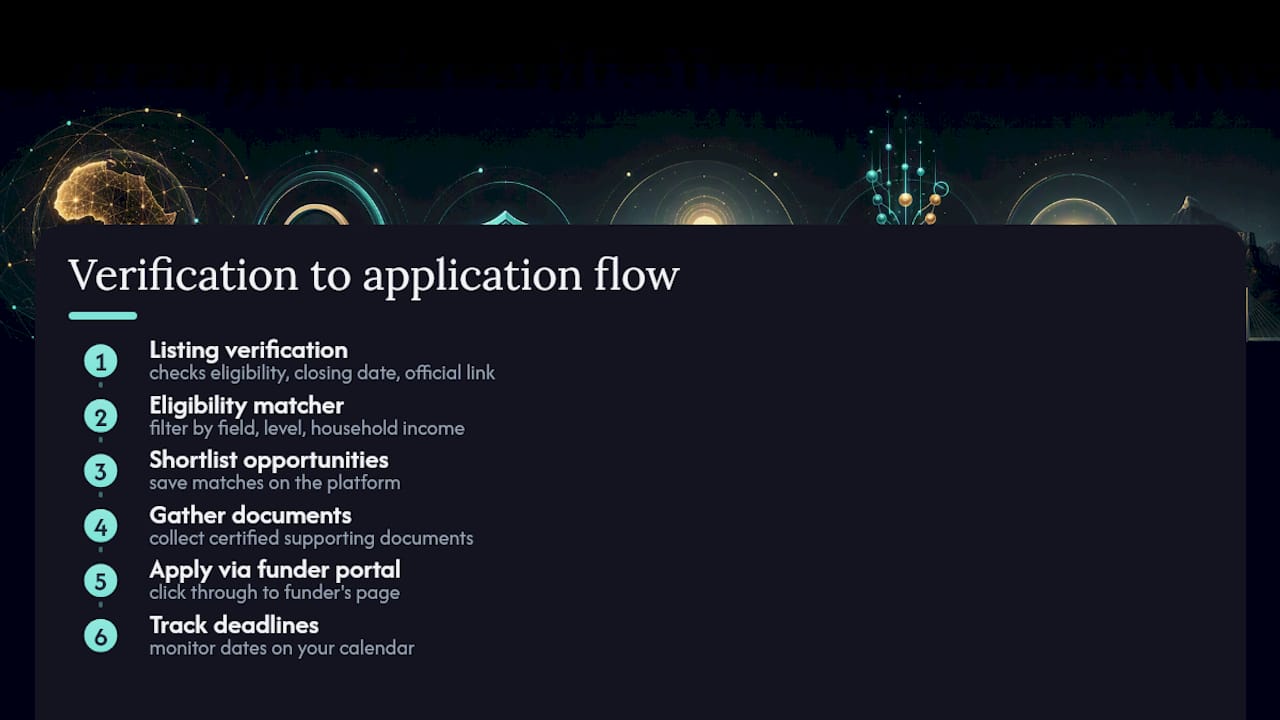
The platform checks each listing for eligibility criteria, an active closing date, and a working official application link before it goes live, so you’re not applying to dead or outdated postings. The eligibility matcher lets you filter by field of study, qualification level, and household income, narrowing a national database down to opportunities you can genuinely qualify for.
The practical workflow: shortlist on the platform, gather your certified documents, apply directly through the funder’s own portal, then track deadlines on your calendar. Clicking through takes you to the funder’s official application page. What happens with your information from there follows that funder’s own privacy terms, not BursaryZA’s.
Lessons From Watching Thousands of Bursary Applications
The applicants who win funding aren’t always the strongest academically. They’re the ones who apply early, certify their documents before deadlines get tight, and write a motivation letter that actually names the funder and the course.
The most common mistake I see repeated across platforms is students applying to five bursaries with one recycled letter, then wondering why none of them land. Fix that one habit before anything else.
— Nkosi
Ready to Search Verified Bursaries?
Unlike open web searches that mix live listings with outdated or fraudulent posts, the platform runs every bursary through a verification check before it’s published, so the closing date and application link you see are current.
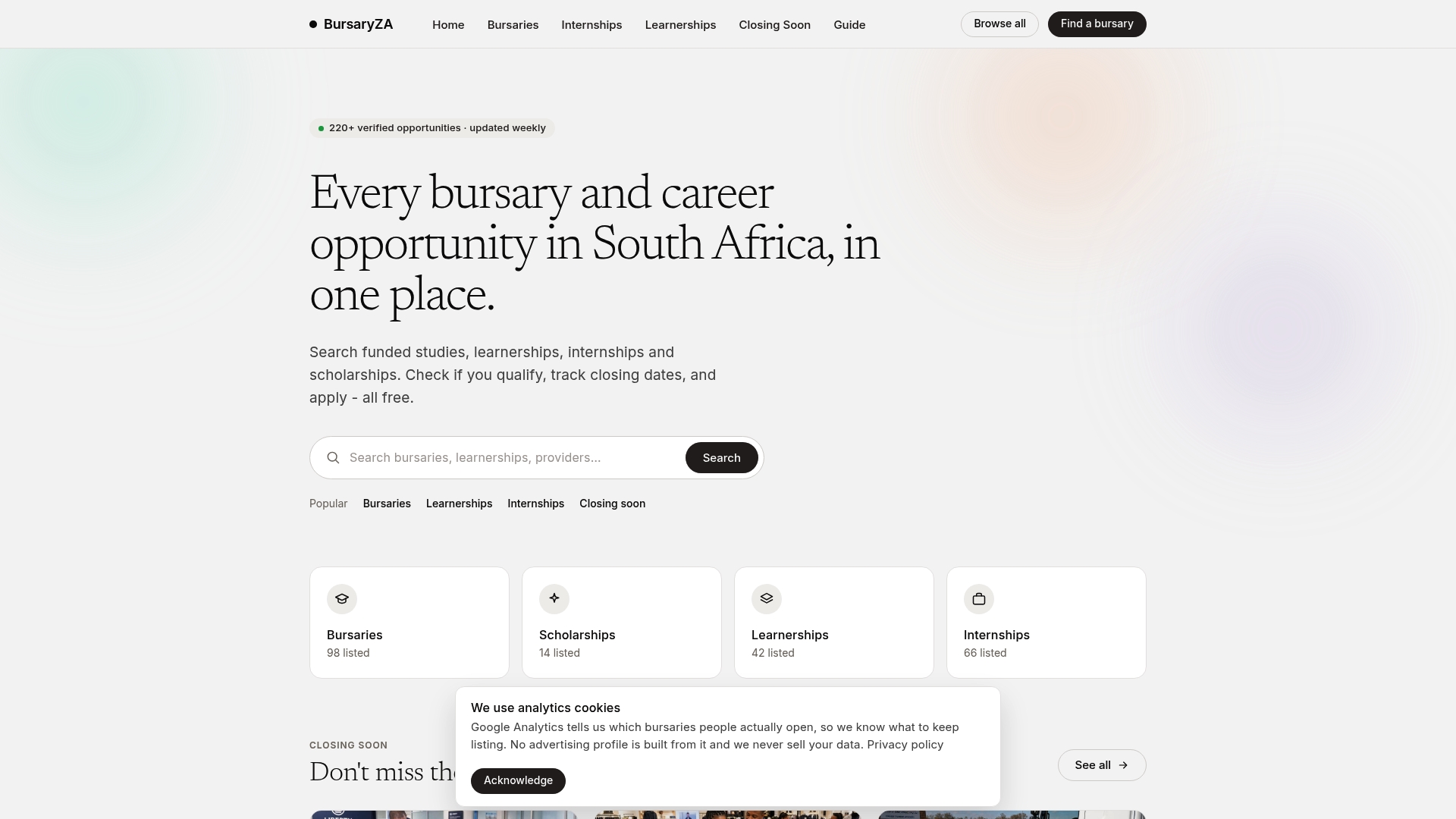
Start by running your details through the eligibility matcher to filter opportunities by field, study level, and income bracket. From there, browse the full bursaries database, or narrow your search by province, like Gauteng or the Western Cape, if location affects your options. If teaching is your path, the NSFAS breakdown explains exactly what coverage to expect before you commit to anything.
Where to Verify Eligibility Rules and Deadlines
Thresholds and closing dates shift each year. Confirm current figures directly through NSFAS’s official bursary guidelines and StudyTrust’s application criteria before you submit.
Sources
- NSFAS 2026 bursary guidelines (Annexure A)
- The Complete Guide to Bursaries in South Africa 2026 — Apply Online SA
- Bursaries vs Scholarships — OnlineLearnerships
- Student bursary and scholarship sources — SaveTheStudent