Avoid Rejection: Z83 Rules, BursaryZA for Government Internships in SA

Yes, government internships are available right now across national departments, provincial departments, and municipalities. Start at Gov, then head to the specific department’s page. Before applying anywhere, get a signed Z83, an updated CV, certified copies of your ID and qualifications, and a SAQA evaluation if you studied abroad.
TL;DR:
- Most government internship applications are rejected due to paperwork errors such as unsigned forms, outdated templates, or missing documents.
- It is crucial to follow specific application instructions exactly, including reference numbers, submission methods, and document certification requirements.
- Internships typically last 24 to 36 months with stipends that vary by department, and selection processes can take up to 12 weeks or longer.
- Reliable sources for current internship listings include official government websites, municipal portals, and verified aggregators like BursaryZA.
- Preparing a tailored application package and tracking deadlines carefully significantly increases the chances of successfully securing an internship.
Table of Contents
- Where To Find Current Government Internship Listings
- Who Qualifies and What Documents You Need
- How to Apply: A Step-by-Step Checklist
- What to Expect: Duration, Stipends, and Timelines
- Common Mistakes That Get Applications Rejected
- What Happens After Your Internship Ends
- Why a Government Internship Is Worth the Paperwork
- The Real Bottleneck Isn’t Competition, It’s Process
- Find Verified Internship Listings Faster With BursaryZA
- Official Pages Worth Bookmarking
- Sources
Where To Find Current Government Internship Listings
Government internships in South Africa get advertised in scattered places, and that’s exactly why so many qualified graduates miss deadlines. The most reliable sources are official ones: gov.za’s public service notices, individual department career pages, and municipal websites that post PDF adverts directly.
Some departments run internship programs like clockwork. The Department of Forestry, Fisheries and the Environment publishes a 24-month graduate program annually, complete with region-specific submission addresses for inland versus coastal posts. National Treasury does the same through its own e-recruitment system, and the Department of Health regularly lists dozens of internship posts by reference number.
Here’s where most applicants actually find these opportunities:
- Departmental websites (search “internships” or “vacancies” on the specific department’s site)
- Provincial government portals for region-specific postings
- Municipal careers pages, which often carry finance, engineering, or admin internship adverts
- gov.za’s central employment notices section
- Verified aggregators like BursaryZA’s internship listings, which link straight through to the original department advert
Third-party job boards can be useful for spotting opportunities faster, but they’re only as good as their last update. An advert that closed three weeks ago does you no good. Always confirm the closing date and reference number against the department’s own PDF before you spend hours preparing documents. A platform that filters by field and province, and links you directly to the source advert, saves that verification step for you.
Who Qualifies and What Documents You Need
Eligibility rules repeat across almost every government internship advert, with small variations by department. You typically need to be an unemployed South African citizen holding a relevant qualification, and in most cases, you cannot have completed a government internship before. The Department of Employment and Labour’s graduate program states this plainly: applicants who’ve already done a public-service internship are disqualified outright.
Every application needs a consistent document set:
- A completed and signed Z83 application form (the current version, downloaded from a .gov.za domain)
- An updated CV listing relevant experience and qualifications
- Certified copies of your ID and academic qualifications
- Proof of residence, when the advert specifically asks for it
- A SAQA evaluation certificate if you studied outside South Africa
Municipal adverts sometimes add extra conditions, like a residency requirement tied to that specific municipality, or an age cutoff for youth-targeted programs. Read every line of the advert before assuming your qualification is a match. A generic reading of “graduate internship” can hide a requirement buried in paragraph four that rules you out.
How to Apply: A Step-by-Step Checklist
Applying for a government internship is less about talent and more about precision. Departments reject strong candidates constantly over paperwork errors that have nothing to do with skill. Follow this sequence and you’ll clear the first hurdle almost every applicant stumbles on.
- Read the advert fully and note three things: the reference number, the closing date, and the exact submission method. The Presidency’s 2025/2027 internship program specifies its own submission address and reminds applicants that only shortlisted candidates get contacted, a standard clause worth expecting everywhere.
- Download the current Z83 form from gov.za, not from a job board or an old email attachment. Complete every section, initial each page, and sign it. An outdated or unsigned Z83 is the single most common reason applications get tossed before anyone reads the CV.
- Assemble your certified documents and SAQA evaluation if it applies to you. Some adverts want everything combined into a single PDF; others want separate attachments. Follow the advert’s exact instruction, not what worked for a different department last year.
- Submit exactly as instructed. Use the correct email subject line (usually the reference number), the specified hand-delivery address, or the postal address given. Keep a copy of everything you sent, including the email or the courier slip, and expect personnel suitability checks if you make it to the shortlist.
Pro Tip: Check the DFFE’s submission instructions carefully. Coastal and inland posts sometimes go to entirely different inboxes, and sending your application to the wrong one can mean it never gets read at all.
What to Expect: Duration, Stipends, and Timelines
Most national government internships run for 24 months, which is long enough to build real, CV-worthy experience rather than a token few weeks of shadowing. Some municipal finance programs stretch further. The Mangaung municipal finance internship, for example, runs 24 to 36 months depending on the post.
Stipends vary by department and by qualification level, so never assume one figure applies everywhere. The Department of Health’s 2026-2028 Graduate Internship Programme lists a monthly stipend example of R8,174.78 for many of its posts, a useful benchmark, but always check the exact figure stated in the specific advert you’re applying to.
A few realities worth planning around:
- Selection can take 6 to 12 weeks or longer, depending on application volume
- Most departments state clearly that only shortlisted candidates will be contacted
- Provincial and municipal timelines can move slower than national departments during budget cycles
Patience matters here. Don’t read silence after two weeks as rejection; read the advert’s own stated timeline instead.
Common Mistakes That Get Applications Rejected
The same handful of errors knock out otherwise qualified candidates every hiring cycle. An unsigned Z83, an outdated version of the form, missing sections, a typo in the submission email address, or uncertified documents will sink an application before a human even opens it.
Fix these before you hit send:
- Certify your documents early. Commissioners of oaths get busy near closing dates.
- Tailor your CV to the actual post advertised, not a generic one-size-fits-all version.
- Put the exact reference number in your email subject line, character for character.
- Prepare a short, genuine statement about why you want to build a career in public service, not just why you need the income.
Pro Tip: Save a PDF copy of every application you submit, along with the date and the email address or physical address you sent it to. If you get called for an interview months later, you’ll want that record on hand.
Academic research on public-sector selection panels backs up something intuitive: candidates who frame their motivation around public service and mentorship tend to read as stronger fits than those who talk mainly about the stipend or the job title.
What Happens After Your Internship Ends
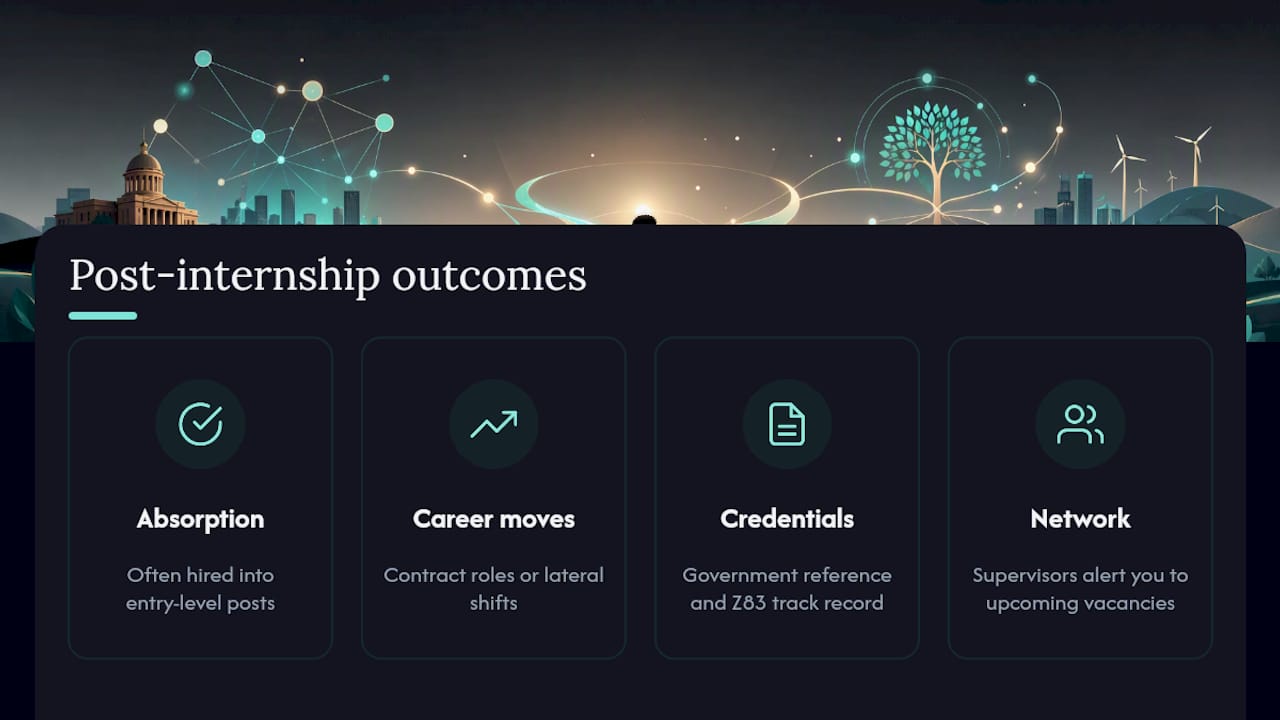
A completed government internship doesn’t guarantee permanent employment, but it puts you meaningfully closer to one. Departments frequently absorb strong interns into vacant entry-level posts when budget allows, particularly in technical fields like finance, environmental management, and health administration where institutional knowledge from a 24-month placement carries real weight.
Even where absorption isn’t available, the internship becomes leverage. You leave with a verifiable government reference, direct experience with public-sector systems and procurement processes, and a completed Z83 track record that makes your next application faster to prepare. Many former interns move laterally into contract positions, apply competitively for advertised permanent posts using their internship as demonstrated experience, or pivot into related public entities and state-owned enterprises that value public-service exposure.
The realistic path forward looks less like a straight line and more like a series of applications where your internship keeps opening doors. Keep your network from the internship active. Supervisors and colleagues from a 24-month placement often hear about upcoming vacancies before they’re advertised publicly, and a former manager’s willingness to vouch for your work ethic matters more in public-sector hiring than most graduates expect.
Why a Government Internship Is Worth the Paperwork
The paperwork is genuinely tedious, but the payoff explains why competition for these posts stays fierce every year. You gain structured, supervised work experience in an environment that many private employers respect specifically because it demonstrates discipline with process and compliance, skills that transfer directly to almost any administrative or technical career.
Networking matters more here than most applicants realize going in. Government departments are large, interconnected systems, and the colleagues you work alongside during a 24-month internship often move into other departments, provincial roles, or state entities over time. Those relationships become a professional network that outlasts the internship itself.
The employment outcome is the most tangible benefit. A verifiable government placement on your CV signals to future employers, public or private, that you can operate within formal systems, meet compliance requirements, and work reliably over a sustained period. For a graduate with no formal work history, that signal often matters more than the stipend itself.
The Real Bottleneck Isn’t Competition, It’s Process
Most advice about government internships focuses on standing out, polishing your CV, writing a compelling cover letter, rehearsing interview answers. That advice isn’t wrong, but it addresses the wrong stage of the funnel. The evidence from department after department points to a simpler truth: applicants lose out at the paperwork stage, long before anyone judges their merit.
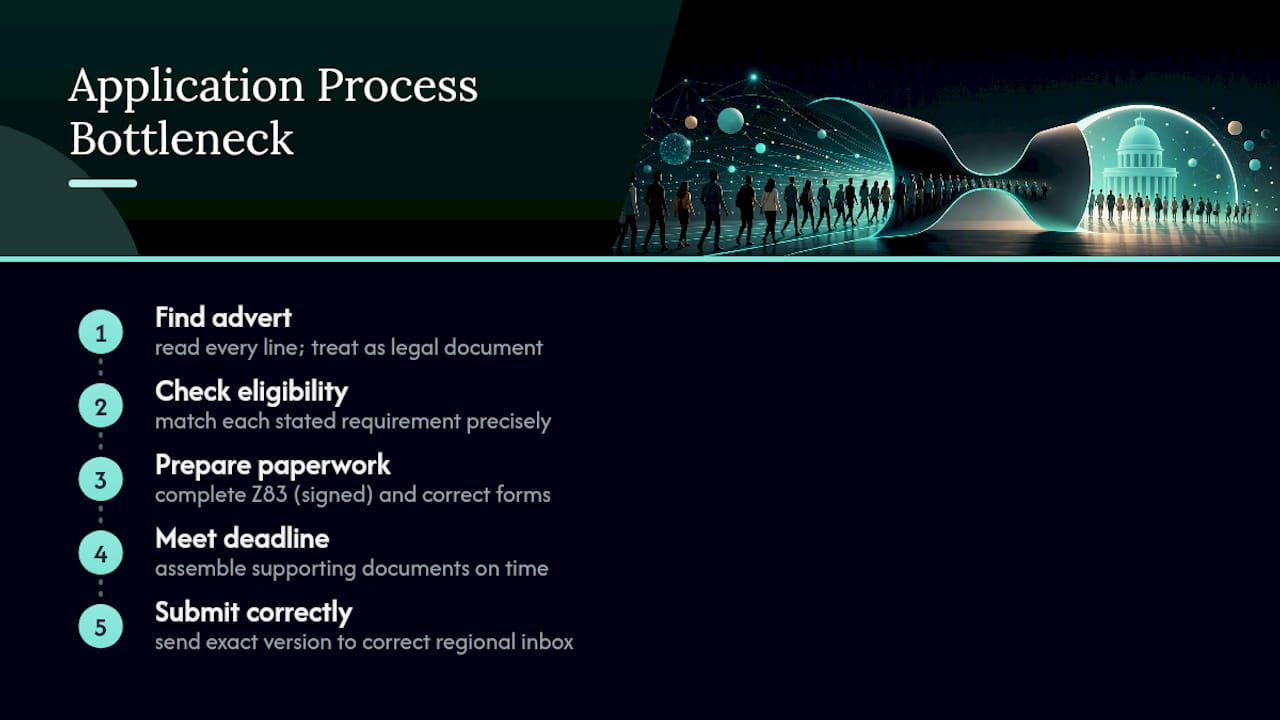
An unsigned Z83, an outdated form version, or a document sent to the wrong regional inbox eliminates a candidate before a human reviewer ever compares them to anyone else. That’s not a competition problem. That’s a compliance problem, and it’s entirely within your control.
If there’s one place to redirect your effort, it’s here: treat the advert like a legal document, because functionally, it is one. Read every line, match every requirement, and submit exactly as instructed. The graduates who get shortlisted aren’t necessarily the most qualified in the pool. They’re often just the ones whose applications survived the administrative filter intact.
— Nkosi
Find Verified Internship Listings Faster With BursaryZA
Chasing down individual department websites and PDF adverts eats hours you don’t have, and a single missed closing date means waiting months for the next cycle. Bursaryza solves that by pulling verified government internship listings, along with bursaries and learnerships, into one searchable database with eligibility checklists and direct links to the original official advert.
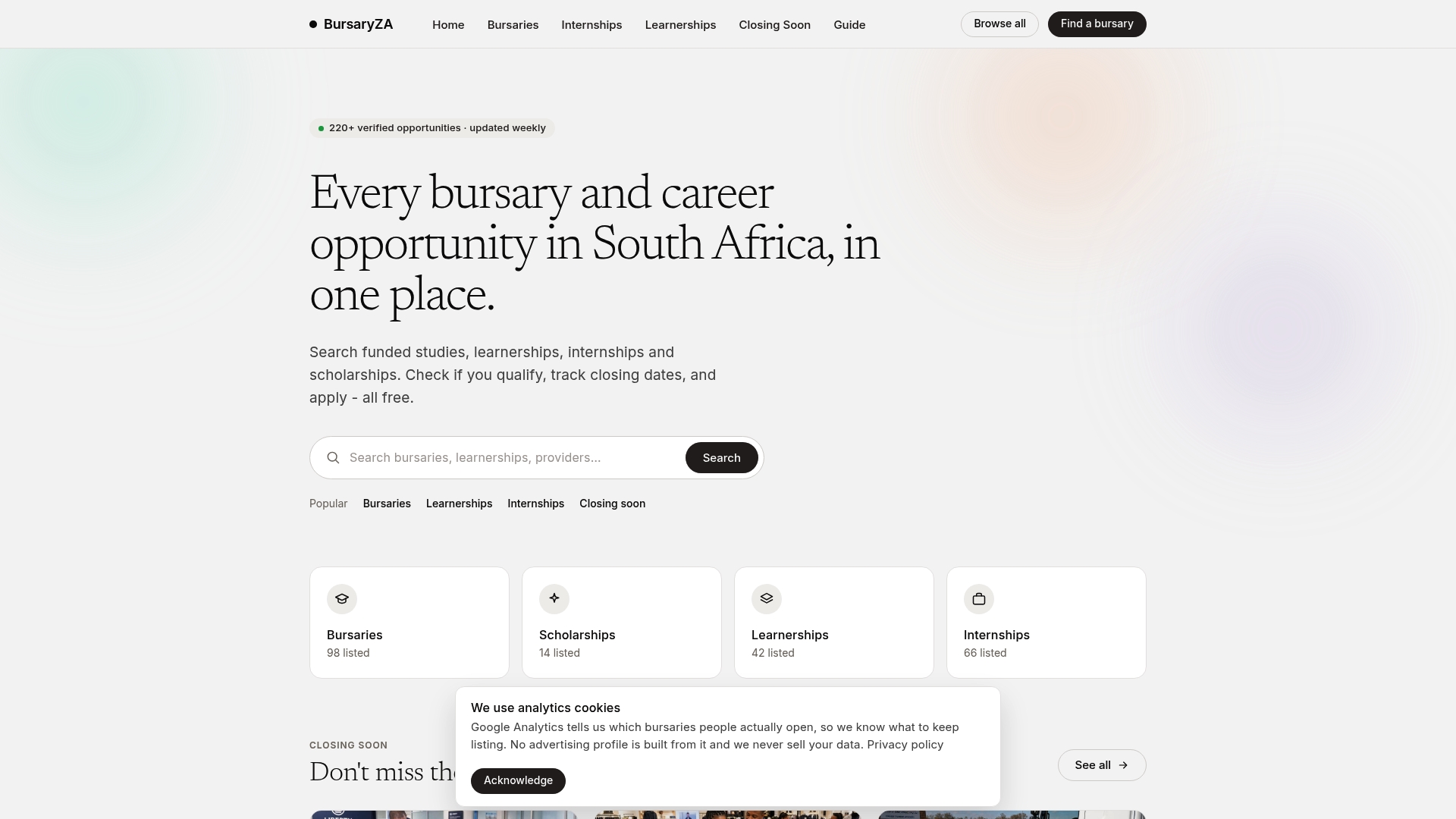
You can filter by field, province, and study level, so a finance graduate in Gauteng sees relevant municipal and Treasury postings without wading through unrelated health or environmental adverts. Every listing links back to the source document, meaning you always verify details against the department itself before applying. Set alerts for closing dates so you’re not scrambling to certify documents the night before a deadline.
Browse the current internship listings on BursaryZA to see what’s open right now, and check the Gauteng opportunities page or Western Cape listings if you’re targeting a specific province. If a government internship doesn’t come through this cycle, understanding work rights in Australia for international students can help you fund further study while you wait for the next intake.
Official Pages Worth Bookmarking
A handful of sources cover most government internship activity in South Africa, and checking them on a regular schedule beats relying on secondhand shares.
- Gov, the central hub for public-service vacancy notices
- The DFFE internships page, updated with regional submission details each cycle
- National Treasury’s graduate internship advert, useful if you’re finance-focused
- Your local municipal careers page, especially for finance and engineering internship posts with longer contract terms
Bookmark these directly. Department pages update faster than most secondhand summaries, and going straight to the source is the surest way to avoid applying against an outdated advert.
Sources
- Gov
- Internships | Department of Forestry, Fisheries and the Environment
- GRADUATE INTERNSHIP PROGRAMME 2026-2028 (24 MONTHS) | Department of Health (advert PDF)
- Internship Programme 2025/2027 | The Presidency