75% Succeed When You Apply for Bursaries, Scholarships in South Africa

A scholarship is awarded for merit, a bursary for financial need, and both usually don’t need to be repaid. That said, either one can come with strings attached, from renewal grades to work-back contracts, so the real decision comes down to reading the fine print before you sign anything.
TL;DR:
- Most scholarships renew annually based on maintaining specific grades, while bursaries often depend on meeting financial need and can include bonding clauses.
- Bursaries may cover full study costs including accommodation and living expenses, but bonding obligations often require years of work-back with the sponsor.
- Application success depends on early preparation, applying to multiple opportunities, and carefully verifying eligibility criteria and coverage details.
- Genuine listings include clear eligibility, coverage scope, deadlines, and direct application links to avoid scams and wasted time.
- Students should prioritize scholarships if they excel academically and bursaries if their primary need is financial support, often applying to both for better chances.
Table of Contents
- Bursary vs Scholarship: What Actually Defines a Scholarship?
- What Is a Bursary, and How Is It Different?
- Bursary vs Scholarship: Key Differences at a Glance
- What Happens After You Accept? Repayment, Bonding, and Coverage Gaps
- How to Apply for a Bursary or Scholarship the Right Way
- Finding Verified Bursary and Scholarship Listings
- The Real Question Isn’t Which Is Better, It’s Which Fits You
- Search BursaryZA’s Verified Listings and Application Calendar
- Authoritative Pages to Read Next
- Sources
Bursary vs Scholarship: What Actually Defines a Scholarship?
A scholarship rewards achievement rather than income. Universities, trusts, employers, and professional bodies hand them out based on academic results, sporting talent, artistic skill, or leadership record, not what your parents earn. The distinction between merit-based and need-based funding sits at the center of the scholarship vs bursary debate, and it shapes everything from who qualifies to what you’ll owe later.
Who typically offers them:
- Universities, through faculty-specific or dean’s list awards
- Corporate sponsors and professional associations tied to a field of study
- Independent trusts and foundations rewarding a specific talent or subject
Coverage ranges from a partial tuition reduction to a full ride with mentorship or internship placements attached. Most scholarships renew year to year only if you keep your grades above a set threshold, so a strong first semester doesn’t guarantee the money keeps flowing.
What Is a Bursary, and How Is It Different?
A bursary exists to close a financial gap, not reward a transcript. Providers assess household income, disadvantage, disability status, or regional need before they assess your marks, though most still expect you to meet a baseline academic standard to stay funded.
Common bursary providers include:
- Government departments and provincial education funds
- Corporates funding students in exchange for future employment
- Charities and university hardship funds
Coverage swings widely. Some bursaries cover tuition only. Others, especially corporate ones, fund the full cost of study including accommodation, textbooks, and a monthly living allowance. The catch with many corporate bursaries is a bonding clause, a work-back agreement that obligates you to a set number of years with that employer after graduation.
Bursary vs Scholarship: Key Differences at a Glance
Here’s where the two paths actually split, side by side:
- Primary basis: Scholarships reward merit; bursaries respond to financial need.
- Who offers them: Scholarships come from universities, trusts, and professional bodies; bursaries come more often from corporates, government, and charities.
- Typical coverage: Scholarships often cover tuition plus extras like mentorship; bursaries can stretch to accommodation and a living allowance.
- Renewability: Both usually renew annually, contingent on maintaining minimum grades.
- Repayment or work-back risk: Scholarships rarely require repayment; bursaries, especially corporate ones, often carry bonding obligations.
- Best for: A high achiever with strong grades but no financial hardship leans toward scholarships; a student facing genuine cost barriers should prioritize bursaries first.
Neither is a loan. NSFAS-style government funding sits in its own category, blending grant-like coverage for the poorest households with loan conversion rules if you don’t pass your modules, which is a very different risk profile from a standard bursary or scholarship.
What Happens After You Accept? Repayment, Bonding, and Coverage Gaps
Accepting an award is where the real homework starts. A corporate bursary’s work-back clause often requires a year of employment for each year funded, though terms vary by company. Miss that commitment, whether by dropping out, failing modules, or turning down the job offer at the end, and the bursary can become repayable in full, even though it was marketed as non-repayable. Miss that commitment, whether by dropping out, failing modules, or turning down the job offer at the end, and the bursary can become repayable in full, even though it was marketed as non-repayable.
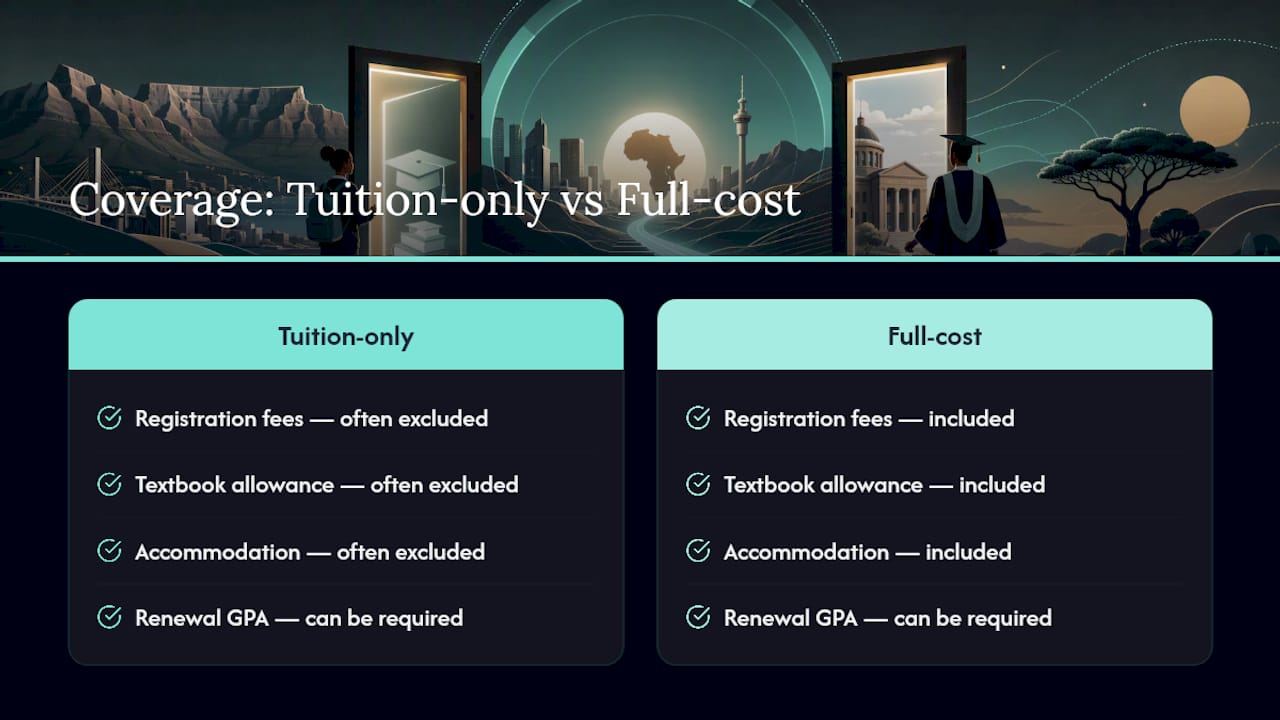
Read every listing for what it actually covers before you celebrate an offer. “Tuition only” and “full cost of study” are very different outcomes, and a vague listing that doesn’t spell out registration fees, textbook allowances, or accommodation should be confirmed directly with the provider before you sign anything. The same caution applies to scholarships with performance clauses. If a scholarship requires a certain GPA to renew, a bad semester can end funding mid-degree.
Pro Tip: Before accepting any bonded bursary, calculate the total years of work-back against your expected starting salary elsewhere. If the bond locks you into a below-market wage for three or four years, weigh that cost against the value of the funding itself.
How to Apply for a Bursary or Scholarship the Right Way
A stronger application starts with the right paperwork and a realistic strategy, not a single perfect essay.
- Gather your documents early: ID, proof of household income (for bursaries), academic transcripts, and at least two referee letters. Missing paperwork is the most common reason applications stall.
- Apply broadly, not narrowly: Submit to several scholarships and bursaries at once rather than betting everything on one. Over 75% of applicants who apply for a scholarship or bursary succeed, yet far fewer students than that actually apply, which means hesitation costs more chances than rejection does.
- Track deadlines systematically: Use a running list or a dedicated bursary application calendar so closing dates don’t sneak past you.
- Tailor your statement to the criteria: A merit application should lead with achievement; a need-based application should lead with circumstance. Follow every instruction on the form exactly, and follow up if you haven’t heard back within the stated timeframe.
Finding Verified Bursary and Scholarship Listings
Outdated or fake application links waste time and, in worse cases, expose applicants to scams. A trustworthy listing includes a clear eligibility checklist, a stated closing date, direct provider contact details, and a working application link, not just a name and a vague promise of funding.
Before you apply anywhere, check that the listing states:
- Exactly who qualifies (academic minimums, income thresholds, field of study)
- What the award actually covers
- The closing date and how to apply directly
BursaryZA’s searchable database organizes opportunities this way, pairing each listing with eligibility details and a calendar view so nothing important closes while you’re still deciding.
The Real Question Isn’t Which Is Better, It’s Which Fits You
If your grades open doors, chase scholarships first. If money is the barrier, a bursary solves a different problem and usually solves it more completely. Most students should do both: build a shortlist from verified listings, tick off the checklist for each, and apply before assuming you won’t qualify.
— Nkosi
Search BursaryZA’s Verified Listings and Application Calendar
Sorting through scattered PDFs and outdated company pages to find funding that actually applies to you wastes weeks you don’t have during application season. BursaryZA is the alternative to that scramble: a searchable database of verified bursaries and scholarships with eligibility checklists and closing dates listed upfront, so you spend your time applying instead of hunting.
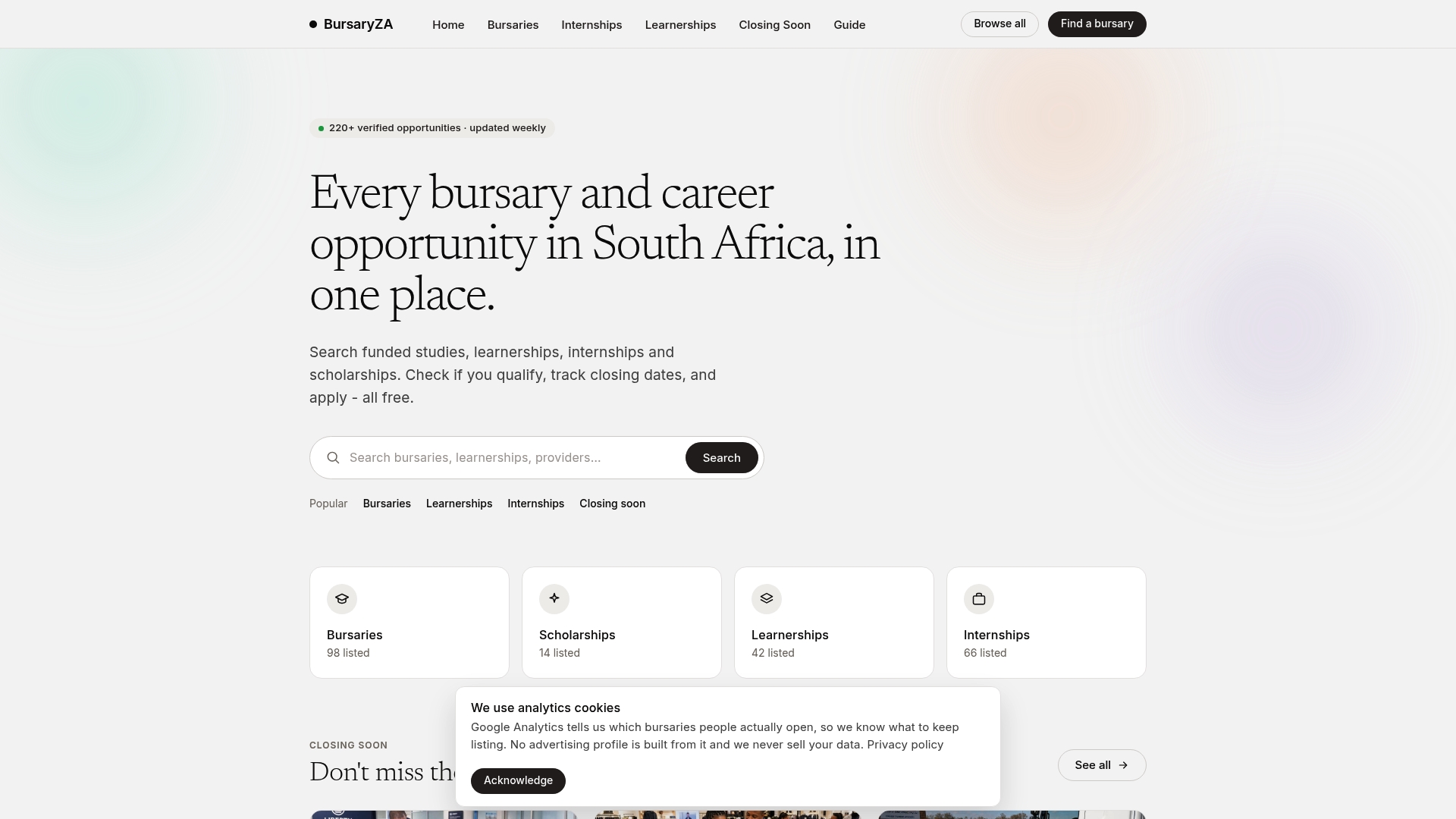
Every listing links straight to the provider’s own application page, and the application calendar keeps deadlines visible so nothing closes while you’re still gathering documents. If you’re unsure where to start, the step-by-step application guide walks through what to prepare before you submit. Search current listings today and shortlist the ones matching your field, province, and study level before their closing dates pass.
Authoritative Pages to Read Next
Before accepting any offer, confirm terms directly with the source: Prospects’ scholarship and bursary guide, Nelson Mandela University’s funding FAQ, and each provider’s own closing-date page.
Sources
- Undergraduate funding 2026: a guide to scholarships and bursaries | Prospects
- Scholarships, grants, and bursaries | UCAS
- What is the difference between a loan, bursary and scholarship? | Nelson Mandela University